
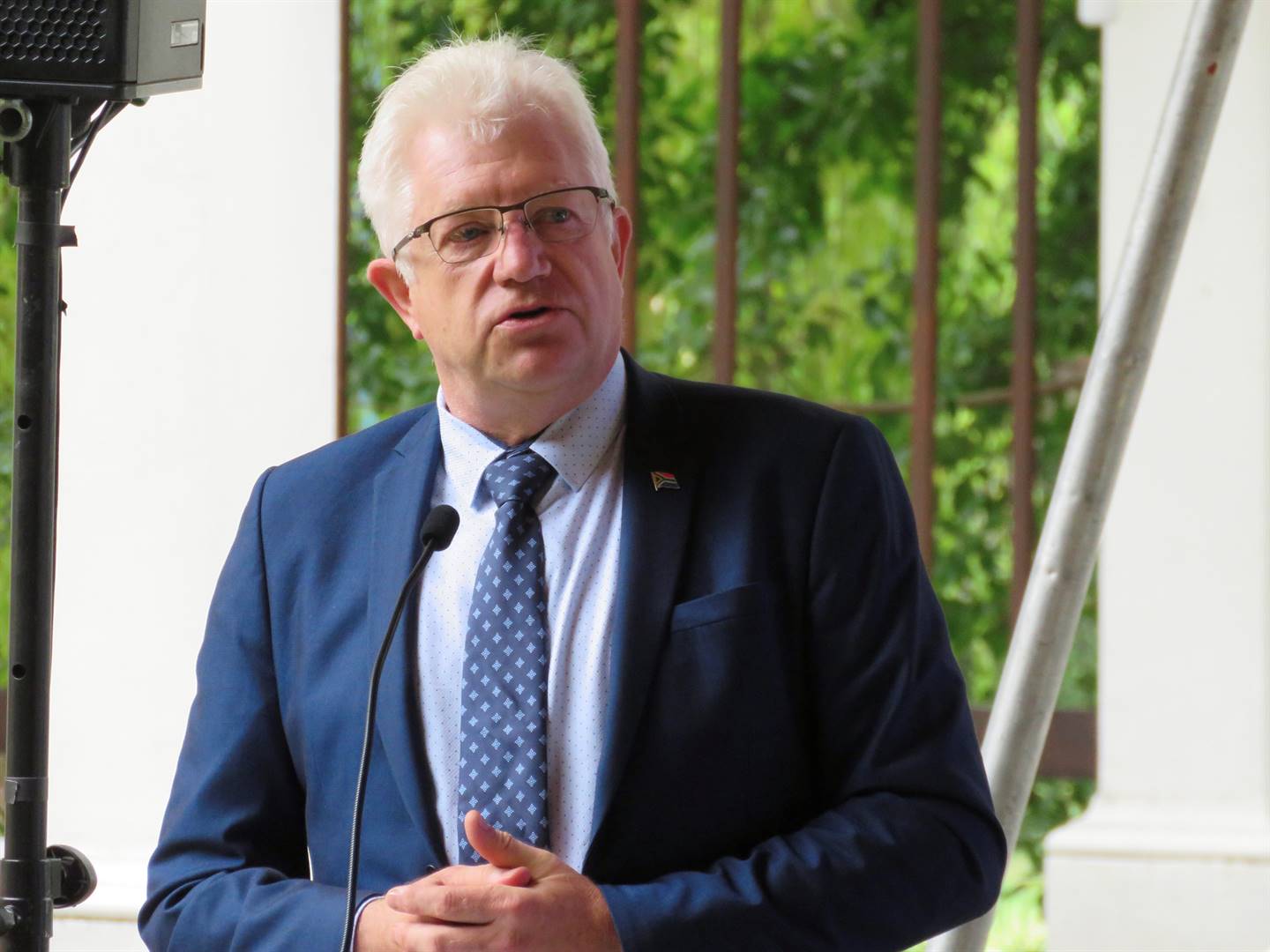
The Riversdale Solar Power Plant stands at 98% completion and could finish ahead of schedule, marking a significant milestone in the Western Cape’s drive towards energy self-sufficiency, Premier Alan Winde announced today following Friday’s Integrated Energy and Water Council meeting.
The ambitious 10-megawatt solar facility, capable of generating 15 million kilowatt-hours annually, represents a collaborative triumph between the provincial government and Hessequa Municipality. Complete with a 10 MW-hour battery energy storage system and advanced monitoring capabilities, the plant will substantially reduce Riversdale’s dependence on Eskom power.
READ ALSO: Cape Town first municipality to procure power from traders below Eskom rates
“This momentum reflects the urgency with which the Western Cape Government and municipalities are investing in alternative energy solutions to meet growing power demands,” Winde said, positioning the project as a template for renewable energy innovation across the region.
Critical water infrastructure projects advance
The council also received encouraging updates on vital water security initiatives, with the Department of Water and Sanitation completing sediment removal at the Wolwekloof weir—just in time for the approaching winter rainfall season. “This critical project has been undertaken just in time for the winter rainfall period. By removing sediment at these two weirs, we will enhance water collection,” Winde explained, praising the collaboration between provincial and national departments.
Teams are now focusing on the Banhoek Weir, where significant sediment build-up has similarly compromised storage capacity. This project is expected to reach completion by May 2026, whilst steady progress continues on raising the Clanwiliam Dam wall.
The sediment removal efforts target the Wolwekloof and Banhoek weirs within the crucial Riviersonderend-Berg River system, where gradual accumulation over time has severely impacted reservoir storage capacity.
Water strategy gains momentum
The province’s comprehensive Water Resilience Strategy, launched in October 2025, continues its progressive rollout as authorities grapple with mounting challenges from population growth, climate change impacts, and increasing demand
“This strategy addresses both current needs and long-term sustainability,” Winde emphasised. “Continued periods of below-average rainfall across several catchment areas have reinforced the importance of a comprehensive, integrated approach to safeguarding our water resources.”