

In today’s AI world, parents and teachers are grappling with an important question in education. How can artificial intelligence be integrated as a teaching tool while at the same time preserving critical thinking skills?
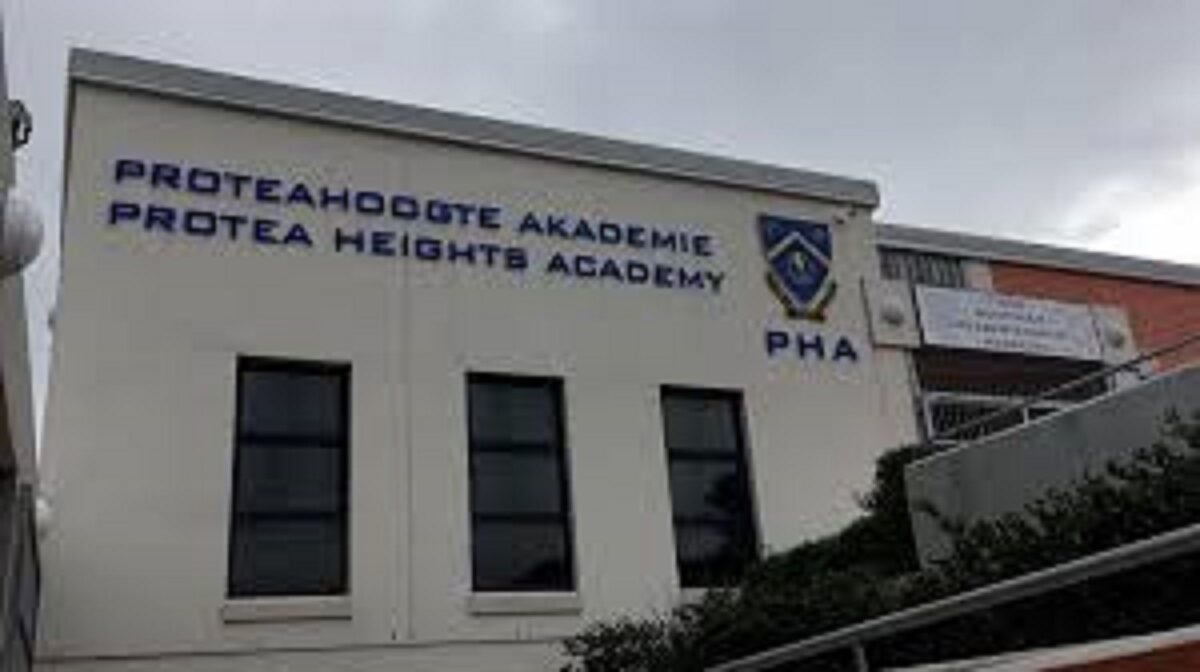
To gain deeper insight, TygerBurger engaged with teachers at Protea Heights Academy (PHA), a STEM-focused school recognised for its use of technology to foster students’ creative and analytical thinking skills. Their candid reflections highlighted both the promise and the challenges of integrating AI into the classroom. To protect their privacy, the teachers quoted in this article remain anonymous.
AI can transform learning for struggling students
For learners who struggle with traditional teaching methods, AI offers unprecedented opportunities. According to one teacher, it can generate visual learning aids such as flowcharts, bulleted summaries, and flashcards, while also providing detailed explanations tailored to individual learning needs.
Teachers also highlighted the importance of teaching learners how to craft effective prompts. As one noted, learners should be guided to use prompts to summarise material or request examples that align with their own experiences and learning preferences. While tools such as ChatGPT can produce summaries of entire chapters, these outputs are of limited value unless they are shaped by a learner’s existing understanding.
The coding classroom, in particular, has emerged as a testing ground for AI collaboration, with teachers using AI to explore faster or alternative solutions to problems. However, as with any tool, it was emphasised that AI’s capabilities must be properly understood and developed to prevent it from being underused or misapplied.
Teachers turn to AI as departments lag behind
Some teachers at the school have begun experimenting with various AI platforms for lesson planning and assessment. The most commonly mentioned tools include ChatGPT, Claude, Perplexity, Microsoft Copilot, and Gemini, saying that these technologies are proving particularly valuable for creating quiz questions and examination papers.
As the teacher I have to go through the questions and scrutinise them as AI is far from perfect.
“I already use it as an assistant when it comes to setting quick and short quizzing as well as setting papers,” said one teacher. “I can give it my source and ask it to help formulate questions for me. I can give it past papers and the CAPS document to help. But as the teacher I have to go through the questions and scrutinise them as AI is far from perfect.”
Nevertheless, perhaps one of the most concerning findings is the apparent lack of structured guidance from education authorities.
Asked about departmental approaches to AI implementation, teachers’ responses ranged from frustration to resignation. One educator bluntly stated, “Other than sticking their head in the sand about it there is none.”
Another said there have been intimations that the department is aware of the issue, but as for “a standardised policy regarding the use and monitoring of this from both learners and teachers this is not apparent.” Yet another teacher noted the education system was struggling to embrace this opportunity.
Plagiarism a worry
A recurring concern among educators was the misuse of AI by learners when completing assignments. Rather than using these tools to enhance learning, many learners are simply copying and pasting AI-generated content.
“Unfortunately, some of them blatantly copy and paste from ChatGPT, emoji icons and all,” one frustrated educator reported. “It is unfortunately making the lazy students lazier,” said one teacher.
Even more concerning is how AI is influencing writing styles, but teachers have become adept at identifying AI-generated text through linguistic patterns. “Even when students are unable to access electronic resources, the style of writing favoured by ChatGPT is apparent: lots of ‘deep dives’ and ‘showcasing’ is ‘woven into the tapestry’ of their commentary, as is the use of participle forms instead of verbs.”
To integrate or not
Teachers agree that the integration of AI varied significantly across different disciplines. While some teachers believed “all subjects are suitable” for the integration of AI others saw clear distinctions. Physics educators see substantial potential gains, while language teachers express greater concerns about authenticity and skill development.
Viewing AI in the classroom as a potential ally is akin to the conquered peoples of the ‘New World’ being blind to the threat of ‘European colonisation’.
An English and history teacher offered a cautionary perspective: “Integration is not an option, except as a tool for demonstrating the value of human knowledge and understanding. Viewing AI in the classroom as a potential ally is akin to the conquered peoples of the ‘New World’ being blind to the threat of ‘European colonisation’.”
It is concurred though that it is critical to teach learners to compare AI-generated information against reliable existing knowledge. In this manner educators can show learners why blindly trusting AI sources is problematic rather than simply telling them not to use AI.
The loss of thinking skills
On the flipside the erosion of critical thinking skills emerged as teachers’ primary concern as AI “will simply do the work for them.” They worry learners will lose thinking skills and therefore struggle to reason and explain themselves when AI tools aren’t available.
“As rigour is sacrificed for convenience in setting assessments the expected standard of responses will drop accordingly,” said one teacher. “AI can widen the gap between the method of instruction, and the method of assessment, or in other words, learners accustomed to having summarised, paraphrased or just generated content, will struggle with an examination in which ideas will need to be transferred to paper through handwriting and a pen.”
How do we teach humanity to use new technology for the greater good?
PHA educators were of the belief that the best approach is to model good AI use and show learners how to do it properly. They emphasised teaching students to use AI as a support tool for learning and assignments rather than letting AI do all the work for them.
One teacher stressed critical thinking, logical reasoning and problem-solving skills must be taught first without relying on AI, and then schools could add AI-focused modules to existing subjects like Life Orientation to teach responsible use.
However, one teacher admitted this challenge felt overwhelming, asking “How do we teach humanity to use new technology for the greater good?” It suggested the scope of the problem extended far beyond individual classrooms.
In the same breath teachers felt training is needed to properly use AI tools properly in their classrooms, wanting to learn prompt engineering, basically how to ask AI the right questions to get useful answers and to learn how to examine what AI produces critically. They emphasised the need to understand how to write good prompts that would give them the results they wanted.
Training needed for all
In addition, they recognised that training is needed for all education levels, from primary school through high school. One teacher concluded that subject knowledge remained the most important skill explaining that if teachers couldn’t fact-check AI outputs, they become “people who blindly accept anything with flowery language and citations,” regardless of whether the information is actually reliable or credible.
As education institutions navigate uncharted territory it is clear that balancing the potential of AI with the goal of developing independent thinking is of paramount importance. As one teacher summarised it, “AI can be a powerful tool but, as with any other tool, its value depends on how skillfully and thoughtfully it is wielded.”