

A six-year-old boy broke down crying and told a holiday programme facilitator that he missed his dad. The facilitator, a volunteer who had been trained to recognise signs of trauma in children, spoke to the boy and helped him to open up.
“He said that his father had left their family,” said Elizabeth English, another volunteer. She added that the boy had been silently carrying the heartbreak until he had opened up about it at the holiday programme.
“Another boy was very withdrawn and wouldn’t interact with the other children,” she continued. “We found out that he is being fostered and that his foster mother had found him on the streets.”
English gave the boy a misty look, and showed TygerBurger some of his drawings, which were all “happy drawings”, she noted.
“He’s such a good child,” she said. “He’s well-behaved and always looks neat and clean. You can see he is well looked after.”
Both boys, along with any others that show signs of trauma, will be referred for intervention, whether it be to a social worker or another organisation, said Ben de Vos, chair of the Impact steering committee. Impact is a multi-stakeholder initiative that was born out of a community dialogue on 26 October 2024.
“The dialogue was in response to the high levels of gang violence at the time. Out of the dialogue came a committee and the committee looked at the integrated anti-gang strategy. The committee is called the Integrated Mitchell’s Plain Action Plan or Impact,” De Vos said.
The anti-gangsterism strategy has several “pillars”, De Vos said, and one of the pillars deals with children.
“Specifically vulnerable children. This holiday programme is an expression of that pillar, an implementation of that strategy. It is a Trauma-informed Children’s Holiday Programme.”
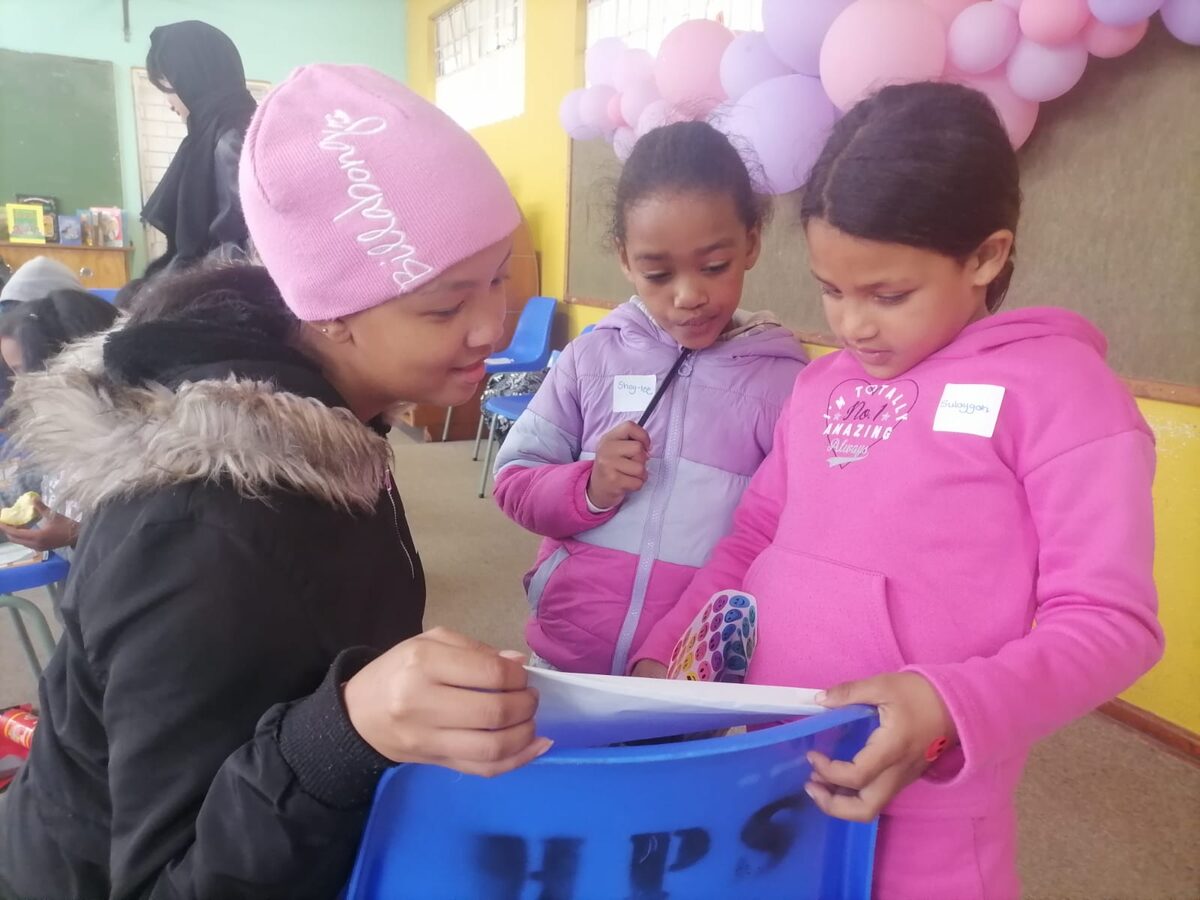
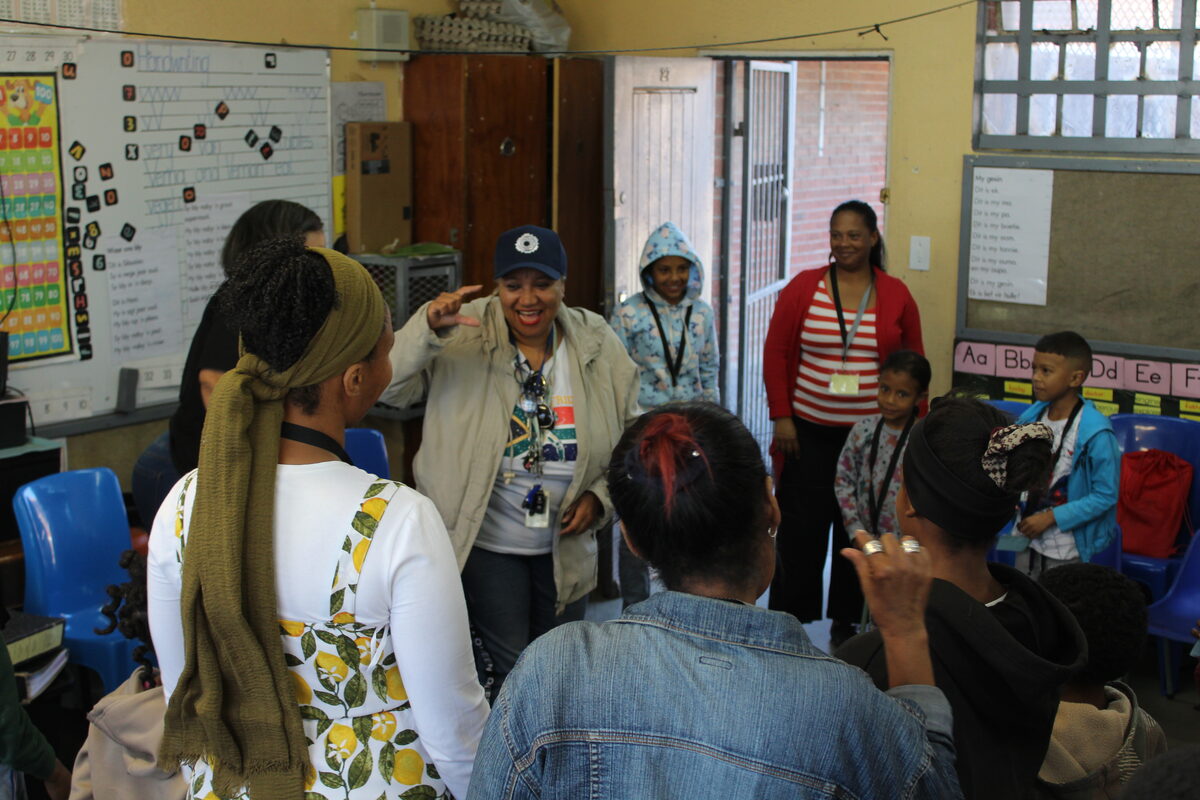
The programme, which was run at three sites in Portland and Westridge last week, was facilitated by volunteers from the Department of Health’s YearBeyond programme, which is one of Impact’s many partners.
Collectively the partnerships stretch like a web across Mitchell’s Plain. The hope is that this web will catch vulnerable children so that they can be helped in a long-term intervention.
“The idea is to create an ecosystem around that child,” De Vos said.
Trauma informed
The trauma-informed curriculum was developed by Wendy Abrahams, an early-childhood and development specialist at Edukos.
“She designed the programme and then did the training,” said programme director, social worker Venessa Padayachee. “She gave us the curriculum and trained a core group and we then trained the others.”
The plan is to roll the training out to places where “adults have access to children”.
“It’s designed to fit schools, crèches, mosques and churches,” said Pastor Mark Bloemstein who opened his church, True North, to the holiday programme. “Any context will be sufficient.”
The long-term goal is to help children with unresolved trauma so that they do not become fodder for gangsters.
“We are trying to recruit them young,” Bloemstein said. “Before the gangs recruit them. The aim is to spread this programme so that if you see vulnerable children in your congregation, we find them and then we apply this long-term intervention. We journey with them.”
Padayachee explained that unresolved trauma can lead to violence.
“Anger is rooted in unresolved trauma,” she said. “We are trying to teach these children earlier how to deescalate, how to regulate emotionally. For some of these children, they already know violence. With big emotions come big behaviours that need to be processed, at that age already. So without intervention, they’re already on their way to crime, gangs, prison.”
Bloemstein adds: “The 14- 15- 16-year-olds that are now gangsters and murderers could have been rescued from that outcome if someone would have had this vision 14 years ago. Now we can see it and we can make a change for the next generation.”