


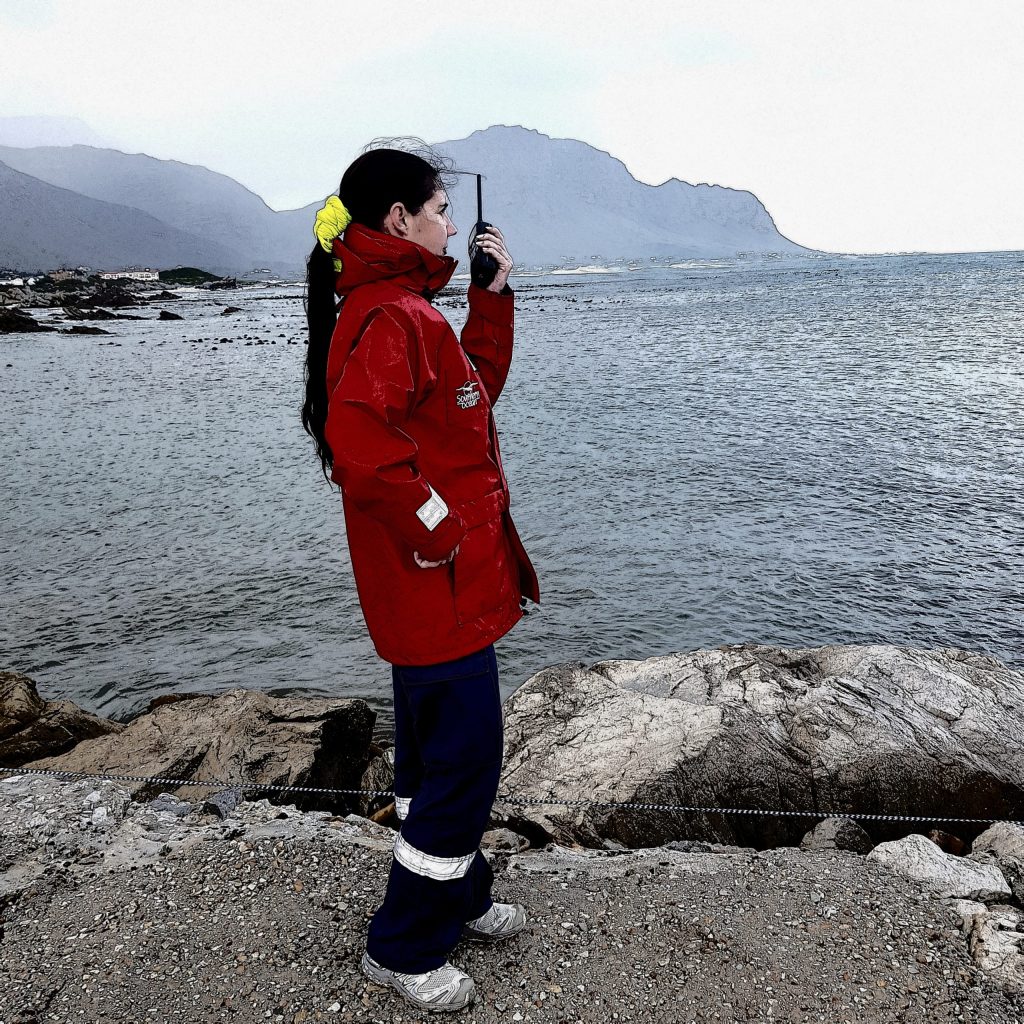
The sea rescue station commander at Strandfontein spends her free time saving people from drowning and training rescuers and she does it for free.
“The volunteers don’t get paid a cent for what they do. We use our own money to get to base. We use our own money to buy food and cooldrink. If it’s a long call out, we drive and we use our own money to get the guys coffee on a cold night. We don’t get paid anything. We do it for the love of serving the community,” Nicky Whitehead said.
Whitehead, of Gordon’s Bay, was reelected for her second three-year term as the National Sea Institute’s (NSRI) station commander at Strandfontein base in May this year.
In the role it is her responsibility to manage the station’s assets and volunteers and during rescue operations she is the main point of call.
“So if anything goes wrong, I’m the one who needs to give the answers,” she says.
Whitehead earns a living managing factories and started volunteering for the NSRI in 2015, in Langebaan.
“I grew up in a household where my mom took me to rehabilitation centres and orphanages to volunteer on weekends. When I moved to Langebaan, I was looking for an organisation that I could join to serve the community in a positive way,” Whitehead said.
She had no experience of sea rescue prior to becoming a volunteer and she said the process of becoming a volunteer is “actually quite simple”.
“We’ve even had trainees that started who couldn’t swim,” she said, adding that they learned to swim during their training. “You don’t have to have any experience. You get taught everything you need to know.”
The only requirements for volunteering is being older than 18, having already finished school and having your own vehicle.
“You can’t stand and wait for a taxi if there’s a call out,” she joked.

“Every minute counts”
Speed is of the essence during a rescue call out, Whitehead said, which is why volunteers are placed at bases that are no more than 20 minutes away from their homes.
“If there’s a call out, you have to be able to be at the base, launch your vessels, be in the ops room, all of those things, within 20 minutes because if you’re in the water, every minute counts.”
And the job requires a lot of dedication.
“It takes a lot of commitment. I mean, every Sunday (for training), being away from family, it’s a huge commitment and it’s time that you never get back, but the reward that you get for that is priceless.” Whitehead was moved to tears when she recalled one particularly rewarding rescue.
“One of the rescues we did was on Boxing Day. There was a whole group of children that were taken out by a rip current at Sonwabe.”
The beach, which is along the False Bay Coastline, near Strandfontein, is a “no-swimming” beach, Whitehead said.
“People are not supposed to be swimming at Sonwabe but in December, the pavilion and all the other beaches are so full and it’s just easy for the people to stop next to the road at Sonwabe.”
Rescuers were able to get most of the children out of the water, except for one little girl who was about eight years old, Whitehead said.
“There was one girl that came out and she was non-responsive. So we started CPR on the beach and as we started CPR, I could see her eyes rolling back and I decided: ‘No, not today!’ ”
Whitehead said, breaking down.
“We brought her back,” she said with relief. “She made it.”
This is why education about water safety is so important, Whitehead said.
“We’ve got a whole department at head office that falls under drowning prevention and they have a whole group of people that go to schools in the areas, all over Cape Town,” she said. “They explain to the kids what the current is and how you notice them and why you don’t go into the water when it looks like that. So we are actively trying to educate the kids around water safety.”

You must be logged in to post a comment.