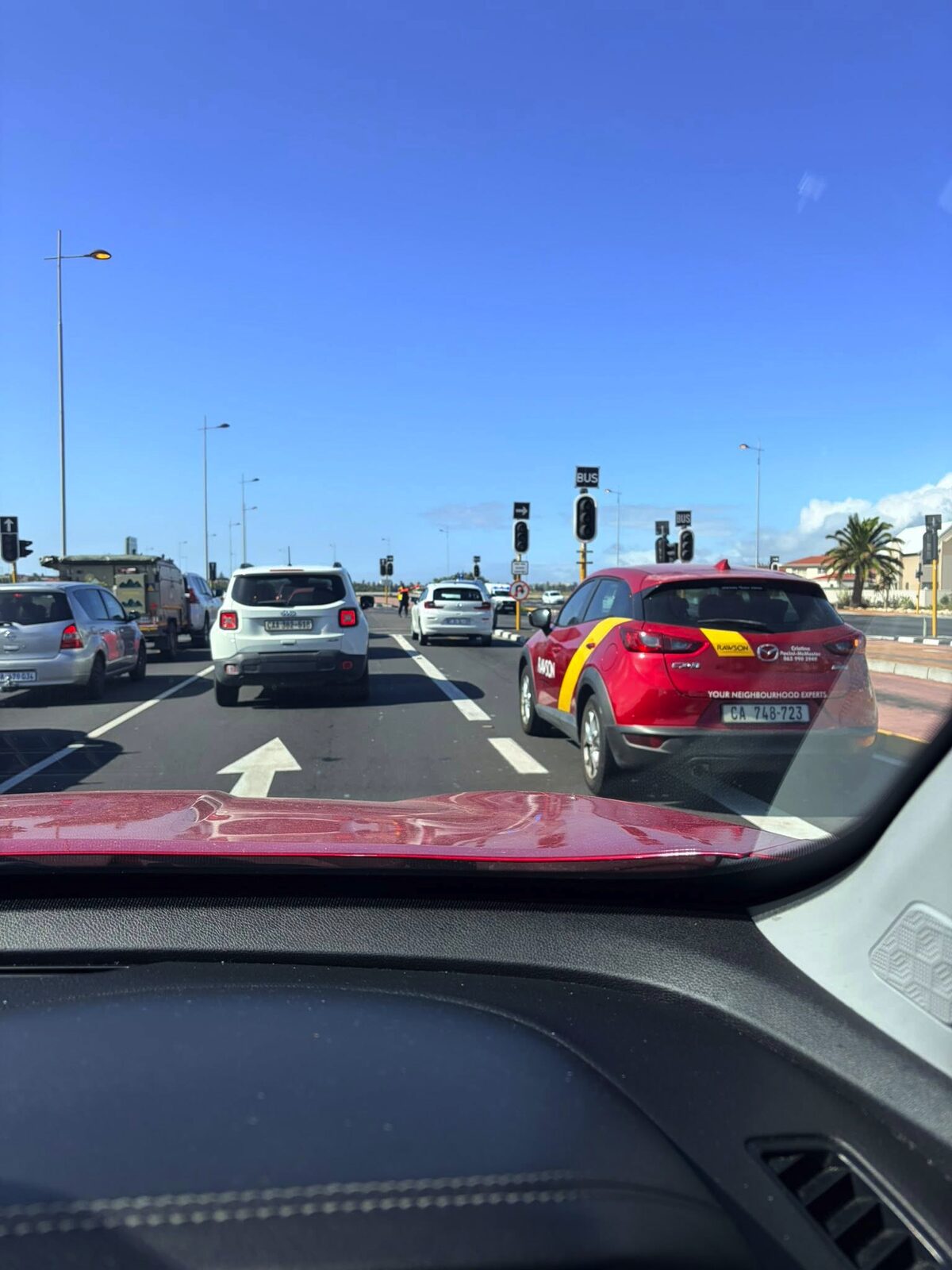

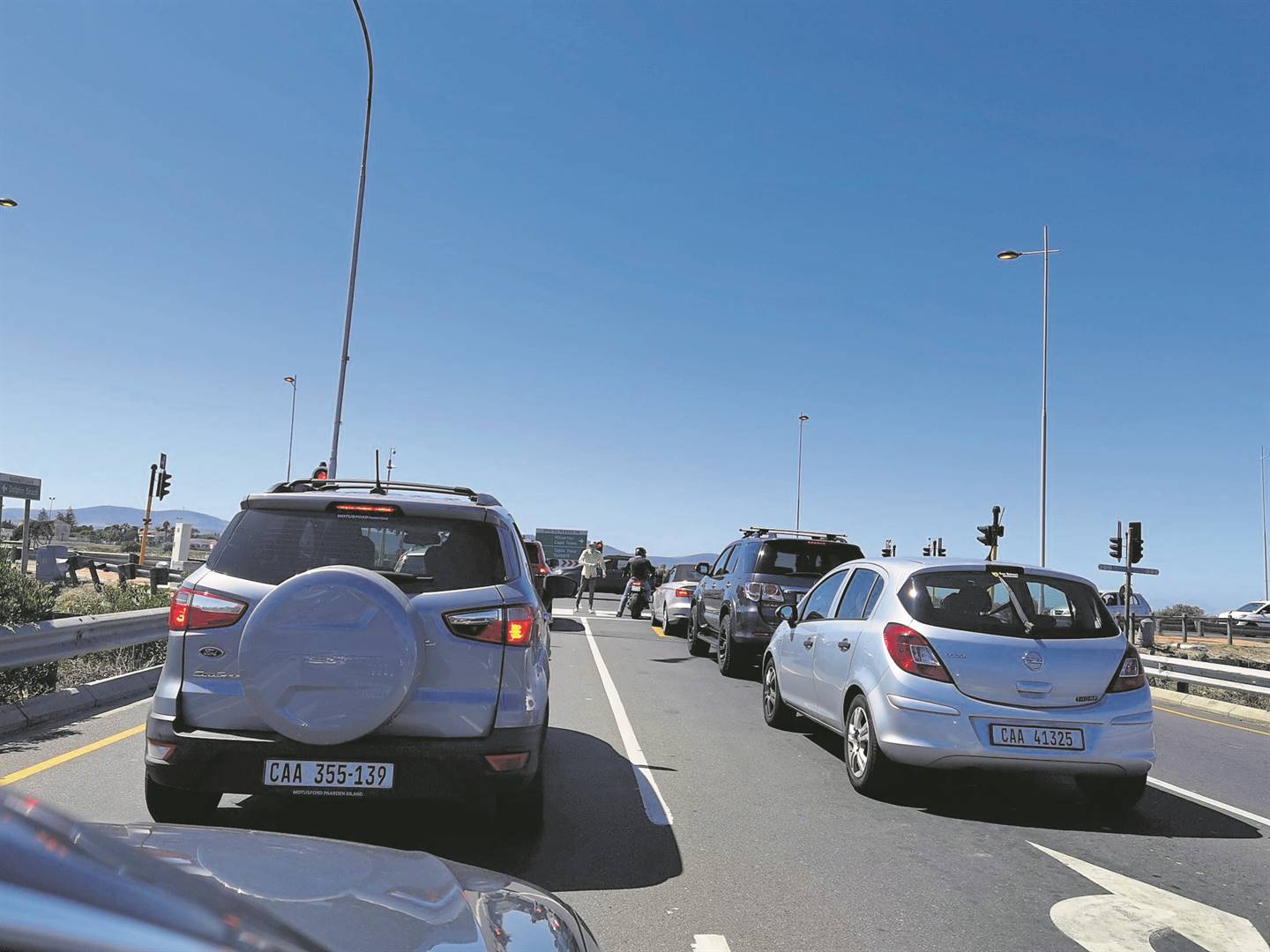
Driving during peak hour towards Dolphin Beach has motorists irate due to an alleged “slow working” set of traffic lights.
This is according to motorists and residents in the area, claiming that the robot at the T-junction of Dolphin Beach Road (Marine Drive) turning onto Otto du Plessis Drive, only allows about four to five vehicles to cross over.
They claim that for years, this has been the cause of congestion and traffic build-up on Marine Drive.
One of the motorists Mike Sealy says he timed the robot to make sure that his facts were spot on.
“I’m not complaining about the traffic. This is Cape Town and it’s a common problem. But a slow working robot is another thing. Only about five vehicles cross over the robot when it’s green. This causes unnecessary traffic congestion and the City of Cape Town needs to attend to this,” he says.
He told TygerBurger that leaving the office earlier or using an alternative route is not an option.
“This is my daily road I use during my commute to work. It’s frustrating to see that a robot can cause all this. Not to mention when it’s not working, which happens quite a lot. However, even then the traffic moves a lot quicker,” he says.
Motorists are pleading with the City to look into this matter.
The City’s Mayco member for transport Rob Quintas told TygerBurger that congestion is a citywide phenomenon typically caused by too many cars wanting to use limited road capacity at the same time.
“This region is densely populated and since there is no rail network here, it was also one of the reasons why the City spent huge sums of money in putting the MyCiTi routes in place to service this area first,” he says.
He adds that the MyCiTi bus service provides a means of mass passenger transport with a view to minimising the number of single occupant vehicles on the road. The provision of public transport in the form of MyCiTi was undertaken as the primary mode of sustainable congestion alleviation in this (and other) areas.
“Public transport is the way forward as it is neither sustainable nor affordable to keep widening or adding roads to cater for an ever growing demand for private motor vehicle use. Residents are therefore urged to make use of the MyCiTi bus service where it is available,” he says.
“Ultimately, drivers in the area have the option to use Blaauwberg Road to access the R27 if they do not wish to wait at the Dolphin Beach signal, but there is also a measure of preferring to use the route along the beach for aesthetic reasons, as well as to avoid worse congestion on the R27 and the intersection of same with Blaauwberg Road,” he adds.
The R27 is the higher order route, higher capacity route and public transport route and as such should enjoy higher priority.
“The Otto du Plessis leg of the R27 has therefore been purposefully ‘gated’ with due consideration to the greater volumes on the R27. Meaning that the green time on the side road has been intentionally limited to give priority to the higher order R27 route which carries higher traffic volumes. Thus, the intention is to improve urban mobility and efficiency on the higher order route. It should be noted that typical morning peak traffic records on Google maps in fact indicate that congestion on Marine Drive is actually less severe than on the R27 despite the prioritisation mentioned,” he says.
He says that other means of mitigating the effects of congestion in the area also includes working from home, flexible working times by travelling outside of the peak hour periods and hybrid work from home / work from office programmes – “all of which contribute to reducing or spreading the peak road usage demand”.