

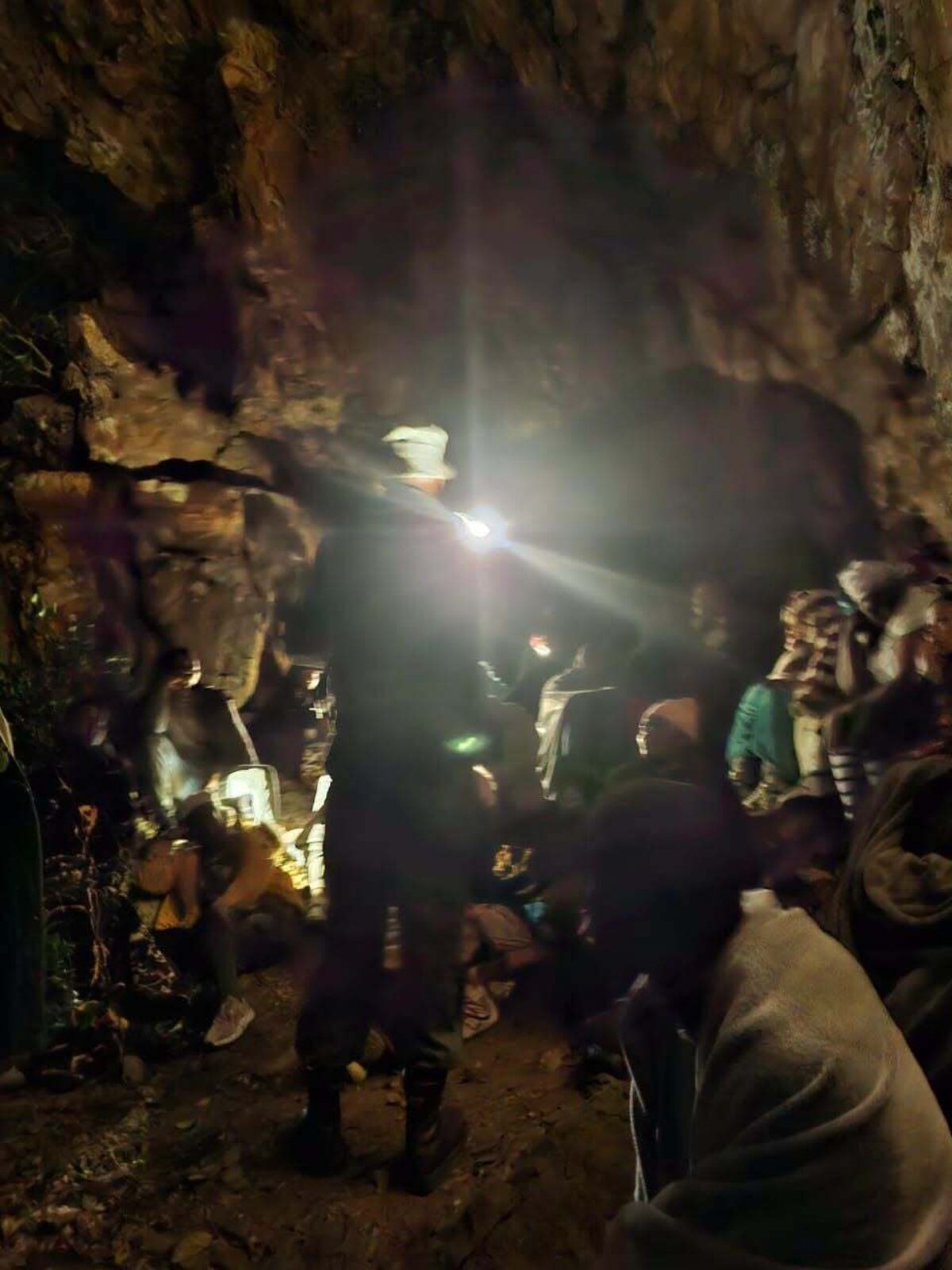
A suspected overnight gathering in Table Mountain National Park has again raised concerns about cultural and religious practices in the park and the environmental and fire-safety risks they pose.
Friends of Table Mountain (FOTM), a non-profit organisation advocating for the sustainable use of the park, posted a trail runner’s report on social media on Sunday 25 October that “probably like 400+” people, as part of religious groups, were on the Muizenberg mountains the previous evening. The runner described seeing people in caves and rock overhangs between Baileys and St James Peak, with more still ascending, and called the scene unprecedented.
FOTM said illegal overnighting was a serious concern because it led to unlawful camp fires, sanitation issues and vegetation degradation as people left the paths. SANParks responded to the post that rangers had escorted the individuals off the mountain during an overnight operation and were informed of the regulations regarding overnighting in the park.
ALSO READ: ‘Religious group’ linked to Muizenberg fire that scorched 28 Hectares
SANParks: ‘Numbers not consistent with report’
JP Louw, SANParks head of communications and spokesperson, said SANParks took illegal overnighting seriously but could not substantiate reports that more than 400 people had camped in the Muizenberg mountains.
“Following a complaint, rangers patrolled from Trappieskop to Steenberg Plateau, escorted groups out and prevented others from entering. Rangers did not observe numbers consistent with the reported figure,” Louw said.
He said regular patrols address illegal overnighting, fires, littering and vegetation damage, with enforcement including warnings, removal and fines.
Louw said engagements with cultural and religious groups through research and workshops complement enforcement. Respect for these practices requires compliance with park regulations and protection of the environment. Permits for these activities do not authorise overnight stays or fires, he said.
On safety, Louw said recorded robberies and attempted robberies declined by approximately 90% in January to June 2026 compared with the same period in 2025. By November, TMNP will have six operational K9 teams, with further expansion and surveillance technology planned.
SANParks is also developing an integrated safety strategy with the City of Cape Town and community partners, prioritising intelligence-led deployment, visible policing and coordinated operations.
ALSO READ: Thieving trio caught in e-hailing getaway car near Table Mountain
FOTM: ‘A real and regular problem’
Andy Davies, chairperson of FOTM, said the organisation did not always receive official reports but its members regularly saw people moving up the mountain to camp illegally. “We also see the litter, vegetation destruction, and old fireplaces where people have camped. It is a real and regular problem.”
FOTM has employed someone to do litter clean-ups at Signal Hill, Tafelberg Road and Newlands Forest, where significant litter piles have been found due to homeless people sleeping there, Davies said.
On cultural access, he said FOTM respects the right of people to practise their religious and cultural beliefs and ceremonies, “but this must be done in a controlled manner to prevent litter, fires and damage to the environment and respect other mountain users.”
Davies said the issue is less about enforcement and more about SANParks not having the resources to police the problem. FOTM has for many years lobbied for more rangers and better use of technology such as cameras at entrances and drones to check inaccessible areas at night, he said.
Comments reveal range of views
Several commenters on social media shared similar concerns, citing litter left by groups and unauthorised fires. Some recalled fires near Boyes Drive and Skeleton Gorge last year attributed to religious groups and overnight camping.
ALSO READ: Hidden dangers remain after Table Mountain fire contained, says SANparks
Others questioned whether SANParks enforced its rules consistently, suggesting event organisers who followed the permit process faced more scrutiny than groups that did not apply. One commenter noted the gatherings were cultural beliefs and ceremonies rather than religious practices. Another saw no harm, but was countered by commenters listing fires, litter and sanitation as obvious risks.
TBOM withdraws from Table Mountain
Take Back Our Mountains (TBOM), a non-profit company running clean-ups, safety patrols and educational hikes on the mountain since 2018, has withdrawn all its activities from Table Mountain following a recent SANParks fine for a guided hike classified as an event.
Taahir Osman, founder and director of TBOM, said TBOM’s direct communication channel with TMNP, through which it shares alerts and reports incidents, does not always result in immediate deployment, though matters have on occasion been attended to promptly.
“We understand the challenges SANParks faces, particularly with limited staffing, and sincerely hope this will improve, especially with the tourist season fast approaching.
“While the collaboration with the City and SAPS is acknowledged and appreciated, we strongly believe that Table Mountain requires more dedicated visitor safety rangers. Rangers have specialised knowledge of the mountain, its trails, terrain and the legislation governing a national park. Deploying other law enforcement resources without appropriate outdoor equipment can create additional safety risks.”
A combination of perimeter fencing and strategically placed cameras monitored 24 hours a day could have prevented or at least alerted authorities to illegal gatherings, Osman said. “Table Mountain requires a multi-layered security strategy if we are serious about achieving meaningful and sustainable results.”
With fire season approaching, he said SANParks should consistently monitor and police areas known to attract large gatherings, including locations frequently occupied by vagrants and church groups. Additional personnel are needed before challenges escalate.
Opportunities
Osman said TBOM supports cultural and heritage activities and recognises their importance, but these must take place within a controlled and regulated environment. “One of the major challenges is that many groups are not adequately informed about their rights, the permission required or the regulations governing the national park. The permit application process needs to be more accessible, with clearly designated areas, proper guidance and educational programmes.”
The decision to withdraw from Table Mountain will have a direct impact on community members who have benefited from stipends through marshalling, trail monitoring and cleaning initiatives, he said.
“A national park should not only be about conservation and law enforcement; it should also create opportunities for responsible community participation, education, skills development and economic upliftment.”
The situation raises serious questions about how SANParks values its stakeholders and community partners. There appears to be little opportunity for meaningful growth, collaboration or community upliftment within the current permit system, he said.
“Protecting Table Mountain and uplifting the communities surrounding it should go hand in hand. We need a system that encourages responsible partnerships, rather than one that creates barriers for organisations genuinely trying to make a positive contribution.”
Fire season
TMNP’s high fire season runs from November to May. No events are allowed after dark anywhere in the park, and no person may stay overnight without the management authority’s permission.
Suspected unauthorised gatherings, camping and fires on the mountain can be reported to the SANParks TMNP emergency number on 086 110 6417.
ALSO READ: Lost on Table Mountain for 11 days: the search that brought Pepper home




You must be logged in to post a comment.