
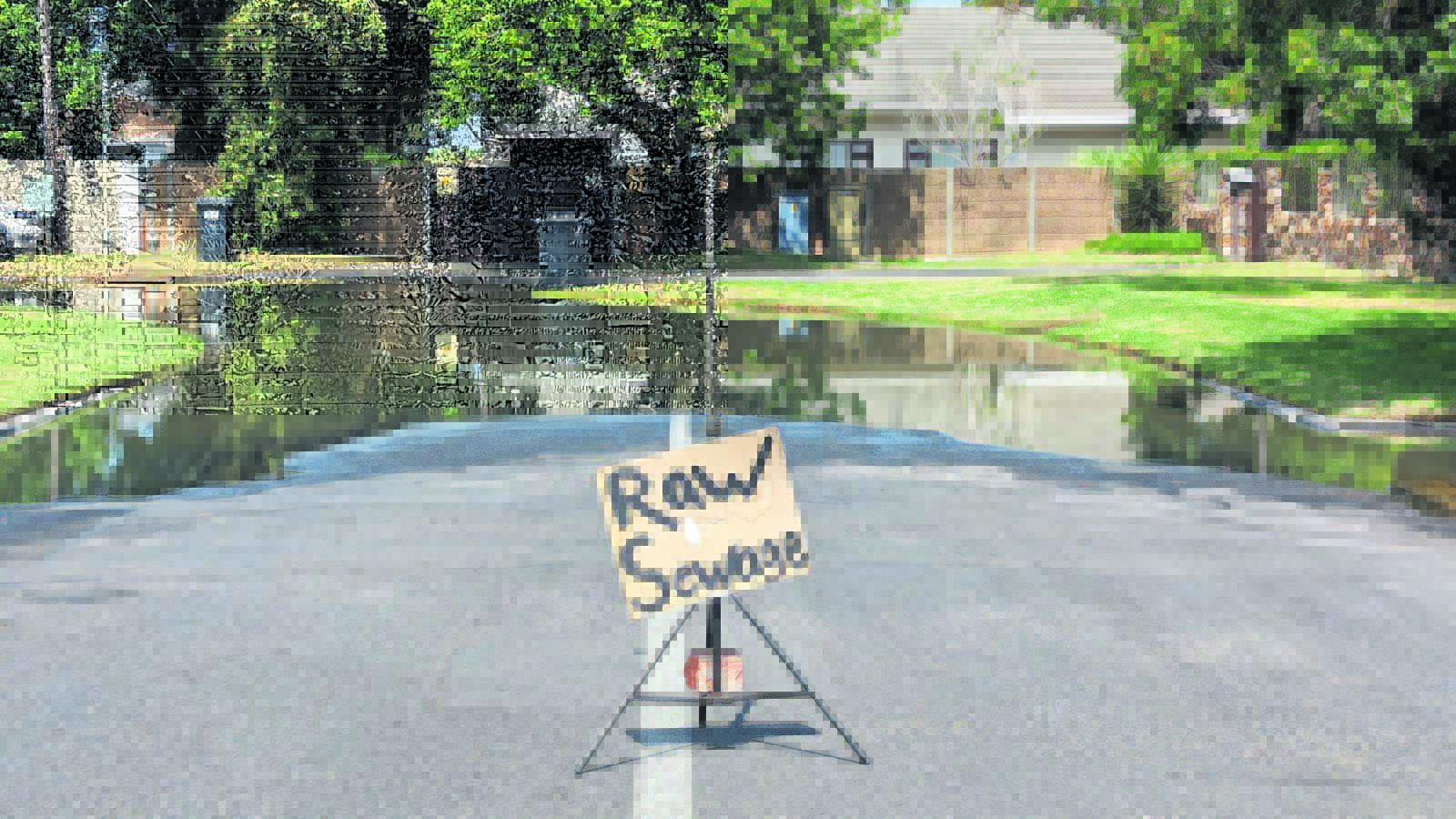
A nauseating sewage stench has blanketed the rural community of Joostenbergvlakte on the fringe of Cape Town since 2017.
Bordering Bloekombos township, raw sewage from upstream has contaminated the aquifer leaving residents in fear of their health and that of their prized horses.
According to the Joostenbergvlakte Community Forum (JCF) it has been established that the raw sewage flows from the township into the Sandringham retention dam from where it overflows into the N1 canal, underneath the highway and into another canal into a second retention dam next to the railway line between Joostenbergvlakte and Kraaifontein.
From here the sewage runs into the municipal canals to Kraaifontein.
“It is the most horrible stench. Except for the smell, we were also concerned that our groundwater will become toxic. Joostenbergvlakte is situated on a primary aquifer that is connected with the Malmesbury, Cape Town and Philippi aquifers. We also have wetlands and almost all the properties have boreholes, some even dams,” says Karin van Zyl from the JCF.
Van Zyl says the water table in the area is very high.
“Most of our properties have strong water, even during the drought. We also have vegetable farmlands surrounding the small holdings. It will be a disaster if this sewage contaminates our boreholes. There are ducks swimming in the contaminated wetland alongside Joostenbergvlakte, an issue that is also under investigation, as it is possible that the ducks can transfer the contamination as they also swim in our dams. Outbreaks of bilharzia, cholera and intestinal diseases can be disastrous. Most of our properties have horses. One horse drinks up to 40 litres of water per day from boreholes.”
Even though attempts have been made through the years to address this issue, the stench repeatedly reoccurs.
According to Dr Barbara Gale, an environmental consultant to the Joostenberg Community Forum, and a specialist in freshwater ecology, the agricultural community is reliant on good quality water from the aquifer on which it is located, for irrigation and, in many cases, domestic needs.
She says the contaminated water has also run into the wetlands from where it ciphers into the ground water.
“Fortunately, wetlands do provide a degree of protection as it helps to filter the water,” she says.
Residents first became aware of the stench in September 2017 coming from the stormwater canal running along Joostenbergvlakte on the N1. In 2017 sewage contamination was confirmed when residents took water samples from the canal and retention dam for tests at ARC Elsenberg Research Laboratory.
Tests indicated the E.coli count in the water samples to be 3 000 times over the legal limit. “The results were sent to the City of Cape Town but nothing much happened as the City made it off as being caused by rotten plant material in the water and not sewage,” says Van Zyl.
“The situation grew worse and during January 2018 we took another three samples to BemLab in Somerset West. The report showed that the coliform, E.coli and bacterial percentages are at a toxic level and should be dealt with urgently.”
The results again showed E-Coli counts of bigger than 2420, whereas the standard count for E.coli should be less than 1.
“Originating from the gut of humans and animals, E. coli is a group of bacteria that can cause infections in your gut, urinary tract, and other parts of your body. Some strains can make you sick with watery diarrhoea, vomiting and a fever,” says Gale.
At the time previous Ward Councillor Ruan Beneke called a site meeting with all the relevant officials. “It was found that there was a sewage valve from Bloekombos informal settlement that was open. One of the role players said it was ‘funny’ that we only get the stench now, because that valve has been open for a while indicating that this could have gone on for many years. Remedies were discussed and it was decided that the valve will be closed. Soon everything was wonderful again, but unfortunately, it was short lived, and the stench repeatedly reoccurred since then,” says van Zyl. The issue was again reported again in 2023, and residents are awaiting answers from the authorities. “Intervention is needed now before this turns into a disaster. It has been going on for years and is getting worse. It has an adverse affect on everyone who lives and works in the area.”
TygerBurger last week confidentially established that a high-profile meeting was held by City officials to discuss the matter, but in an official media response the City declined to comment and referred the newspaper to the Western Cape Government’s department of environmental affairs.