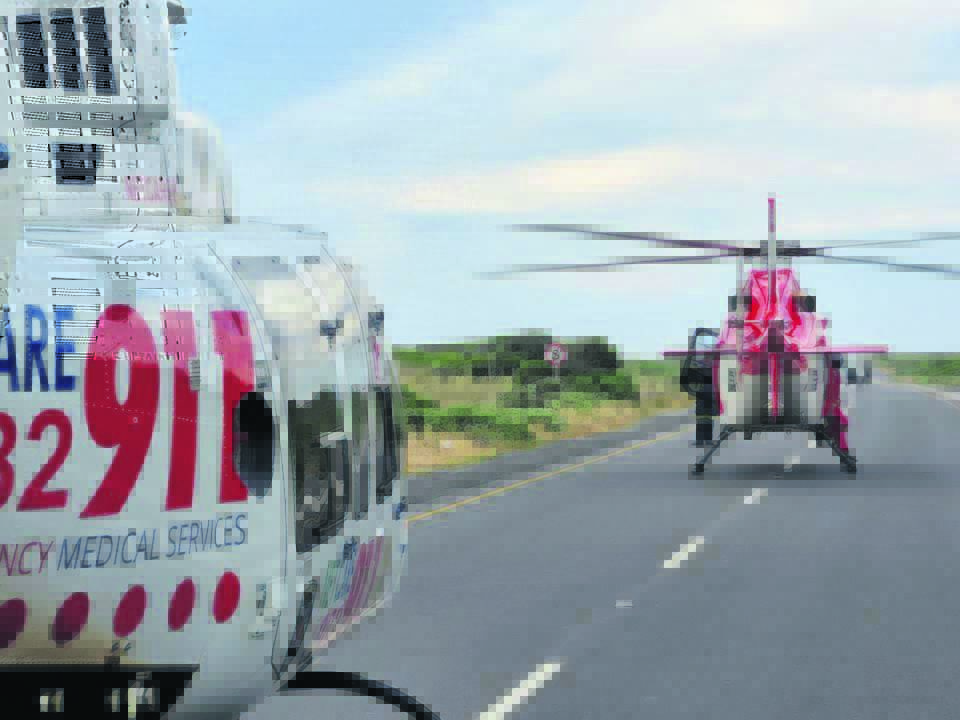


With a speed limit as low as 70 km/h on Otto du Plessis Drive between Seaside Village and Melkbosstrand, road safety in this vicinity remains a concern.
Numerous accidents occurred on this stretch of road in recent months, with residents pointing the finger at behavioural aspects which include speeding, driver error, driving under the influence and reckless driving.
Just last month two vehicles were involved in a head-on collision leaving two people seriously injured.
One driver was arrested for driving under the influence.
The City’s traffic services spokesperson Kevin Jacobs says between 1 September and 29 November speed enforcement was done on 42 occasions, resulting in at least 7 330 offences.
Among the highest speeds recorded was 131 km/h.
“The City’s traffic service conducts regular speed enforcement along Otto du Plessis Drive,” Jacobs says.
Seeking solutions
Ward councillor Paul Swart says Otto du Plessis Road is a provincial road and they are involving provincial government to seek solutions.
Swart and councillor Nicky Rheeder recently had a site meeting with the Mayco member for urban mobility, Rob Quintas, on Otto du Plessis Road with some officials.
“The topic was the need to urgently look at means of easing traffic flow along these roads, but in particular the totally reckless manner in which some road ‘hogs’ use our roads with complete disregard for fellow users and endangering the safety of all,” Swart says.
He told TygerBurger that they are looking at means of making the roads safer, albeit with traffic enforcement, speed cameras, traffic calming devices or other innovative methods.
“These are all on the table,” he says.
He allocated a substantial portion of his Ward 23 allocation to traffic services for overtime payment and ward-specific traffic operations.
Driver behaviour
After enquiring more information from the City Quintas says driver behaviour remains an issue over which the motorist has direct control “and it is neither sustainable nor practically attainable to ‘engineer away’ all bad driver behaviour. The road in question is a higher order mobility route which would not qualify for traffic calming in terms of the Traffic Calming Policy,” he told TygerBurger.
Many motorists may argue that the speed limit of 70 km/h is too low, however Quintas says this is a scenic mobility route with a shared cycle and pedestrian lane in very close proximity to the travelled way.
“Besides the risk to the vulnerable road users, the delineator kerb which separates the non-motorised and vehicular modes poses an overturning risk if collided with by vehicles travelling in excess of 70 km/h. This was one of the key factors that influenced the capping of the speed limit at 70 km/h,” he says.
Swart says they hope in the next financial year they will be able to create general awareness around road safety.
“What is however needed is a serious culture change among road users, as it will always be impossible to police all our streets 24/7,” he says.
He says that the moment speed humps are installed in one street, these road users immediately seek alternative roads to speed along.
“We also trust that with increased budgets for traffic enforcement, more visibility will assist this much needed change in driving behaviour,” Swart says.