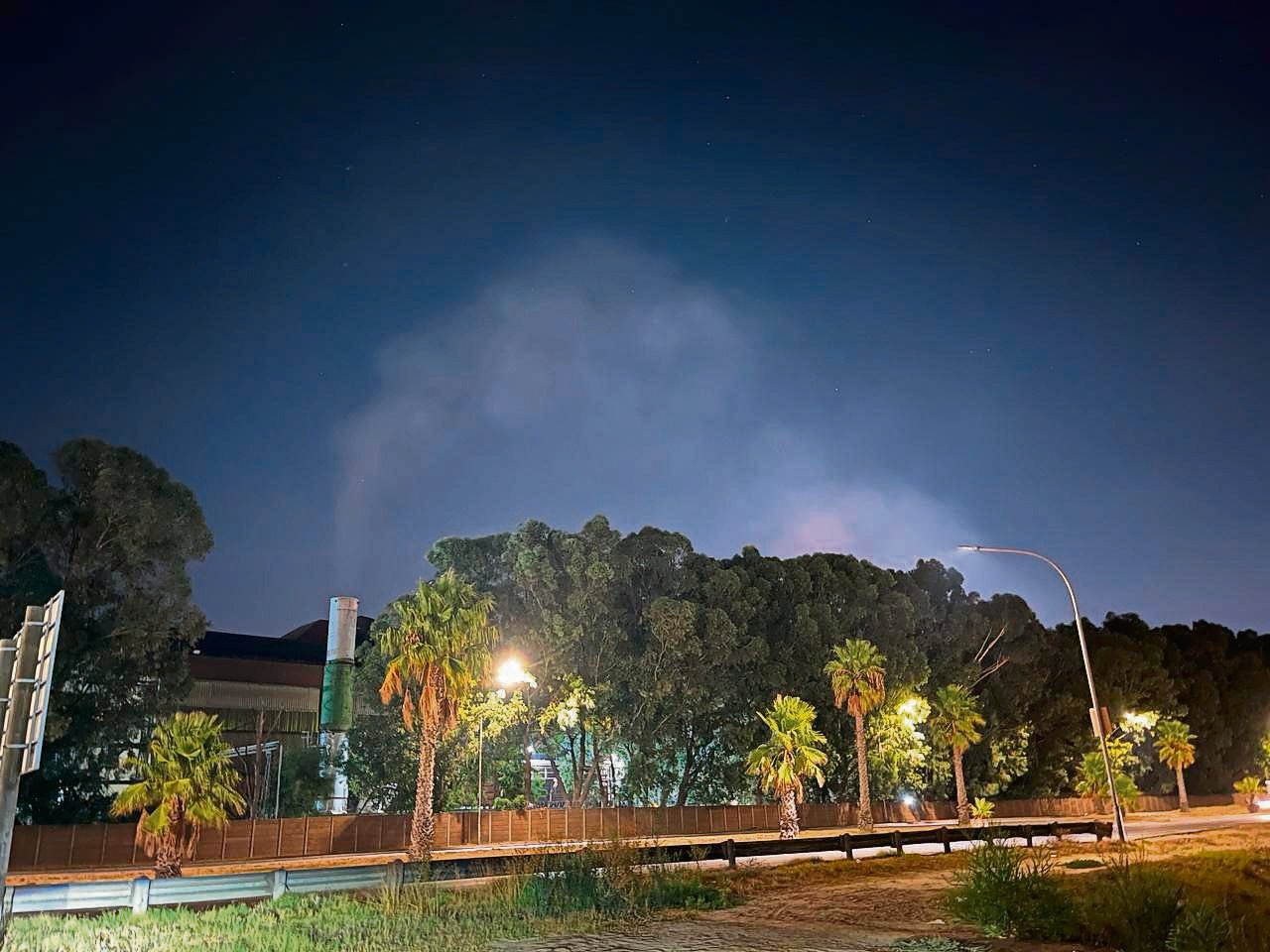


After being shut for two years local steel factory Cisco is operational again.
Albeit under new ownership, mistrust in the community runs deep.
From 2017 to 2019 whilst operating under Turkish-owned company DHT Holding Africa more than 400 complaints were lodged against the facility.
Residents from areas such as Vredelust and Highbury complained about noise and air pollution having negative effects on their health and wellbeing whilst the plant operated on a provisional atmospheric emission licence (PAEL). To residents’ dismay a full licence (AEL) was granted in September 2019.
The factory, originally opened in 1967 closed in 2010 after which new residential areas sprung up in the vicinity.
DHT who received a substantial loan from state-owned Industrial Development Corporation (IDC) resumed operations in October 2017.
In September 2019, shortly after the AEL was granted it stopped again. City Press reported (in 2020) about an investigation into DHT as “the company was unable to repay the IDC loan in line with obligations.”
Prior to this, in April 2019 TygerBurger reported on community meetings held with City officials, one with then mayor Dan Plato.
Discussions pointed to the lack of a buffer zone between the plant and residential areas being at the root of the problem.
Mike Tyszowiecki, resident and environmental stakeholder forum representative, says national dust control regulations, fall short as any excess by mass is determined as “nuisance’’ only.
“There is currently no mention made for dust fall samples as collected to be analysed for elemental content which could determine harm.”
The problem, he says, is that there seems to be no environmental law that provide legal limits for the elemental content of toxic or hazardous dusts which fall out in receiving residential areas. “My common sense tells me that it’s not supposed to happen?”
Tyszowiecki says while operating under a revised PAEL, the City’s air quality officer (AQO) requested Cisco to install dust fallout collection buckets around their perimeter fence.
“They were instructed to have the contents of any dust so collected analysed for elemental content at an approved facility. The company did install these buckets and they did report at stakeholder forums, but they only reported values for dust collected by mass as mg/m2/day as per national dust regulations. At these forums, they never reported on the elemental content.”
Tyszowiecki says he then applied in terms of the Promotion of Access to Information Act (PAIA) for access to these dust content elemental analysis certificates but was told there were no such records or requests.
“The community has made our independent community dust buckets content elemental analysis available to Cisco, the City AQO and the department of environmental affairs and development planning (DEADP). I requested – in a stakeholder forum meeting held on 22 August 2019 – that either Cisco or the City identify the source of the heavy metals as found in the receiving community dust collection buckets and soil samples taken outside the facility.”
Tyszowiecki says he received no response or any further communication from Cisco, DEADP or the air quality officer in this regard.
“My presentation was not minuted either – Why not?”
New ownership
In November last year the facility was taken over by the Kamal Group of Tanzania.
When some operations started up at the facility again in February Vredelust resident Earl Polman noticed residue collecting in his pool. He has made a request on behalf of residents for a community meeting with the City, but says they are awaiting feedback from the mayor’s office.
An Environmental Stakeholder Forum meeting during which the new owners and management were introduced was held at Cisco last week.
Ward councillor, Wouter de Vos, says the impression he got is that the new owner wants to start from a clean slate – to operate within regulations and do things correctly.
De Vos says the assurance was also given that certain irregularities “left behind” by the previous management are being resolved.
Tyszowiecki echoes De Vos’ version of the meeting about the new owner “wanting to do things better”, but he remains sceptical. “If this problem (the lack of a buffer zone) could have been fixed, it would have been fixed long ago.”
Tyszowiecki says the presentation at the meeting referred to fume plants, which he claims does not exist.
“When they refer to fume plants, they put the public under false pretence.”
Tyszowiecki has since made an email request to do a walk around the facility as he says, “they said they have nothing to hide.” De Vos is aware of Tyszowiecki’s request – “I asked if I could also join the walk around.”
Tyszowiecki says the AEL also mentions “Fume Plants 1, 2 and 3”.
He also claims, “the buffer zone exclusion seemingly got overruled by using listed activity 4.7, which would be true if the primary input was raw iron ore from Sishen, instead of 4.21 which deals with mixtures of scrap metal material – because then stack monitoring includes for heavy metals.”
Research study
A recent research study funded by the South African Medical Research Council (published in April, done November 2020) looked at the levels of heavy metals in soil samples at 34 preschools within a 2,5km radius of the industrial belt in Kuils River. The aim was to identify contamination levels and possible sources of heavy metals and evaluate the health risk.
It states, the “study provides evidence of the need for action, including the institution of mandatory buffer zones between pollutant-generating activities and human settlements.”
Although heavy metal concentrations in soil samples were below South African reference levels, at certain preschools, arsenic (As) and zinc (Zn) concentrations were found to exceed the more protective Canadian soil reference values.
It notes “the levels of heavy metals from the preschools in the study were elevated relative to findings from certain studies conducted in urban settings situated in low to middle socio-economic status communities, with a consequent associated risk for children via the soil–hand–mouth pathway.”
The City’s Mayco member for community services and health, Patricia van der Ross, says City Health is studying the findings of the research and has scheduled an engagement with the lead researcher to unpack the study in more detail to obtain a better understanding of the findings.
“The study does however suggest that the sources of the heavy metals are from industry, motor vehicle emissions and natural origins.”
Van der Ross says historic dust fall monitoring results recorded both on the facility’s fence line and from community sampling, “has shown that the dust fall associated directly with Cisco, is well within the legally prescribed industrial dust fall rates and the stricter non-industrial dust fall rate (National Dust Control Regulations), which is indicative that the facility’s dust generation, is well managed.”
She says in terms of heavy metal emissions, the City required Cisco to appoint independent specialists to measure the concentration of heavy metals being discharged through the stacks.
“A dispersion modelling study was undertaken, whereby the results of these tests were then modelled to determine ground level atmospheric concentrations of these pollutants. The results were compared to internationally accepted health exposure guideline levels. The study found that all measured pollutants were below levels that could cause health risks to sensitive populations.”
Van der Ross confirms the City is the competent authority for the Atmospheric Emission Licence (AEL). The licence issued to Cisco in 2019, remains valid and expires on 11 September 2024.
“We confirm that as per the correspondence received by the City, the Kamal Group has entered into a share purchase agreement and has purchased the shareholding in Cisco. Since this was a share sale and not an asset sale, Cisco with its own legal personality will continue to exist and meet its contractual and legal obligations.”
TygerBurger asked if the AEL was transferred to the new owners as the Air Quality Act (AQA) stipulate specific terms (Section 44) to be followed which some residents pointed out did not happen.
“Cisco as a juristic person is still the owner of the activity for which the AEL has been issued and as a result Section 44 does not find application,” Van der Ross says.
“The City has previously initiated criminal prosecutions against Cisco for noise violations. While these prosecutions were not successful, Cisco has significantly reduced the noise levels on site.
Recent noise readings taken in the community have indicated that noise levels are below ‘disturbing noise’ levels as defined in the Western Cape Noise Control Regulations.”
Van der Ross says the City will continue to monitor Cisco’s operations closely, to ensure compliance with the AEL.