
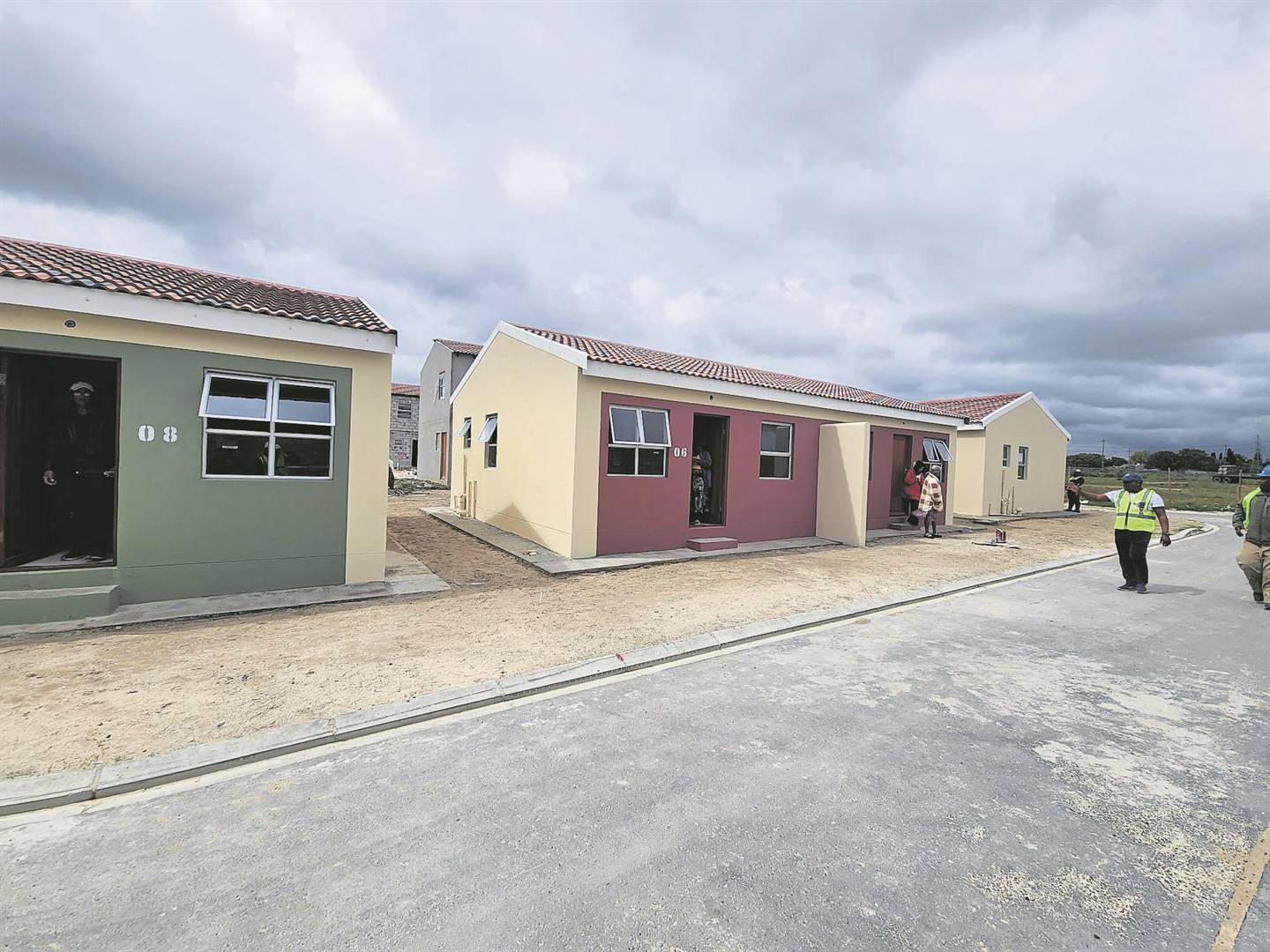
The first 10 houses of the Maroela South Housing Project in Bloekombos were handed over to beneficiaries, but in the face of the current housing crisis Subcouncil 2 representatives are concerned about vandalism and illegal invasion.
The housing project, surrounded by Kleinbegin and Wallacedene, had been in the offing for several years and is expected to be completed in June 2025, if all goes to plan, according to Carl Pophaim, Mayco Member for Human Settlements.
“A contractor has been appointed for the construction of the first 73 Breaking New Ground (BNG) houses and the units are at various stages of completion,” he said.
The first 10 units were handed over on 18 September, after which monthly handovers were expected to take place, subject to no delays.
The project involves the construction of 395 state-subsidised BNG homes and 175 Gap housing units for those who earn between R3 500 and R22 000 a month.
Vandalism
In a subcouncil meeting following the handover City councillor Grant Twigg urged City officials involved in the project not to allow any of the completed houses to stand vacant for fear of invasion.
He also asked ANC ward councillor Siyabonga Duka to urge the community not to burn houses down due to unhappiness about electricity and plumbing issues that had not been rectified as yet.
At the time of the first handover Eskom had not yet connected the houses. As per Eskom policy, 80% of the project must be completed before connection takes place.
The City is currently coughing up R200 000 per month for security patrols on the site, according to Shaun Moodley of the City’s housing department.
Twigg added that this process being hampered by illegal invasions or vandalism cannot be allowed.
Beneficiary records lost
To complicate matters further it was revealed at the meeting that beneficiary records going back to 2005 had gone missing from the City’s housing database, among it a group of residents from local settlement Mooi Trap, who were promised houses 20 years ago.
The beneficiary administration and subsidy application process started in April this year, and so far more than 800 names from the housing database are being considered for the project, according to Moodley.
The project will target 80% of its beneficiaries within the area and 20% from outside.
Moodley said SMSes were sent to community members who attended sessions at the Northdene Community Hall, which resulted in 281 applications being submitted to the City’s subsidy office and provincial government’s Department of Human Settlements.
First come first serve
He said beneficiaries must make sure their contact details are updated on the database as it is proving difficult to get hold of beneficiaries listed.
Moodley said it was at this stage a matter of first come, first serve, a contention that was fiercely opposed by subcouncil representatives.
Councillor Siseko Mbandezi Mabanda said that these people, most of them elderly that registered in 2004, must get houses first.
“The elderly must be prioritised and it is the City’s policy that those people who registered first must get houses first,” he said.
“These people will have registration cards as proof. They simply must be found.”
“We as the City are morally and ethically bound by this promise,” said Subcouncil chair Marian Nieuwoudt.
“We must find them.”
Keep contact details up to date
Pophaim stressed the importance of applicants to keep their details, including their address and cellphone number, up to date so that the City can contact them when they qualify for a housing opportunity.
“They should also ensure their identity number, marital status, household income and whether someone in their household suffers from a permanent disability remains accurate,” he said.
According to Pophaim, beneficiaries of this project, as is the case with all projects, will be selected according to the City’s Housing Allocation Policy and Housing Needs Register to ensure housing opportunities are made available in a fair and transparent manner, this “to prevent queue jumping and to benefit those who qualify for housing as per the South African legislation.”