

The roots of crime are multi-faceted and require a multi-pronged approach.
This was the gist of a R9 million safety plan presentation that the Mitchells Plain Safety and Development Forum tabled to Subcouncil 17.
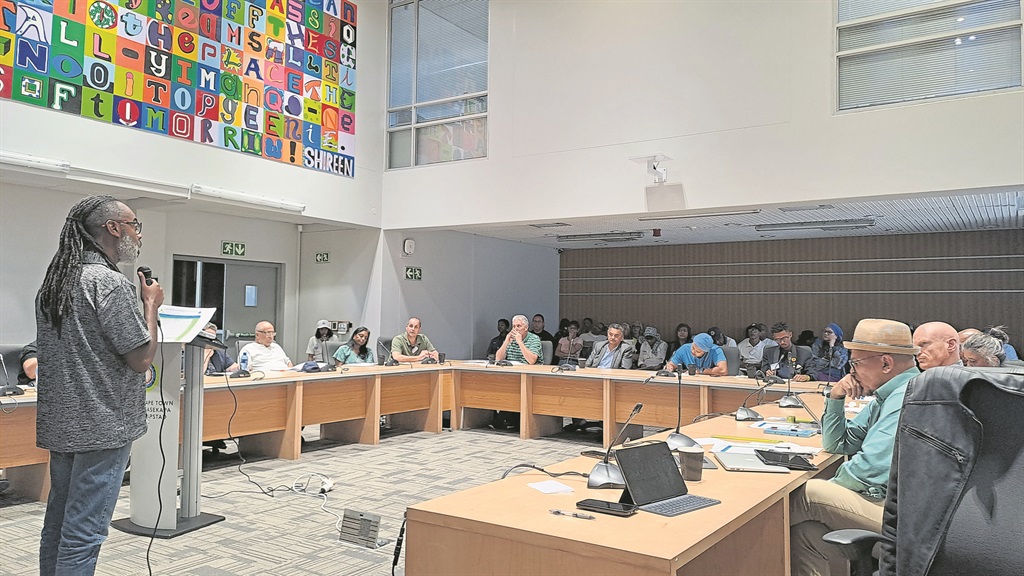
Forum secretary Oleander Oakes presented the plan to the councillors on Monday 16 March. She told the meeting that the forum had been formed following months of community meetings with police, the community police forums, the City and the province.
“There’s been endless issues raised within our safety structures and on the community front with regards to safety and security within Mitchell’s Plain,” Oakes said.
The plan has five streams: violence prevention, secure communities, effective policing, job opportunities, and leadership and skills training.
Facets of plan
The plan is backed by R9 million in provincial funding and designed to be community-led.
It pulls together the efforts of groups, projects and faith-based organisations that are already active in the five streams in a coordinated effort.
Oakes said: “Our role is to provide strategic direction and oversight of safety and development interventions in communities as I’ve alluded to. It’s to strengthen collaboration between government departments, Saps, the City of Cape Town District, local municipalities, civil society organisations and businesses. It’s to facilitate and coordinate integrated planning, resource pooling and joint implementation of interventions. As I’ve noted, it’s a whole of government approach. It’s Wosa — a whole of society approach. Everyone is on board, especially within the forum, we have a variety of different departmental cohesion happening at the present moment.”
ALSO READ: Youth safety headlines two gatherings in two days
Safe zones
The plan will establish safe zones in five identified crime hotspots within the suburbs of Montrose Park, Beacon Valley, Hyde Park, Rocklands, and Strandfontein.
Oakes said the areas were selected based on crime analysis data.
“We’ve identified what the issues are within the communities through community engagements, and now we want to ensure that we have a whole approach to start addressing these socio-economic issues,” Oakes said.
The funded programmes include holiday programmes for youth, skills development initiatives, job placements, business development, and police station improvements.
Community-driven approach
Oakes emphasised that the initiative emerged from community safety structures and represents a community-led project rather than a top-down government intervention.
The funding will also support youth social media influence programmes, family wellness hubs, and street coach programmes, with partnerships being finalised with organisations including Cape BPO and various skills training centres.
Oversight concerns
Some councillors raised questions about budget allocation, particularly regarding funds designated for painting police stations and improving statement-taking processes—functions typically handled by Saps.
The sub-council chairperson acknowledged the concerns but noted that if the initiatives help address identified gaps, they would receive support in principle.
“We cannot choose one over the other. If a third organisation comes and they say this is our effort to combat crime, we support every effort to combat crime,” he said.
The forum, now registered as a non-profit organisation, has received formal endorsement from the provincial government and reported to stakeholders on 3 March.
The initiative coincides with Mitchell’s Plain’s 50th anniversary celebrations this year, with organisers hoping to launch the holiday programmes as part of the commemorations.
Executive structure
The forum is led by chairperson AB Isaacs, with Bishop Mark Bloomstein as deputy chairperson. Work stream leaders have been appointed for each focus area, with community representatives heading violence prevention, secure communities, and economic opportunities programmes. A community workshop is planned for the coming weeks to provide further details about implementation timelines and community involvement opportunities.
Support from subcouncil
Oakes said that she was presenting to the meeting to request subcouncil’s support for the plan.
“The reason we are here today is to reach out to the councillors ultimately,” she said, adding that several of the councillors have taken part in the meetings.
“We are reaching out because we want to ensure that whatever is put forward is a whole of Mitchells Plain approach and not excluding anyone,” Oakes said.
Subcouncil chair, Elton Jansen, replied saying that in 2024 he had been part of a gang dialogue in the council chambers in Lentegeur and that elements of what had been discussed in that meeting had been made part of the provincial plan.
“In principle we support every effort to combat crime. I think it’s important that we understand that we cannot choose one over the other. No one organisation holds that autonomy or that exclusivity. We are the crime fighters. And, so we do as a subcouncil, in principle, support your efforts,” he said.
Concerns around how the spending of the funding would be monitored were also raised.
Westridge and Portland councillor, Ashley Potts, said: “They’re always saying that you should hold the politicians accountable and now on the other side of the coin, we would like to say money has been made available, so we need to hold them accountable and make this communication available to the community as well.”
Jansen agreed, adding: “Whenever there’s money, it’s always an issue. But there’s enough oversight to make sure that the intended purpose for the money is spent to combat the crime and we support that.”



You must be logged in to post a comment.