
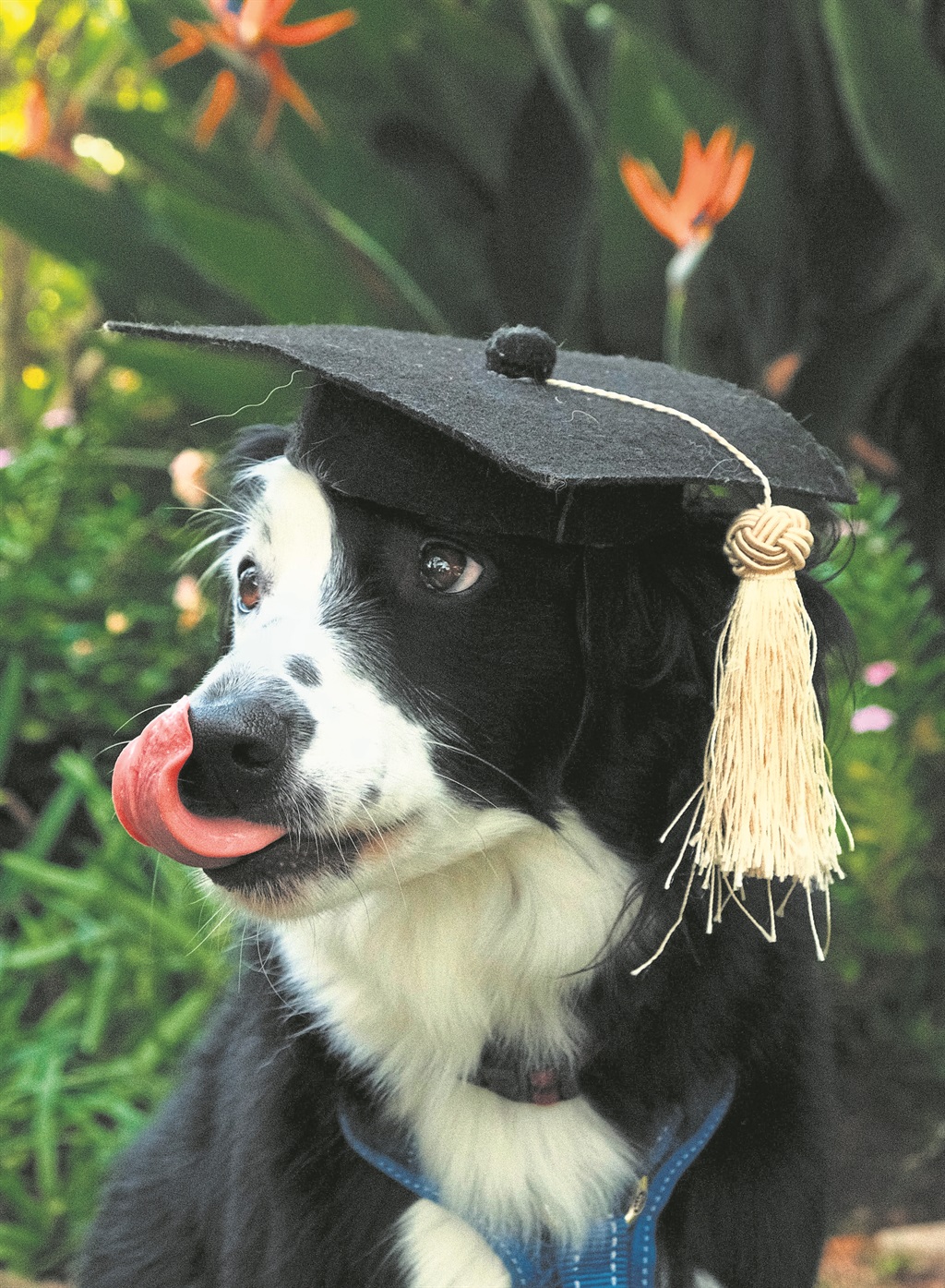
A deaf border collie called Purdy is the latest addition in the animal-assisted therapy (AAT) progamme at Durbanville Children’s Home.
A young girl at the home, who struggled with behaviour challenges at school, finally opened up when social worker Helen Williams used Purdy to communicate with her.
“Purdy has been taught to whisper things in my ear when I hold my hand up to my ear. The girl was talking as if nothing was wrong and I asked her if I could ask Purdy what she thinks. I gave Purdy, who at that time was lying on the girl’s lap, the signal to ‘whisper’ and she came over. I told the girl what Purdy had ‘said’ and it really opened up the discussion and allowed us to get to the root of the issue, while the girl lay and hugged Purdy in her safe space,” she says.
Lower stress levels
According to Williams, AAT offers a range of benefits for both mental and physical health.
“Engaging with animals can lower stress levels by promoting the release of relaxation hormones like serotonin, prolactin and oxytocin. Animals provide comfort and companionship which helps alleviate loneliness and depression. Spending time with animals boosts overall mood and emotional wellbeing.
“We have also noticed the benefit our therapy pets have in helping to improve social interactions and social skills, especially in our kids with anxiety – the unconditional love that they give to our traumatised children; the empathy they teach them and the acceptance given. The benefits are endless,” she says.
Williams started the animal-assisted therapy progamme at the home in 2017 with two bunnies, Orea and Smudge, which unfortunately both passed away this year due to old age.
“I started with bunnies as they were non-threatening to our children, of which some were afraid of dogs due to past trauma,” she explains.
Walk-in cage
The project has expanded since then and in 2020 a large walk-in cage was erected in which the children could sit with the bunnies, and later also guinea pig and chickens, and engage with the animals.
Currently the programme consists of five bunnies – called Snowy, Pixel, Biscuit, Ore and Fluffy, a guinea pig called Marshmallow, five chickens and roosters, two budgies called Skye and Storm, and a tank with fish.
“The fish and budgies are in our therapy unit and provide a calming presence on entering. As a social worker and an animal lover I have always known the benefits of human animal interactions.
“I attended short training courses in animal assisted interventions, got exposure to various eight-week equine therapy programmes and then it was a matter of time for the dream to become a reality,” Williams says.
“The benefits of being able to engage and cuddle with the bunnies – to feed and nurture them, highlighted that this was something our children would really benefit from.
“It was always my dream to have a therapy dog, but it needed to be the right time. We were very excited to be approached by Honey’s Garden Medical Alert Dogs SA regarding Purdy,” she says.
Purdy was adopted at the beginning of this year and achieved her KUSA CGC bronze and silver awards. Williams and Purdy qualified in May this year as a facility therapy dog team – the first team to qualify as such through Honey’s Garden Medical Alert Dogs SA.
Rescue dog
“The added benefit of Purdy’s story is that not only was she a rescue dog from a shelter, whilst undergoing training she was in fostercare and now adopted – terms our children identify with.
“As one child told Purdy, ‘she knows what she has been through as an animal shelter is like a children’s home for dogs and she, Purdy, doesn’t need to worry, she is safe now’.
“In addition to this, Purdy is also deaf, which has brought a lot of empathy from our children,” Williams says.
“Purdy walks around the unit and engages with the other social workers and nurse. She assists even when children come up to see the nurse and gives the children hugs to assure them it’s okay.
“The children absolutely love the animals. Some children are drawn to the bunnies and love to come and feed them, to sit in the cage and stroke them.
“When a 11-year-old boy arrived at the home, he was very shut down and never spoke to anyone after severe trauma, but started to open up and talk whilst ‘helping me’ to feed the bunnies and guinea pig. For him it became his safe space.
“Others really love Purdy and run to the gate after school to come and greet her. She always stands at the gate and wags her tail when she sees them. Purdy also loves to play ball with them in an enclosed garden and go for leashed walks on the bigger grounds with the children.
“Other children love to talk to Storm and Skye, the budgies, or sit and watch the fish swim up and down whilst waiting to see the other social workers or the nurse,” she says.
Heartbreaking stories
“Another child, who was a new admission was struggling to adapt to being in the children’s home. I told her Purdy’s story and suddenly she started crying. She was missing her dog at home as her dog was always there for her in the tough times.
“They would run away and hide when her father hit her mother. She regularly comes up for her Purdy cuddles and she is currently in therapy with Purdy and I,” she says.
“The effectiveness of the programme lies in the lives that have been changed, the broken and bruised children who have experienced trauma like most adults never have, who hug and hold our animals whilst telling their heartbreaking stories,” Williams says.
Needs financial support
However, the home needs financial support or donations to feed and take care of the animals.
“Purdy is on Hills dog food and requires grooming and vet check-ups. We do have a vegetable garden on the grounds that provides vegetables to the bunnies, but we need bunny pellets, straw, chicken feed and so forth.
“Due to the benefits we have seen from this programme, we have recently created a new full-time therapy post. Any financial contribution towards this new position would also be much appreciated,” she says.