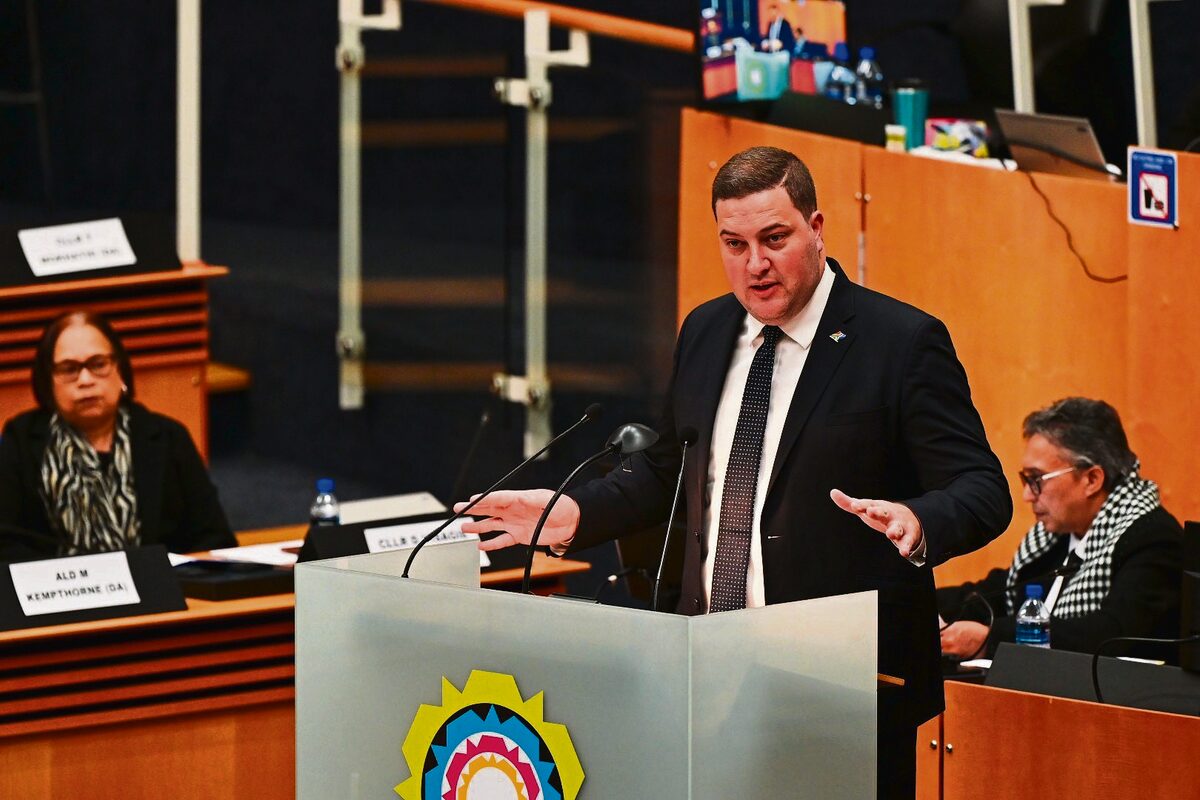

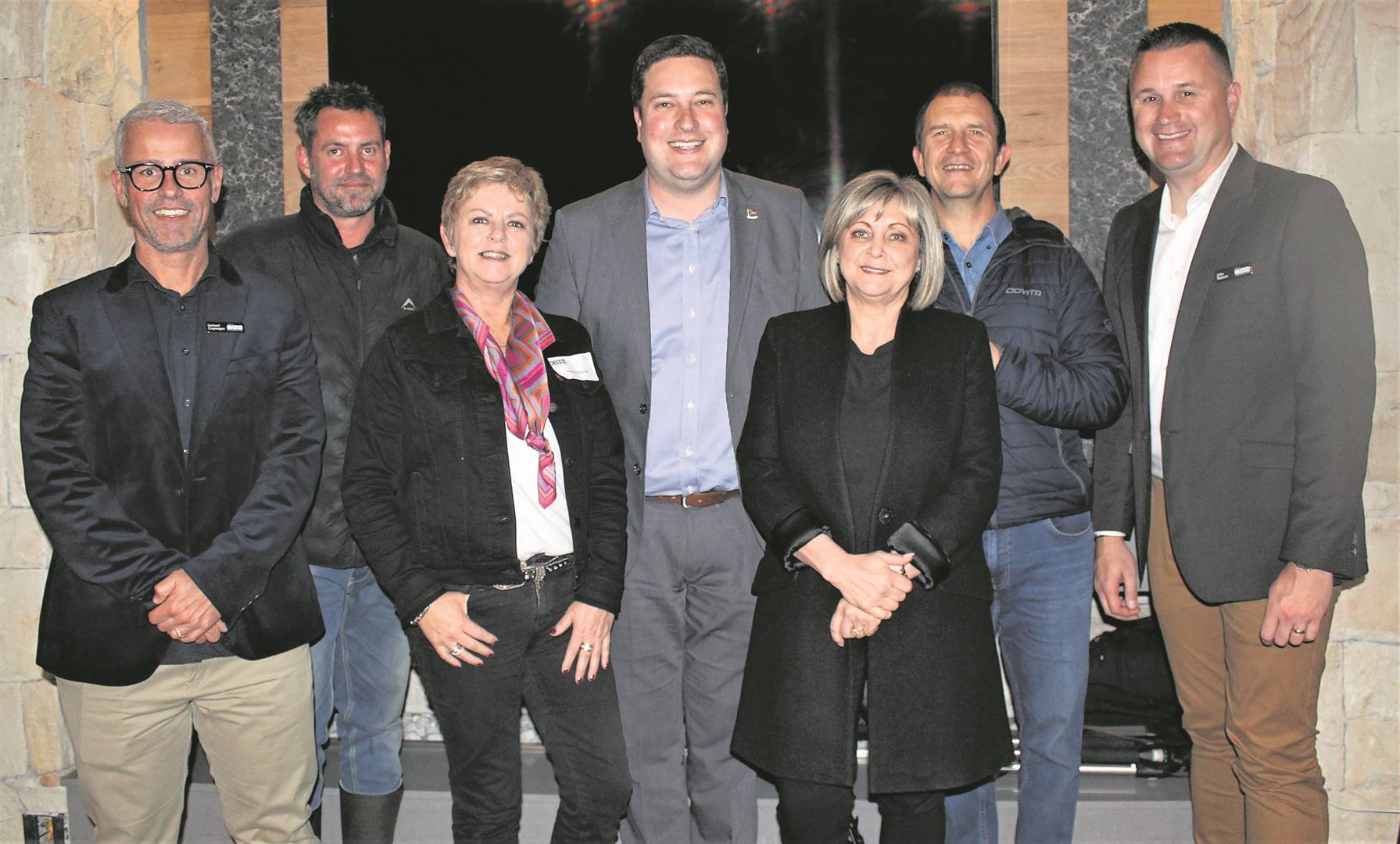
A message of hope for Cape Town was delivered by Geordin Hill-Lewis, mayor of Cape Town, at a business network event presented by Clara Business Network (CBN) in Clara Anna Fontein in Durbanville last Thursday evening.
Hill-Lewis said the equivalent of the entire Bloemfontein – over a million people – are going to move to Cape Town in the next decade.
“That is a fact. There is nothing we can do about it, those people are coming. We’ve got work to do to keep up with the pressure. I don’t see that as a threat but as a wonderful opportunity,” he said.
“If we look at the budget over two decades, the City of Cape Town has been investing in infrastructure – this year over R5,5 billion. What is truly shocking, is that it amounts to 14% of all infrastructure expenditure in South Africa done by the state. There is just not enough infrastructure investment happening in our country to keep up with the needs and the demands,”he said.
Growing population
“Even though we have been investing as a City, it is not enough to keep up with the demands, because of the rapidly growing population in our city. We are going to accelerate on basic infrastructure spending to create a platform for continued city growth,” he said.
Hill-Lewis said as member of parliament in 2017 he was concerned as citizen and dad in South Africa. He was frustrated with parliament and the lack of meaningful change and slow pace of delivery. During lockdown he saw a gap to do someting on local government level. “There is a gap in South Africa on local government level to do something about our concerns. Local government is where all the leverage is.
Reverse gear
“The last ten years we have been told the country only has a reverse gear, but we can still get forward and make progress. It will be tough to get there – hard work and difficult choices, but it will be important for more than just Capetonians,” he said.
“We have to think differently about our anxieties, about issues such as personal safety, energy security, a functioning transport system, a government that cares about how our city looks and feels – cleanliness.
“Cleaning up the city is one of the plans – a place that looks good and inspires pride.
“What was done in the last nine months, was to work on a list of things. We finished the first round of independent power producers, to buy our own power – about 300 MW. It is enough for Cape Town to stop level 5 loadshedding.
“We are making a conscious decision that we are not going to accept the mediocrity we got used to in the last 15 years. We must set a much higher standard and do something better for Cape Town,” he said.
“Regarding safety, we had a successful partnership with the Western Cape government called LEAP, which puts extra boots on the ground. They were deployed in the 10 worst crime districts in Cape Town. According to the latest quarterly police statistics, which were released on Friday 19 August, there were only 10 districts where violent crimes came down in the country – of which nine were in Cape Town and all nine in the areas where we have deployed these LEAP officers. So the evidence shows the model is working,” he said.
Data and technology
“We are the first law enforcement agency to appoint its own chief technology officer. It was the chief of metro police who said of course we need more officers, but the future of crime fighting is all about data and technology.
“No doubt it will be the biggest investment in crime fighting technology. Every one of our officers will get a body camera, and a dashboard camera for every vehicle, which is linked to integrated number plate recognition technology.
“We are going to use aerial surveillance technology later this year for the first time,” he said.
“It is not good enough for us to throw up our hands and say sorry, it is this or that department’s responsibility. We’ve got to do more ourselves to get it right. Here in Cape Town we choose to make a different decision. If we do get it right, we would have done something very important for the country, and for the city.”