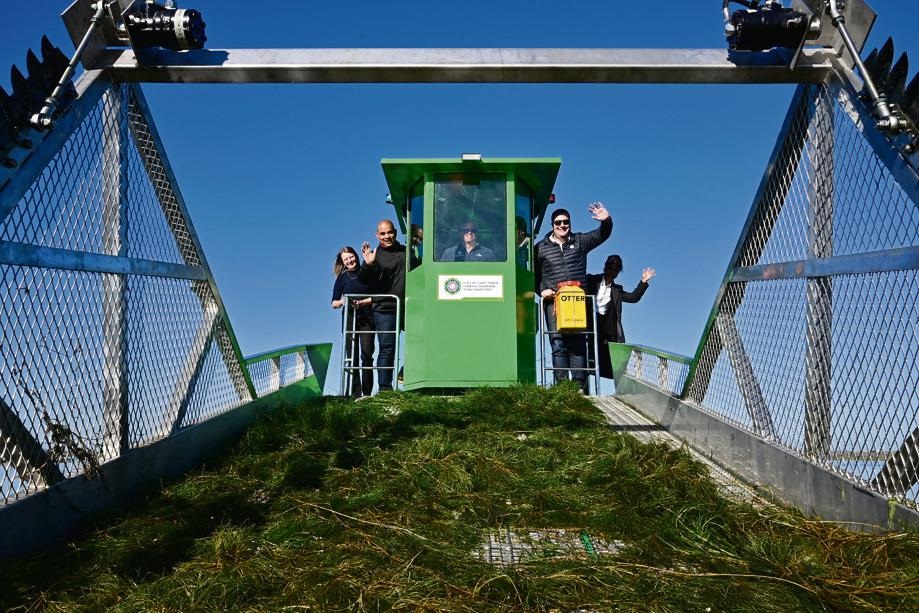


Pondweed harvesting was recommended for the Rietvlei waterbody remediation after the City appointed special consultants to test and monitor the water quality at the vlei.
This was according to a final assessment report from specialist consultants on the proposed short, medium and long-term remediation interventions for Rietvlei.
“We are pleased to announce that a mechanical weed harvester for Rietvlei will be delivered by mid-January 2024, if all goes as planned. Although dredging is not recommended for the immediate future, the City will still go ahead with the environmental and other approvals needed for dredging as these processes can easily take up to three years to finalise,” the City says in a recent statement.
Reports
The reports state that pondweed should be removed from areas where boat launching takes place. These could be identified through engagement with the Milnerton Aquatic Club, while allowing pondweed growth in other areas, in particular the southern portion, where it will not interfere with, or can be managed to minimise interference with recreational activities.
It is recommended that the City uses a mechanical weed harvester as the harvesting of pondweed and other selected aquatic plants will assist in removing nutrients (particularly phosphorus) from the ecosystem, provided that it is carried out on a sustainable basis.
Announcement welcomed
When TygerBurger approached the Milnerton Aquatic Club (MAC) for comment, Katja Haslinger, Nature Conservation Officer at MAC, said they welcome the announcement of the City consultants’ results.
“There are many measures which were suggested by the Milnerton Aquatic Club in 2019 after the closure of Rietvlei due to high E.coli readings. The raising of manholes in Ruben Road, the prevention of blockages and outages at the TV West Pump Station as well as containing any sewage spills into the stormwater system will be key to improve the water quality in Rietvlei,” Haslinger says.
Haslinger told TygerBurger that they hope the City will abstain from allowing property developers to install their own wastewater treatment package plants on-site and to release their “treated” effluent into the Bayside Canal.
“It must remain the City’s responsibility to treat sewage properly at their own wastewater treatment plants and this task should not be handed over to third parties where control will be difficult,” she says.
Rietvlei remediation options
Specialist consultants were appointed in June last year to advise the City on possible remediation options, as well as the potential risks and benefits of dredging Rietvlei to improve the water quality for recreational use.
The City says apart from the removal of organic material by dredging, the consultants investigated a range of remediation options including: the capping of organic material, water circulation and aeration, retrofitting of sewage grinders in nearby sewage pump stations, pondweed management through mechanical harvesting, and planned treatment reedbeds at the Bayside Canal outlet.
- The high costs and significant ecological disturbance associated with dredging of this particular waterbody do not warrant this intervention at present.
- The ongoing build-up of organic and inorganic sediments from catchment inflows and in-lake processes can be contained within the deep-water basins in which they occur.
- Artificial water circulation and associated aeration would not address the water quality concerns given the particular nature of this waterbody, and could potentially worsen them.
- Catchment interventions would improve water quality over the longer term.
- Catchment interventions should be complemented with improved in-lake management, through the controlled growth and sustainable harvesting of pondweed.
- The installation of sewage grinders in nearby substations should reduce the frequency of blockages at these stations.
- Improving bunding capacity within or around pump stations, to allow for sewage retention and prevent overflows while the City effects repairs.
- Identifying sewer manholes that are low-points from where sewage is likely to flow when there are downstream blockages or when there is a pump station failure – the manholes should be raised where possible and/or their design adapted to allow diversion of overflows back into the sewer rather than into stormwater.
- The Bayside Canal discharges stormwater from the Table View area into the north-western part of Rietvlei. The construction of sediment ponds and treatment reedbeds at the downstream end of the Bayside Canal with litter and sediment trapping upstream of the reedbeds, would improve the quality of water passing into the Rietvlei area.
“The assessment reports recommend the active management of pondweed in identified key areas of the vlei as one of the alternatives to dredging to improve water quality,” says the City.
- Oxygenation of shallow submerged waters.
- Stabilising of bottom sediments, making wave-induced turnover of bottom sediments and resuspension of their associated nutrients less likely.
- Provision of habitat complexity, making the dominance of a few nuisance aquatic faunal species such as midge larvae or mosquitoes, less likely if there is adequate habitat for aquatic predators such as fish larvae and some macro invertebrates.
- The uptake of nutrients including phosphorus makes pondweed a potentially significant store for this nutrient, which can be removed through harvesting.