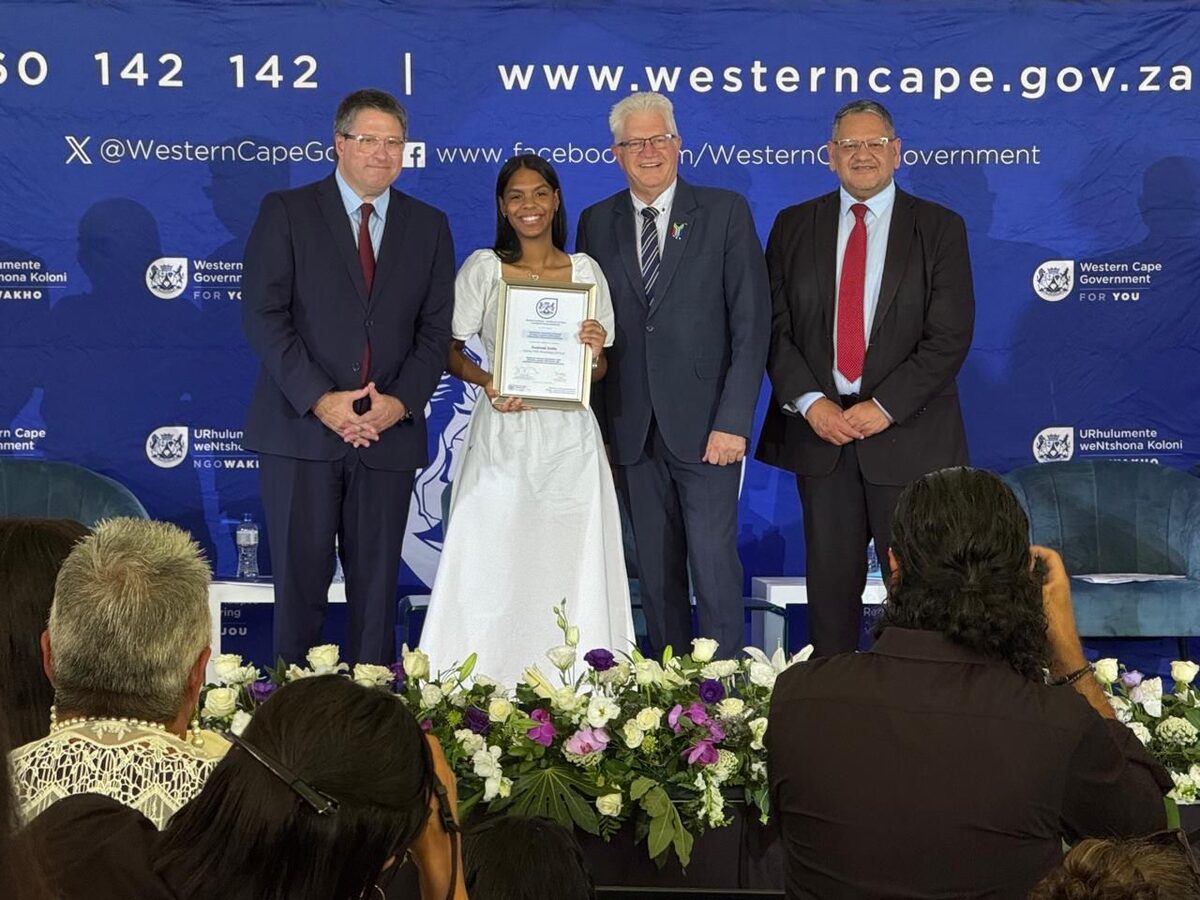

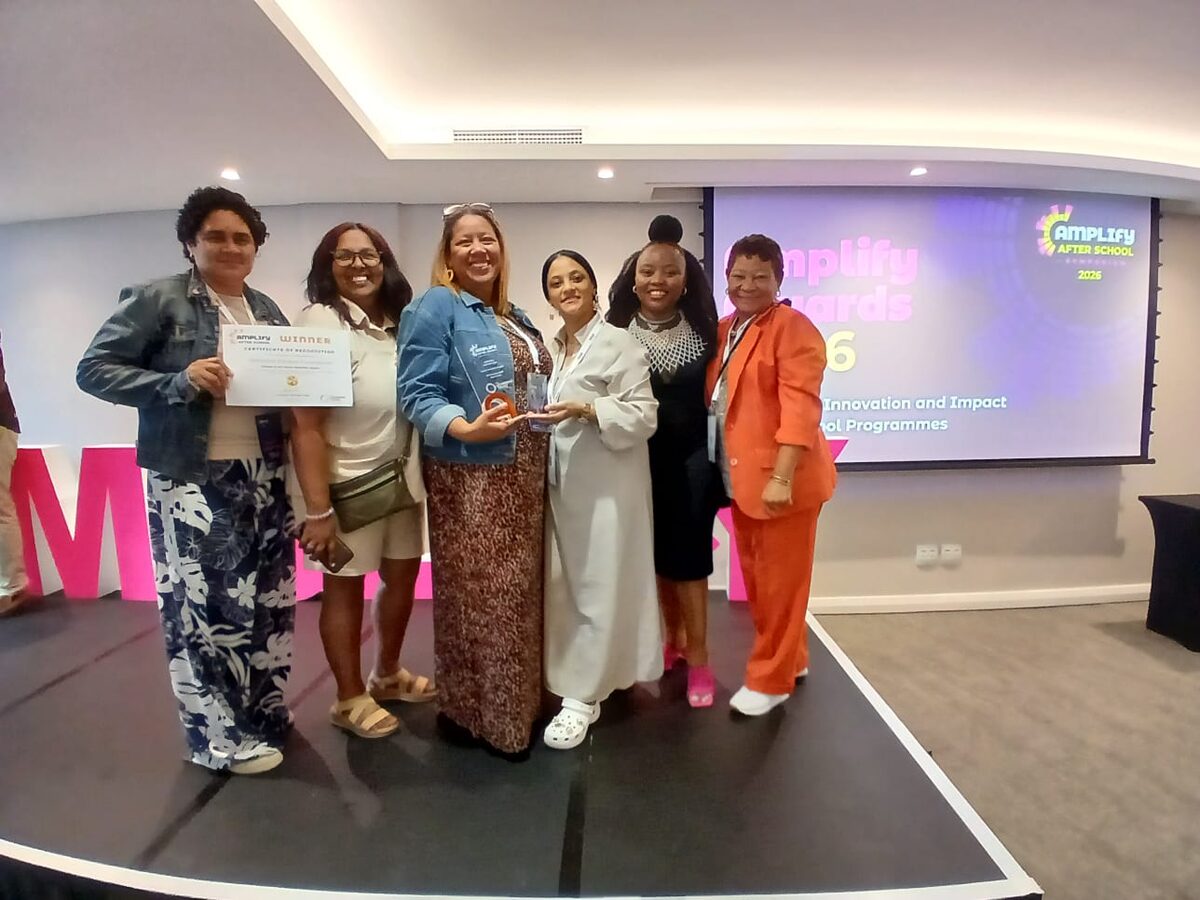
The founder of a Strandfontein-based after-school programme has been given the National Amplifier After-school 2026 Award for her two decades of advocacy work in the sector.
Wendy Abrahams, founder of Advance Edukos, received the award for actively promoting and strengthening the after-school sector through advocacy, storytelling, media engagement and public campaigns.
“This award recognises that we were identified for actively promoting and strengthening the after-school sector,” she said. “It’s been a while for us to have been identified by other government departments as a need as a need between home and school.”
Advance Edukos, which turned 5 last year and will celebrate its sixth anniversary in June this year, operates seven after-school programmes and two external art programmes across multiple communities including Schaapkraal, Strandfontein and Mitchells Plain.
The “baby programme”, as Abrahams calls it, has had sustained and significant growth since it was founded.
For more Mitchells Plain news click here
Growing impact
The organisation works within four pillars: education, arts and culture, health and well-being, and psychosocial support. Under education’s banner it runs literacy programmes specifically targeting Grade 2 and 3 learners to intervene before they reach Grade 4.
“We know the poll stats that tell us learners cannot read when they reach Grade 4, and so we want to change that narrative and do an intervention before they reach Grade 4,” explained Abrahams.
The organisation also won the Arts and Culture award from the Department of Cultural Affairs and Sport last year for the best Arts and Culture after-school programme.
Employment opportunities
Abrahams leads the Western Cape Consortium as administrators for six organisations that together employ 90 young people through the Social Employment Fund programme. Her own organisation employs 40 young people.
It recently secured a memorandum of understanding with Year Beyond to provide positions for 25 young people and is partnering with six Early Childhood Development programmes.
Success stories
The programmes have produced numerous success stories, including art students exhibiting at prestigious venues such as the Norval Foundation Museum and Zeitz Museum of Contemporary African Art. One learner recently sold artwork for R700, Abrahams said.
“We have a lot of success stories,” said Abrahams. “Our children were the first 47 to exhibit at the Norval Foundation for the opening of the Children’s centre.”
Two young men from the programme have progressed to international degree opportunities, with one also securing an internship with Spar.
Community reach
The programmes are essentially free to participants, with most learners living close to the after-school spaces to eliminate transport barriers.
“We saw there was a decline in attendance,” said Abrahams, “and when we investigated it was because learners didn’t have transport. So we said why have one hub trying to reach 100 children when we can break them up and have learners coming to after-school programmes close to home in their communities.”
The organisation will begin new awareness campaigns in April 2026 following a recent memorandum of understanding with the Networking HIV and AIDS Community of Southern Africa Networking HIV/Aids Community of Southern Africa (Nacosa) and continues to expand its reach through partnerships with local schools, including a memorandum of understanding with Eisleben and Caravelle primary schools in Rocklands.