
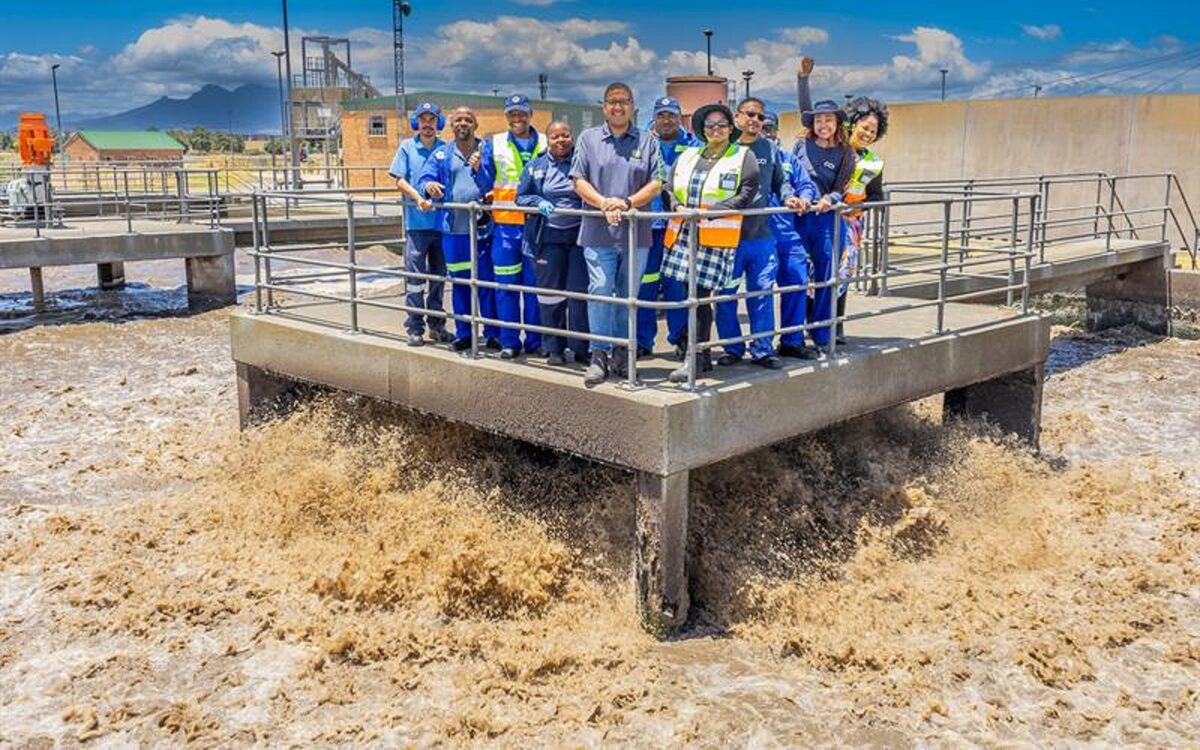
The Kraaifontein Wastewater Treatment Works is performing well, achieving a 98% compliance rate over the past six months, City officials announced this week.
The facility, which treats seven million litres of wastewater every day, serves residents in Kraaifontein and Durbanville areas. It is one of 23 wastewater treatment plants operated by the City of Cape Town.
Mayco member for water and sanitation Zahid Badroodien recently visited the plant to check on its operations, noting the ongoing challenge posed by foreign objects entering the sewer system.
The treatment process operates in several phases. Raw sewage first goes through screens to remove solid waste and grit. The water then moves to biological treatment tanks where helpful bacteria clean it. Next, the water goes to settling tanks where remaining solids sink to the bottom while clean water rises to the top. The water is then disinfected in a bioreactor to kill harmful germs using both chlorine and natural sunlight in special ponds.
Still too much foreign objects in system
The plant has six maturation ponds where sunlight helps remove disease-causing organisms. Finally, chlorine is added as a last cleaning step before the treated water is either used for irrigation or released into rivers.
“It was an interesting visit, particularly at the inlet works, where we continue to see foreign objects such as rags entering the system via pump stations. I would like to remind residents to refrain from flushing these items down toilets, as they place unnecessary strain on sewer infrastructure, pump stations and wastewater treatment works,” said Badroodien.
“The City urges residents to dispose of waste responsibly to help ensure the efficient operation of wastewater treatment facilities and the continued protection of rivers and the environment.”
First commissioned in 1974, the plant has been in operation for 52 years and has undergone four major infrastructure upgrades in 1983, 1987, 2003 and most recently in 2013, when new inlet works were commissioned. The plant currently uses two screening systems, two grit removal units, one biological treatment tank, three settling tanks, and equipment to remove sludge. Fourteen permanent staff members keep the facility running.