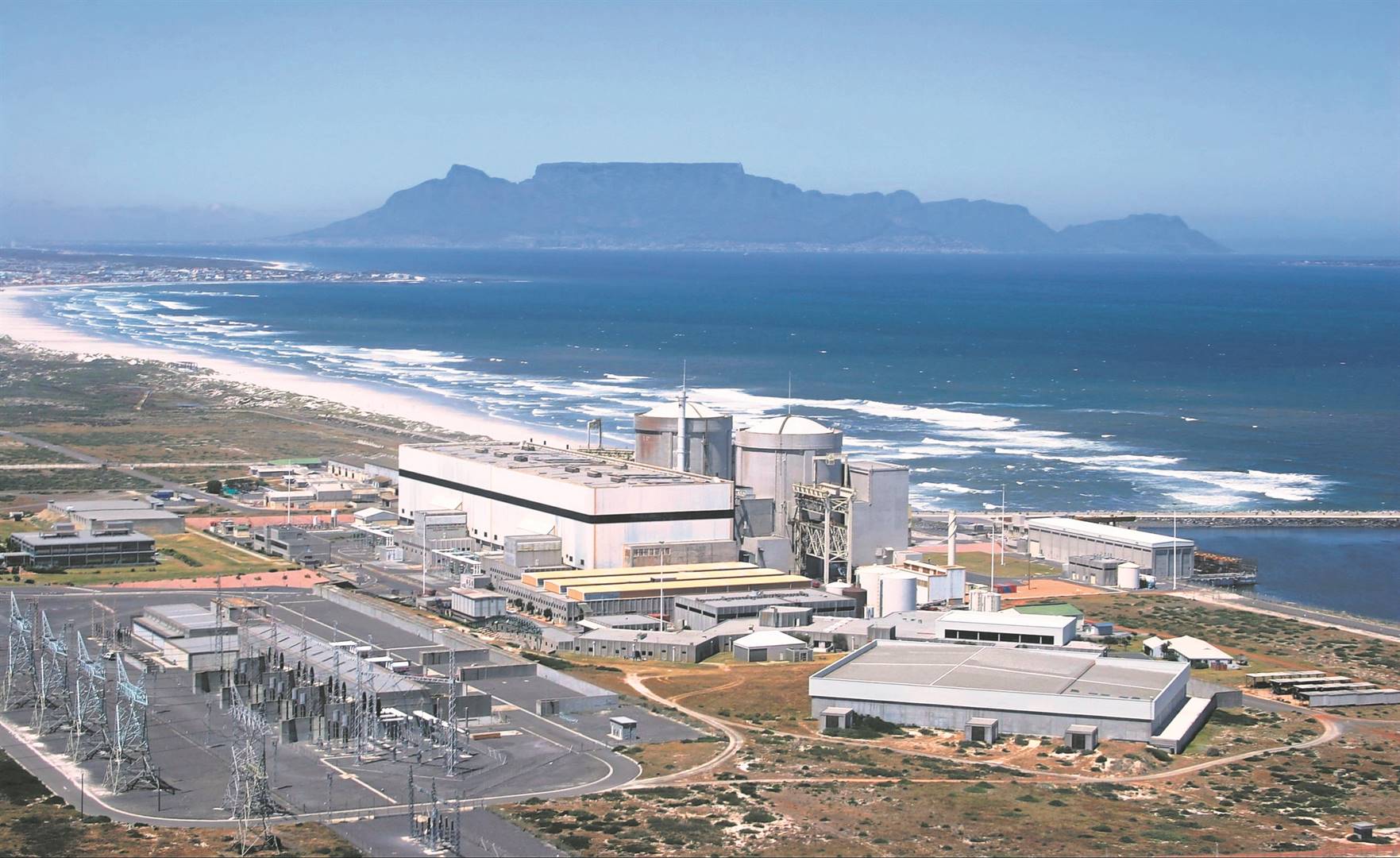

After over 450 days of uninterrupted operation, Unit 2 of the Koeberg Nuclear Power Station will on Monday 17 January be taken offline for a regular refuelling and maintenance outage scheduled for five months.
This will be the 25th refuelling outage on Unit 2 since commissioning and will also see the replacement of the unit’s three steam generators. According to Eskom, during this outage the reactor pressure vessel head, which houses the nuclear fuel while the station is in operation, will also be replaced.
The Koeberg Unit 1 outage, of a similar duration, will follow later in the year during which the Unit 1 steam generators will also be replaced. Its reactor pressure vessel head was replaced several years ago.
The Koeberg units, at 920 MW each, are the largest generating units on the African continent.
The Koeberg outages are planned at times of the year when the impact on the overall electricity supply is minimised as far as possible.
Koeberg recently made headlines when Eskom announced its plans to extend its lifespan. Anti-nuclear demonstrations were held to highlight concerns of Capetonians about the implications of the decision.
The nuclear plant reaches the end of its 40-year lifespan in 2024, but Eskom is trying to extend its operating life by another 20 years before any public consultation.
“This is going to be a long, but needed outage – the first of its kind for Koeberg. Our staff are prepared and committed to make history by ensuring success of this project,” says Riedewaan Bakardien, Eskom’s chief nuclear officer.
“Nuclear safety is the paramount factor. We will progress the outage work diligently, making sure nuclear safety and safety of plant, personnel and public is top of mind.”
When Koeberg Unit 2 shut down on Monday 17 January, it will have been online, safely generating electricity, for 452 days without any interruption since its last refuelling outage, which was completed in October 2020.
However, the Koeberg Alert Alliance (KAA) argues that Unit 2 going offline is disingenuous to call a “regular refuelling” outage.
“It is about as accurate as saying your car is going to the mechanic for refuelling, and by the way while busy filling the tank they will also replace the gearbox. The vast majority of the cost and the duration of the outage will be to do the refurbishment, so it is more accurate to call this a refurbishment outage,” KAA says in a statement.
KAA says that a refuelling outage takes just over four weeks.
“This outage will be either 90 days, 150 days, 155 days or 165 days depending on which Eskom statement one chooses to believe. In the MYPD5 application submitted to the National Energy Regulator (Nersa), Eskom says the refurbishment outage would be 90 days. This 15 January statement says five months, previous statements by Eskom said 155 days, and a presentation by Eskom in November 2021 said it would be 165 days (nearly 24 weeks) before the unit could be connected to the grid again.
“Is Koeberg reliable? In describing the two Koeberg units, the Eskom statement reads: Their safe and reliable operation is a significant contributor to meeting the country’s electricity demand,” KAA says.
The KAA pointed out that Koeberg may be declared “safe”, but there is an evacuation plan in place for a reason – sometimes things go wrong. “And in the case of a nuclear plant, that can be very badly wrong indeed.”
Eskom said in a statement to the media on Saturday that Koeberg Nuclear Power Station recently completed a key industry periodic nuclear safety review, and the station was confirmed by independent industry reviewers to be performing strongly in terms of safety and reliability.
The National Nuclear Regulator (NNR) also routinely performs crucial regulatory reviews and monitoring aimed at ensuring that the station remains safe and meets all regulatory requirements.
“For the past five years, Eskom and the NNR have been working on its application for extending Koeberg’s operating life. The replacement of the reactor pressure vessel head and steam generators has been identified by Eskom as a requirement for life extension. The successful replacement of these components is, therefore, an important element of the Safety Submission being prepared for submittal to the National Nuclear Regulator in mid-2022, in support of Koeberg’s operation for 20 additional years,” Eskom says.
The KAA argues that to avoid unnecessary load shedding the refuelling of Unit 2 should be completed and it should be brought back online before the end of February.
“The refurbishment of Unit 1 should be put on hold until there has been more transparency from Eskom about why this work is being done, how long it will take, and what the true cost is,” KAA says.