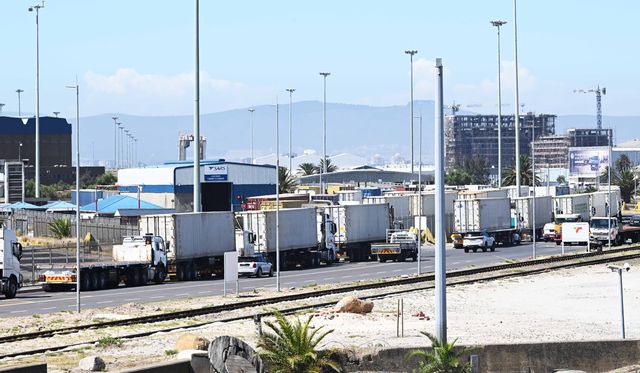


CAPE TOWN – The City of Cape Town has initiated the public participation process for its updated Freight Management Strategy, with residents and stakeholders invited to comment on plans that could reshape how goods move through the metro over the next decade.
The comment period will run from 24 February to 31 March, giving communities the opportunity to influence freight planning decisions that directly affect them.
Modern freight challenges
The strategy was tabled at the Subcouncil 17 meeting in Mitchells Plain on Monday 16 February. City official Nicky Sasman presented the report for noting.
Sasman said the increase in freight traffic has affected not only infrastructure but also road accident statistics. The updated strategy builds on the 2016 Freight Management Strategy while addressing contemporary challenges including the surge in online shopping deliveries, informal truck staging, and growing environmental concerns about freight transport.
The strategy tries to balance the urban mobility department’s vision of freight of “safe, efficient and reliable” transport while ensuring operators comply with safety and environmental principles.
Key infrastructure developments planned
The strategy outlines significant infrastructure projects designed to improve freight movement across the metro. These include developing the Kraaicon inland terminal, supporting the Belcon intermodal terminal, and reopening the Atlantis-Chempet rail line to serve the Atlantis Special Economic Zone.
Other major projects include upgrades to the Cape Town Container Terminal to increase capacity, new truck staging facilities in Paarden Eiland, and back-of-port facilities in Culemborg.The strategy also prioritises rail infrastructure, with plans to protect and maintain City-owned rail sidings whilst advocating for better utilisation of existing rail networks to reduce road freight dependency.
IN OTHER NEWS: Hundreds of nappies continue to wash up on local beaches
Addressing community concerns
The strategy directly responds to community complaints about freight impacts, including traffic congestion, accelerated road deterioration, and safety risks to pedestrians and cyclists. Environmental issues feature prominently, with measures proposed to address air pollution from vehicle emissions and noise pollution from heavy vehicles, particularly affecting residential areas near freight corridors.
The strategy also tackles illegal parking and offloading by delivery vehicles, which disrupts traffic flow and pedestrian access, whilst addressing nuisance behaviours from truck queuing near the port and terminals.
Technology and enforcement focus
Enhanced enforcement capabilities form a cornerstone of the updated strategy, including weigh-in-motion systems and automated over-height detection on strategic roads. These technologies aim to reduce overloading and improve compliance with vehicle regulations. The strategy recognises the need for better freight movement data to inform planning decisions about loading zones, congestion management, and emissions reduction.
Digital scheduling systems and after-hours operations are proposed to reduce peak-hour freight movements, potentially easing traffic congestion during busy periods.
Supporting micro-freight and last-mile delivery
Recognising the growth in online shopping and small-parcel deliveries, the strategy introduces specific measures for micro-freight and last-mile delivery services.
These include plans for dedicated loading zones, micro-hubs for package sorting, and infrastructure to support various delivery modes including cargo bikes and small delivery vehicles.
Economic growth considerations
The strategy emphasises freight transport’s role in supporting local and regional economic growth, recognising that efficient goods movement underpins business competitiveness and job creation. Plans include protecting freight-generating land uses near the port and along arterial routes from rezoning pressures that could compromise freight efficiency.
The strategy also addresses the needs of small and informal freight operators, acknowledging their important role in the local economy whilst working to improve safety and compliance standards.
Next steps for implementation
Following the public participation period, Urban Mobility will compile and analyse all comments received, preparing responses and incorporating appropriate feedback into the final strategy.
The updated strategy will then progress through the City’s formal approval processes, including consideration by the Portfolio Committee for Urban Mobility and eventual review by the Mayco and Council.
Subcouncils have been asked to assist with distribution of participation materials through their offices, libraries, and community networks, whilst encouraging local stakeholders to engage with the process.
Contact details: Residents and stakeholders can obtain more information about the freight strategy and participation process from Nicola Sasman at Urban Mobility on 021 400 9339 or nicola.sasman@capetown.gov.za. Comments should be submitted to UrbanMobilityCT@capetown.gov.za before 31 March.