
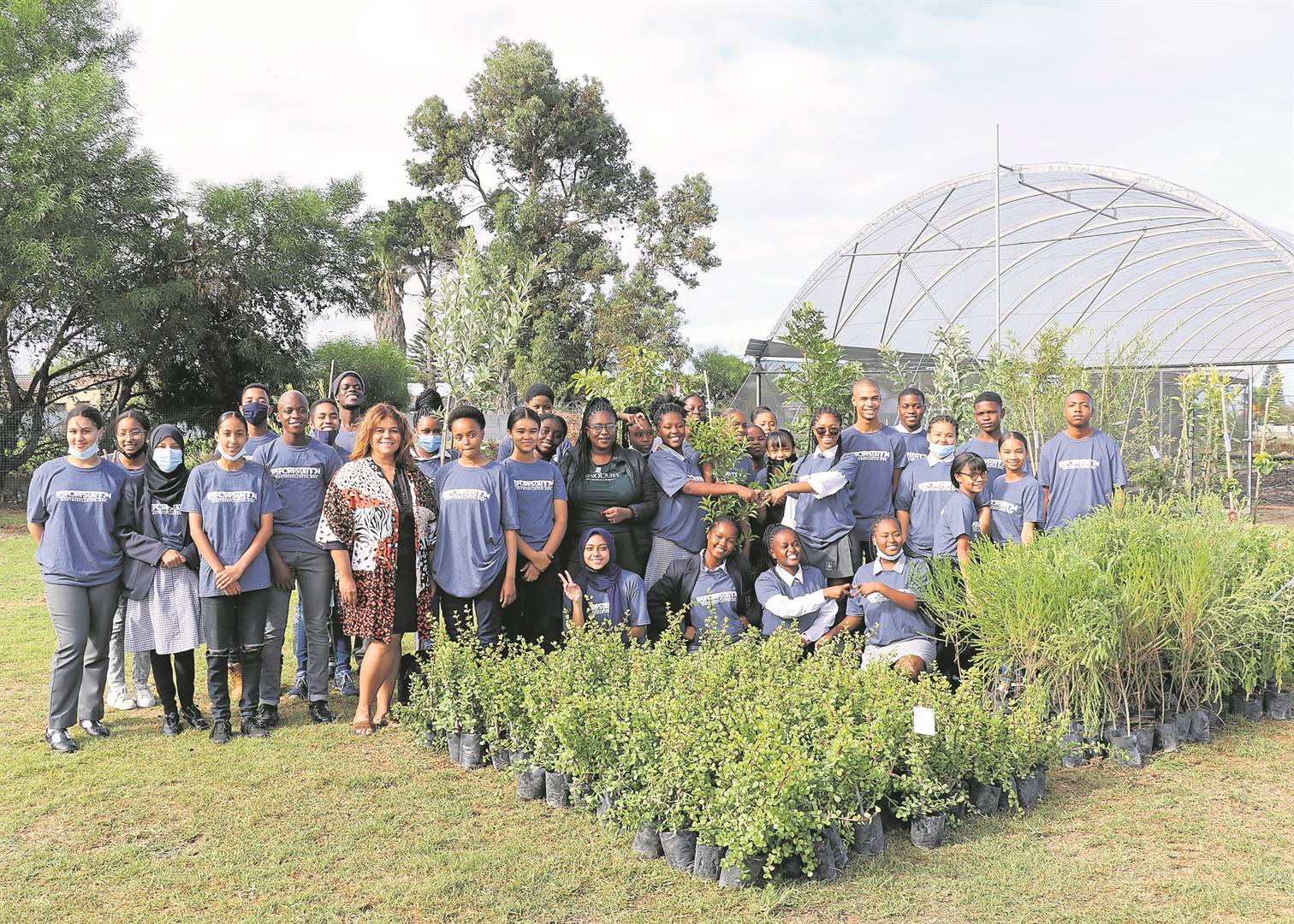
Soneike High School in Highbury celebrated Earth Day on Friday 22 April by planting 1 000 indigenous trees and shrubs.
The planting of trees was in tune with this year’s theme, “Invest in our planet” calling for a shift towards sustainable practices.
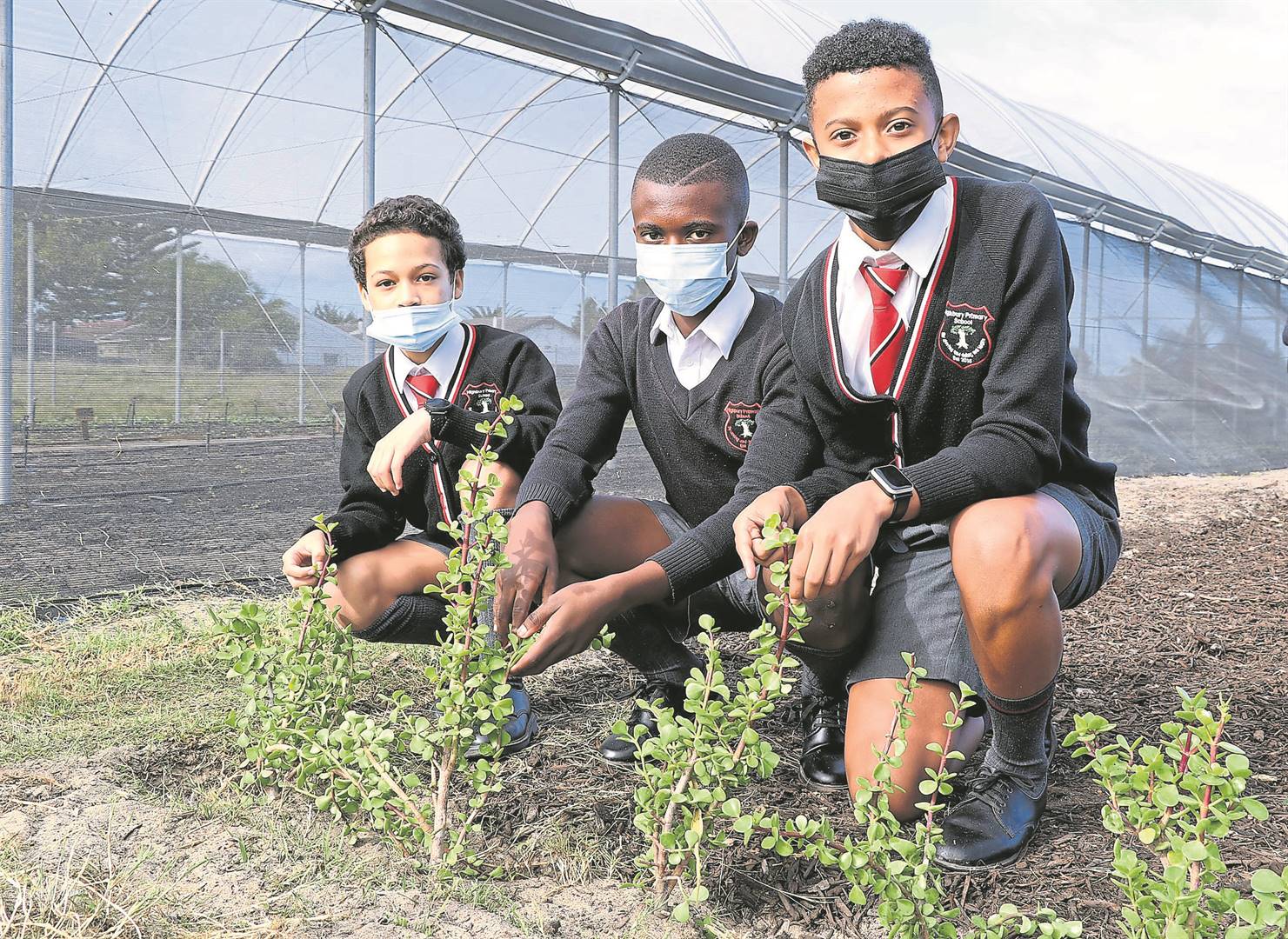
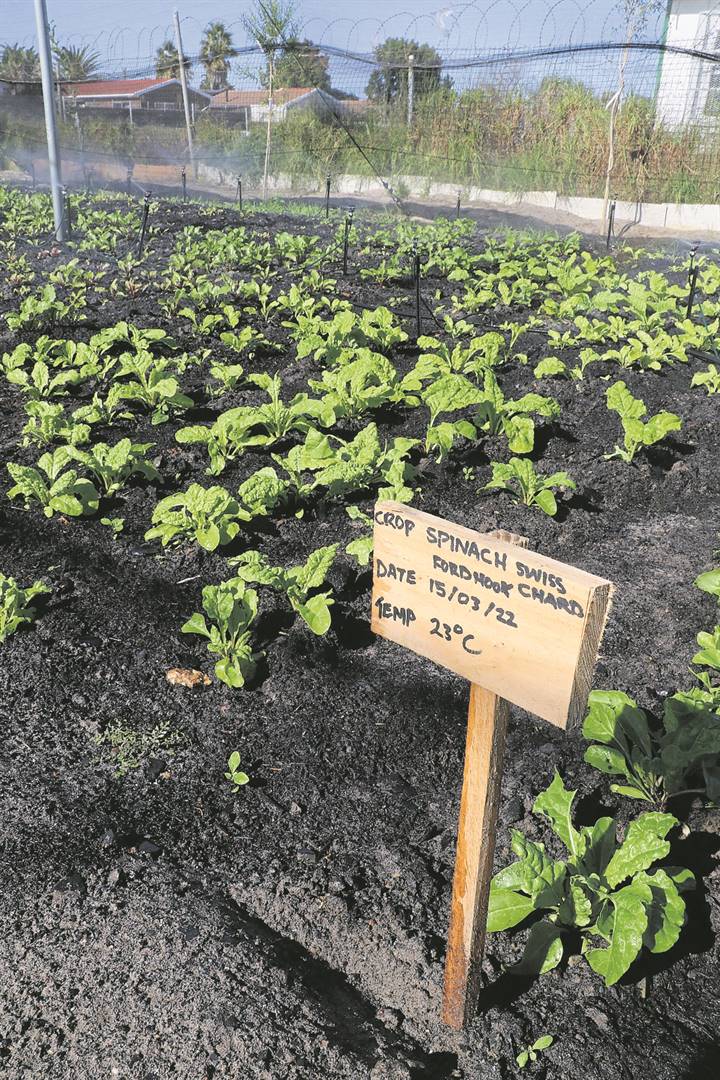
The tree planting ceremony was held close to the greenhouse and the spread of vegetable beds on the terrain – partly “borrowed” from neighbouring Highbury Primary School of which a group of Grade 7 learners joined in.
Soneike’s head girl Cloe Bennet said being part of the school’s vision and agricultural project not only taught her about the basics of growing her own fruit and vegetables, but also responsibility towards the environment.
“Preserving it depends on us, as youth.’’
Head boy Liyema Mbebe said he was happy to see the greenhouse being built at the school last year.
“The agricultural learners benefit greatly as it gives them a hands-on experience.”
Grade 12 learner Fundisiwa Jikolo called for a need to reflect on environmental injustice such as poor communities being exposed to more pollution.
“These communities get alienated to nature. They are estranged and don’t recognise themselves as part of nature.”
It’s up to the current generation to redress the issue whereby “coloured developments were not developed greenly”.
People who are not educated about the earth and not used to seeing greenery and plants grow are psychologically oppressed, said Jikolo.
“The agricultural project is a great initiative to ensure we go back to a green lifestyle and the growing of our own food.”
The trees and shrubs planted on the day were provided by Siyabulela Sokomani, founder of Nguni Nursery in Philippi that grows indigenous plants for communities that cannot afford to buy trees by partnering with international climate mitigating organisations like One Tree Planted.
Principal Ronel Baker told guests as a young teacher, in 2003, she moved to a school in Khayelitsha that was in a sad state – “a sandy pit of nothing”.
There was ‘‘this little boy” that attended the school. “Every little plant we planted, every Arbor Day, he was there. For five years this little boy, Siyabulela Sokomani, planted trees. That was his dream which later became a bigger dream.”
Baker said for 14 years her message to the children in Khayelitsha was: “This is your environment, but you can do something about it. You are better and you can.
“This young man is why we are here today. These 1 000 trees come from his nursery – from this little boy who studied horticulture and became an adviser to farmers.”
Baker thanked colleagues and others who “are part of my vision and part of what we want to do as a school to ensure these learners are going to make a difference to the world and to change the narrative of their own communities.”
Deputy principal Leon Hanslo said the learners who participated could each attach a tag with their name to the tree they planted.
“We want to connect you to this tree.”
Hanslo said “like Siya” they need to start propagating.
“This is what we will start doing next in our sustainable agriculture centre, we need to grow things. The centre is in planning and will hopefully be built here in August.”

Stimulating learning
Hanslo says the agricultural project at Soneike was born out of the need to improve learners’ results in mathematics and science.
The predecessor was their STEM (science, technology, engineering, maths) space programme involving modular computer chips, as used in mini satellites, that can gather weather related data (temperature, humidity).
Hanslo says though a brilliant programme, it only involved a small group of learners, mainly achievers in maths and science. “We wanted to get more learners involved.”
They decided to extend beyond the programme rules with exponential and blended learning.
“If we can get learners to do their own observations it will stimulate learning – especially maths – by making measurements and calculations, by collecting and comparing data.”
Hanslo reckons soil is an ideal medium to stimulate a love for science and maths as one can observe the influence of various environmental factors on plants including the uptake of water, transpiration, evaporation, basically the “laws of nature”.
It’s about more than just stimulating learning as the programme also has value in terms of food integrity. This, Hanslo explains, is a step beyond food security – healthy food as organically grown as possible.
“What we are trying to do here, is small-scale regenerative agriculture. In a year or two the soil must be in a beter condition than before.”
Compost generated is plowed back into the soil.
Hanslo says nearby communities benefit from their surplus produce that is distributed with the help of Highbury Foundation to soup kitchens.
Hanslo says Soneike are linking with two areas, “environmental action” and “innovation and education” that form part of the United Nations’ Sustainable Development Goals.
“Schools in disadvantaged areas must approach the learning process differently. We must look at experimental learning. How can we use innovation and technology?”
Their science teacher is busy developing an app, says Hanslo, to scan QR codes that will be put up in their garden to reveal relevant information about a specific plant.
“We have a greenhouse and outside areas that will give us two data sets that can be compared.”
Possibilities in future include hydroponics or aquaponics, says Hanslo.
He would like to see the ideas of what’s being done at the school “exported” to the community.
Stimulating learners to start their own vegetable gardens at home is just one way.