

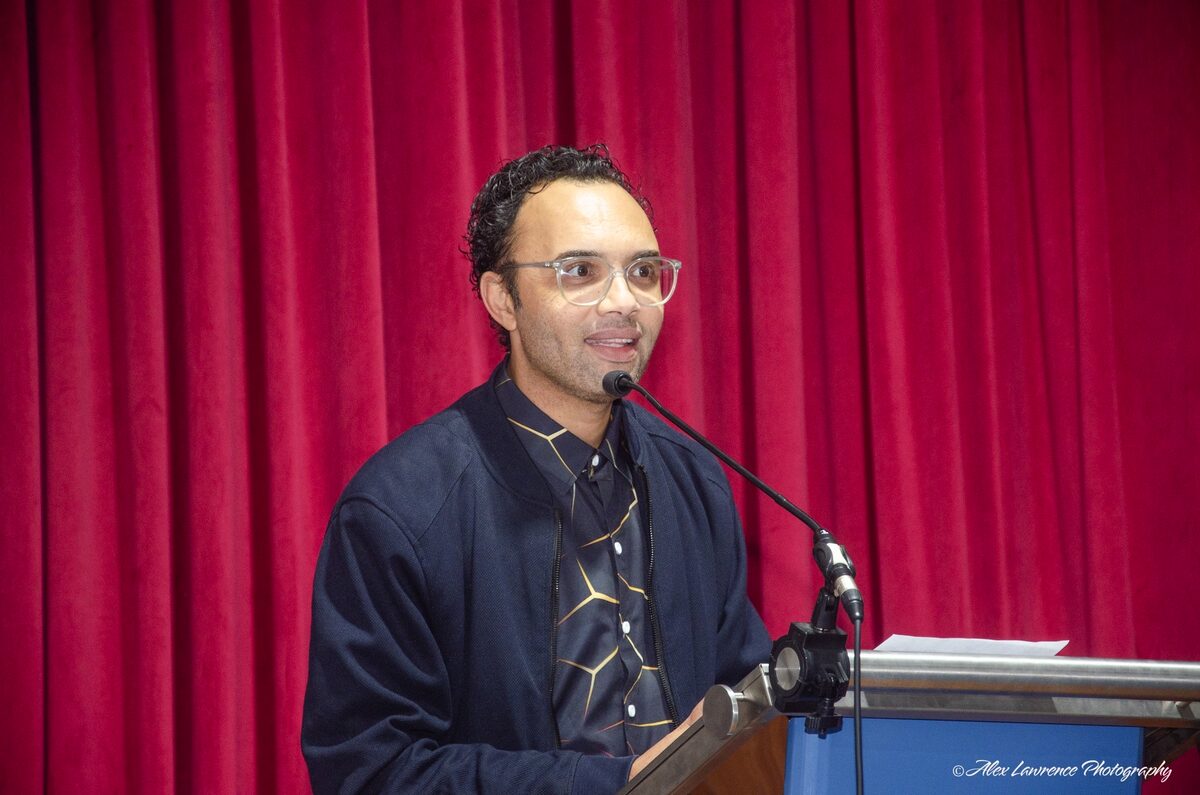
A question on where the name “Mitchells Plain” came from and whether it should carry an apostrophe sparked a journey that led to a PhD thesis for a resident from the area.
“When we speak about Mitchells Plain — beyond the headlines — we need to ask ourselves: how does your history put your reality into context? What does the history of a piece of land mean to the people who call that land home?”
Nathan Adams, an award-winning journalist, writer and communication officer at the University of the Western Cape (UWC), spoke about his doctoral research — which he will defend in August — at the Mitchells Plain Legacy Project’s Beyond the Headlines workshop on Thursday 14 May, at Hazeldene Primary School Hall.
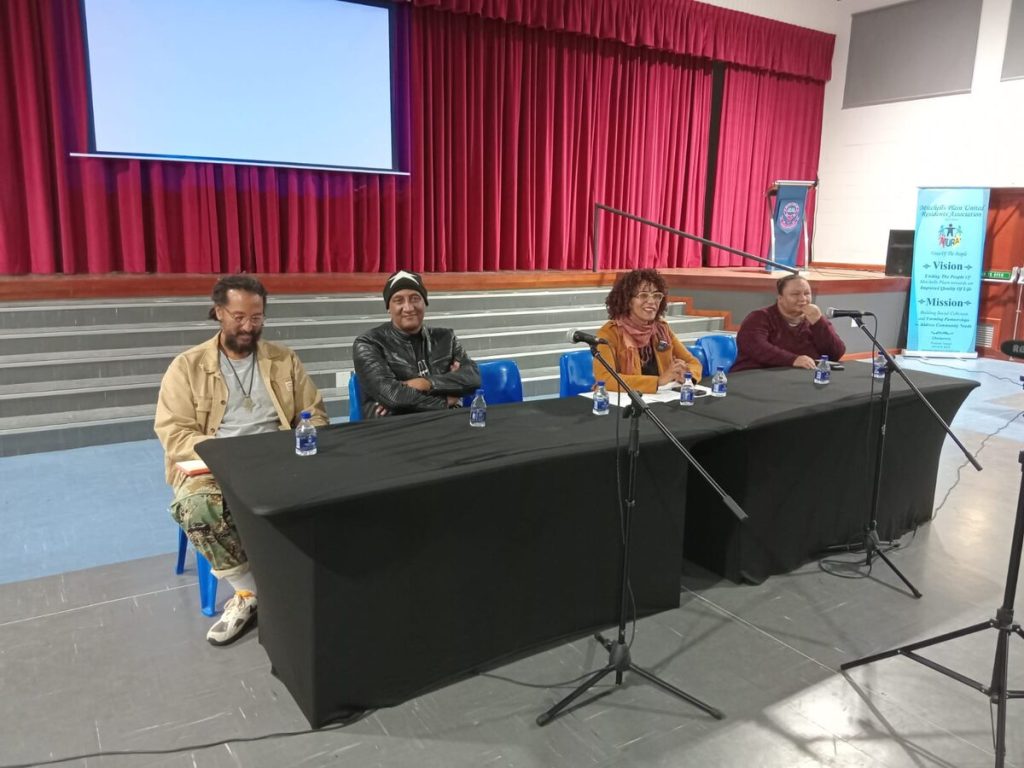
Adams was one of the guest speakers at the media workshop, which looked at how Mitchells Plain is covered in the press as part of the area’s 50th anniversary celebrations.
Norman Jantjes, a member of the legacy project, said the event grew from a shared concern about how the media portrayed the area.
“In a room you can only get so many people. But the people who don’t come to meetings — how do we influence them? How do we inform them? So our relationship with the media is essential,” he said.
He said crime dominated the headlines at the expense of everything else.
“I can safely say a large part of Mitchells Plain is traumatised today,” Jantjes said, adding that behind every murder or shooting in the news, there were real people whose fuller stories deserved to be told.
The research begins
Speaking ahead of the main panel discussion, Adams explained how his curiosity about Mitchells Plain started.
For his master’s degree at the University of Pretoria, Adams explored public perceptions of army deployments to the Cape Flats, examined through the lens of coloured community leaders involved in the Daily Voices programme. During that research, his supervisor began asking questions about the origin of the name “Mitchells Plain”.
“She put it on the back burner,” Adams said. “But when I graduated, she came back to the question. ‘If you can answer those questions, you have the basis of a PhD,’ she said.”
That is how his research began. Adams said the 50-year history of Mitchells Plain was, in a sense, deceptively recent.
“It’s not a long period of time in a timeline of history,” he said. “But it’s actually really difficult to trace.”
Into the archives
Adams started at 1976 and worked backwards — through 1970 and 1960 — searching for the earliest known reference to the name. The central question, he said, was the apostrophe.
“That’s crucial not only in English grammar, but it also denotes that it belongs to somebody. It denotes possession. Was Mitchells Plain then named after a person called Mitchell?”
He turned to the archive for answers. The earliest reference he found was dated 13 February 1903; a mortgage deed in which a son had inherited his father’s estate and, short of money, approached the bank to mortgage the land.
Going further back, Adams found a reference dated 2 May 1898, in which a man with the initials JA applied to the Cape Division for Crown land, stating he already owned Mitchells Plain and a neighbouring plot and wanted to buy the stretch in between.
The family linked to the land has descendants alive today and a road in the area named in their honour. Yet, Adams said, their own family records showed no acknowledgement of the land, no farming history and no mention of it, despite being proud of other landholdings in wealthier areas.
Curiously, the name Mitchell is not linked to any of these families.
The apartheid connection
Adams said this history of the land matters in the context of what followed.
District Six was declared a whites-only area in 1966. By 1970, four years into the brutal evictions, the organs of the apartheid state had started planning what would become Mitchells Plain. A master development plan for the Cape Flats appeared in the Cape Times on 25 March 1969, with proposals for group area proclamations across the Hottentots Holland Basin.
“They make a point of saying that the nationalist, racist government needs a better public image,” Adams said. “So they need to frame themselves as not only a government of destruction but a government of positive stature.”
In 1973, he said, the apartheid government carried out what he described as its biggest land acquisition: appropriating, sometimes without compensation, 183 separate plots to create Mitchells Plain. Some of the original farm names still live on in the area’s road and area names today.
A question that still puzzled him, Adams said, was why the apartheid government, which routinely named projects after its leaders, never renamed Mitchells Plain.
Whose story is it?
Adams shared a quote from the celebrated architect who designed the houses in Mitchells Plain, a man who received a national honour for his work in 2005. In an interview with the Financial Mail, the architect had written: “If one has grave reservations about the concept of group areas enactments, mass housing schemes, and all they imply, why get involved at all?
“After a lot of soul searching, I reasoned that the commission gave me the opportunity for suggesting an urban structure that might work. And a unique opportunity for the integration of unit and layout design in urban design terms. And that if only that were achieved with some measure of success, it would justify the attempt.”
Adams said this illustrated how those involved in building Mitchells Plain had, over the years, been able to distance themselves and their legacies from what residents actually lived through. He also shared a quote from a 1970 newspaper article about a municipal official tasked with persuading people to move into the new houses. The official had worked through 9 000 names on the council’s housing waiting list, singling out those with incomes above R200 who could be reached by phone.
“The atmosphere at these meetings can only be described as incredible,” Adams said, reading from the article.
Adams said his research spans 1903 to 1975 and urged those present to look beyond the crime headlines.
“When we look at Mitchells Plain beyond the headlines, we need to really ask ourselves and reframe the narratives. From the history of the land, how do we reconcile that with the history of the people?” he said.
ALSO READ: Original residents share memories of area’s early days for 50th anniversary


You must be logged in to post a comment.