

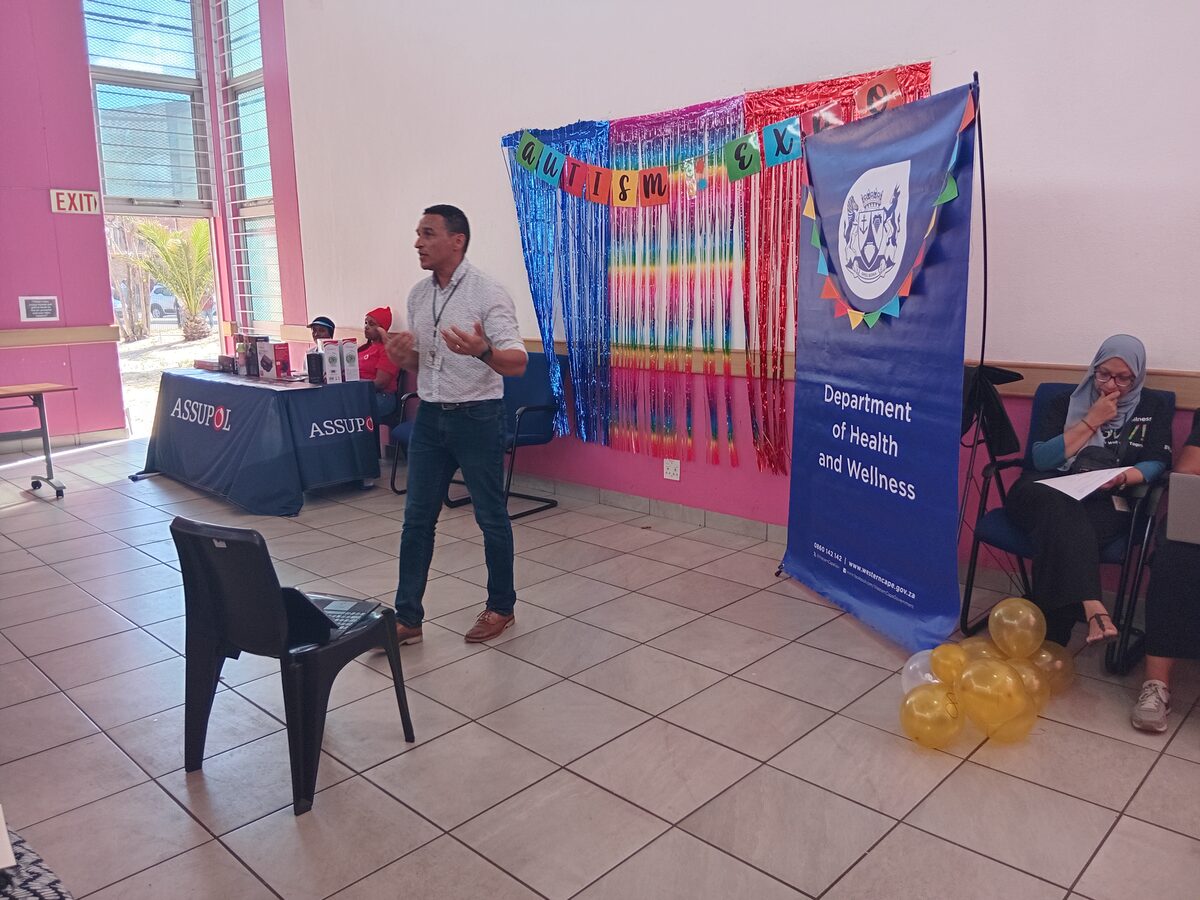
Health and education professionals have called for better collaboration and teacher training to support children with autism.
Dr Roland Kroukamp, a family physician at Mitchells Plain Community Health Centre, told attendees at an autism expo at Town Centre Library that the disorder is a developmental condition affecting how children communicate, interact with others, and experience the world around them.
“These children are special, they can still be high-functioning despite having the label of being autistic,” said Kroukamp.
What is autism?
Autism, also known as autism spectrum disorder, is not a disease but a lifelong developmental condition, Kroukamp said. It affects three key areas: communication, social interaction, and behaviour and interests.
Early symptoms that parents and caregivers should look out for include children not responding to their name, limited eye contact, delayed or no speech, preferring to play alone, repetitive actions with toys, and extreme sensitivity to textures, lights and sounds.
READ ALSO: Autism: Shift focus to children’s strengths and potential
“These signs usually appear before the age of two or three years old,” he said.
He shared examples of high-functioning individuals with autism he has encountered, including a man in his late 30s with a successful singing career who has recently had a newborn, and a woman in her 20s who is “extremely clever” and reads extensively.
Myths and causes
Kroukamp addressed common misconceptions, stating that vaccines do not cause autism and that poor parenting is not to blame.
“The causes of autism are not fully known yet, it’s not fully understood, but there are links to genetics and environmental factors,” he explained.
Environmental factors may include premature birth or pregnancy complications, but these are often beyond anyone’s control.
Getting help
At Mitchells Plain Community Health Centre, children suspected of having autism are first assessed by occupational therapists or speech therapists before being referred to specialists.
“We don’t have neurodevelopmental specialists at the CHC. The child will be assessed by an occupational therapist or speech therapist because they’ll pick up on the milestone development,” Kroukamp said.
Children are then referred to hospitals with paediatricians skilled in neurodevelopmental issues, or to Red Cross Children’s Hospital’s neurodevelopmental department for expert assessment.
Professional support team
Jean-Pierre Hartmann, a clinical psychologist from the Provincial Mental Health Outreach Team, emphasised the importance of appropriate school placement and teacher understanding.
“Having a good teacher is like the most powerful magic. A teacher that just sees these things don’t work for this child and you just make an accommodation,” he said.
He stressed the importance of early intervention through assessment forms, noting that teachers should start the SNA1 and SNA2 forms immediately when they notice concerns rather than waiting.
“If you notice something in grade one, make a note of it. Start the SNA because often teachers believe that SNA1 and 2 are referral forms and they’re not. They are forms to provide the original first support,” he explained.
School challenges
A grandmother attending the expo highlighted the struggles families face with inadequately trained teachers. Her autistic grandson is the only child with autism in his grade and teachers frequently complain about his behaviour.
“The teachers unfortunately are not trained to deal with our kids. The reports are endless coming back to us as parents,” she said.
Ilhaam Adams, a psychiatrist with the outreach team, acknowledged the gap between health and education departments, noting that while teachers are well-versed in ADHD, they need more training specifically for autism.
“There’s a big recognition that there needs to be training around autism. It’s also difficult because the teachers themselves are so overwhelmed with class sizes. Forty children in a class with one child on the spectrum is very difficult to manage,” Adams said.
Teacher perspective
A teacher at the expo shared her experience of managing a classroom with 10 children with ADHD and one autistic child, emphasising the importance of parent-teacher collaboration.
“I’m trying my best, but I’m also not qualified to handle all those things, so I’m learning. When you have that relationship and you don’t fight each other, this whole thing becomes easier because now we work together,” she said.
Treatment and support
While there is no cure for autism, Kroukamp emphasised that with proper support, children can lead normal lives and receive regular education.
Key interventions include speech therapy for children who struggle to speak, occupational therapy for developmental support, and parenting training.
“The goal is to help the child to communicate better, to be independent and to participate in daily life. In one word, we want to integrate the child into normal society, not label the child, not ostracise the child,” he said.
Taking action
Kroukamp called on the community to be patient and understanding, educate other children about differences, avoid judgement, and support parents and caregivers.
He stressed the importance of promoting inclusive schools and play areas, noting that teachers need to be informed to provide necessary support.
“Parent training and support is absolutely vital, probably the most important part in terms of this child’s life,” he said.
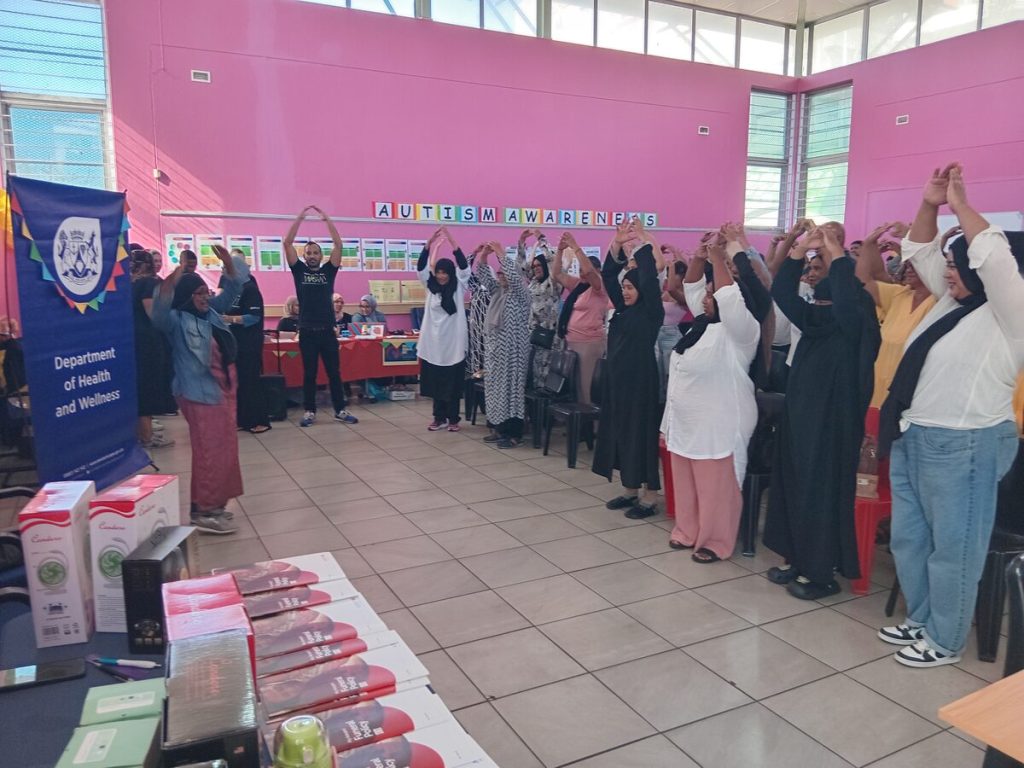
The expo concluded with calls for better collaboration between health and education departments and more community-level initiatives to support children with autism and their families.
Kroukamp concluded: “Children with autism can have a meaningful and successful life. They’re just different. You must just find them and they will thrive.”
- Mitchells Plain CHC will be starting a support group for carers of children with autism at the Town Centre Library, in Monday 20 April, at 10:00. The group will meet on every third Monday of every month. For more details, contact the registered counsellor at the hospital, Shabana Osman.



You must be logged in to post a comment.