

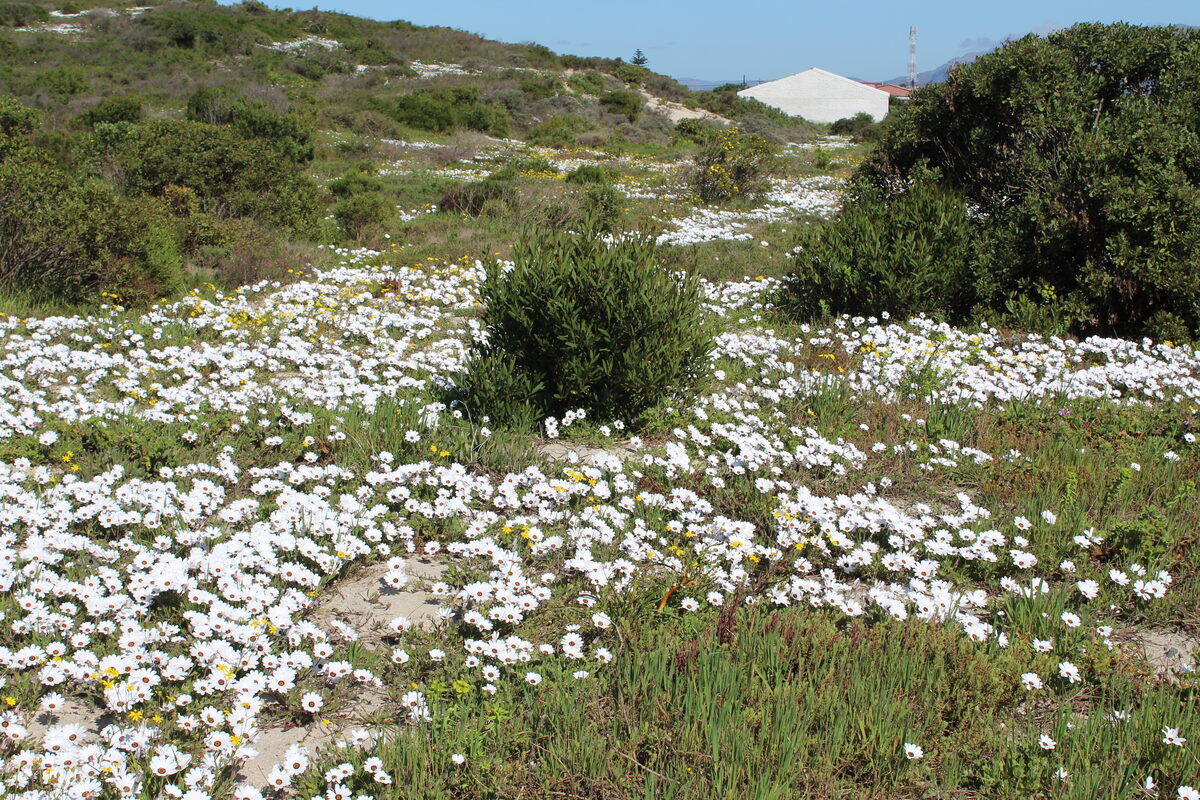
Rocklands councillor Danny Christians has renewed his decades-long advocacy for coastal development rights, presenting a comprehensive motion to Subcouncil 17 on Monday 16 February.
The proposal, which was tabled at the subcouncil’s meeting at the Lentegeur administrative buildings, called for the return of 162 hectares of False Bay coastline to its “rightful people” for economic development.

For easy reference to more Mitchells Plain news, click on this link and bookmark the tab
Motion seeks return of camping sites
In his eight-page motion submitted the Ward 79 councillor called for the return of camping sites A, B, and C at Strandfontein, comprising 162 hectares stretching from Strandfontein Pavilion to Nautilus Road. The land, which forms part of a larger 392-hectare coastal strip running to Mnandi Resort, was incorporated into the city’s biodiversity footprint as an offset area.
“It is hereby recommended that the City of Cape Town… return our camping sites A, B and C, erf 1212… to the rightful people living on the False Bay coastline for parallel development,” Christians states in his motion, which was seconded by Ward 81 councillor Ashley Potts.
The motion specifically separates these camping facilities from the proposed Strandfontein nodal development, arguing that this separation is necessary to prevent delays to the broader coastal development project.
For easy reference to more news about Strandfontein, click on this link and bookmark this tab
Mayor’s pledge acknowledges Christians’ campaign
Christians’ motion draws significant weight from recent comments by Executive Mayor Geordin Hill-Lewis at the full council meeting of 29 January. According to the motion, the mayor acknowledged Christians’ persistent advocacy, stating: “Many people and in particular Councillor Christians have been campaigning this for many years and in fact, most of his entire career in politics have been campaigning for this one issue… and later this year and before the end of our term, I hope to make his dream come true.”
The mayor’s remarks referenced the historical injustice of coastal access, noting that residents of Mitchells Plain live “agonisingly close to that coastline” but were prohibited from coastal living during Apartheid, when such areas “were not designated for them”.
Historical context drives development argument
Christians’ motion provides extensive historical context, citing the apartheid-era company “VisKor”, a coastal parastatal responsible for coastal structures and development, which had initially declared the False Bay coast as an opportunity site for development exclusively for the white community. Following urban sprawling by black communities, this development vision was abandoned in favour of declaring a “green lung” for the False Bay coastline.
The motion references company records from Watermeyer, Prestige and Retief, and Common Ground Consulting (Muller Coetzee) as evidence of previous coastal development plans for coastal communities that were later rejected by the National Government.
Economic transformation at heart of proposal
Christians argues that current spatial development patterns perpetuate income segregation and racial inequalities, forcing workers, particularly retail and domestic employees, to commute long distances to wealthy suburbs where employment opportunities are concentrated.
The motion advocates for creating “fewer but better-quality urban parks and open spaces” whilst ensuring that biodiversity offsets are not permitted in nodal development areas. Instead, Christians proposes that such offsets should be considered in more affluent areas to optimise land efficiency for “much needed economic, socio-economic, recreational and sustainable opportunities”.
Additional nodal developments proposed
Beyond the camping sites, Christians’ motion calls for pursuing the Kapteinsklip/Mnandi nodal development despite ongoing land issues with the Passenger Rail Agency of South Africa and strongly supports exploring reconfigured conceptual frameworks for nodal points at Macassar, Monwabisi, and the Sonwabe Fishing and Tourism Front.
The motion cites the successful Hartenbos development in Mossel Bay as a model for what could be achieved on the 162-hectare site, noting that this concept was previously supported by former Sub-Council 12 Chairperson Alderman Eddie Andrews.
Sub-council endorsement moves proposal forward
During the Sub-Council 17 meeting, Christians received support for his motion, with the council noting the importance of the recommendations and the extensive background research presented. The motion now forms part of the formal council record and will proceed through the city’s development planning processes.
Christians’ advocacy represents a continuation of his 2010 motion, which received acknowledgement from the Planning and Environment Portfolio Committee (PEPCO) to develop nodal points between Muizenberg and Macassar, though he argues that insufficient progress has been made to address inequalities affecting black coastal communities.
The motion emphasises that development of these coastal nodes should prioritise local communities’ economic participation, arguing that “when poor people are given access to tangible assets, they obtain the means to participate in economic activities, and are therefore better placed to benefit from economic growth.”
Subcouncil 17 will now consider the motion as part of its ongoing development planning processes.
Hot property
Several other entities have put in applications for sections of the node.
Most recently, a request by a private school was tabled before the subcouncil for a section of ground in front of Strandfontein Police Station.
Subcouncil chair Elton Jansen, who is also the councillor for Strandfontein, advised that the school apply for the piece of ground directly opposite, which was fenced and already zoned for education, but added that the application would need to be made via the provincial government.
He explained that the ground the school had requested was zoned for commercial use and was being considered for the surrounding communities’ repeated requests for a mall.
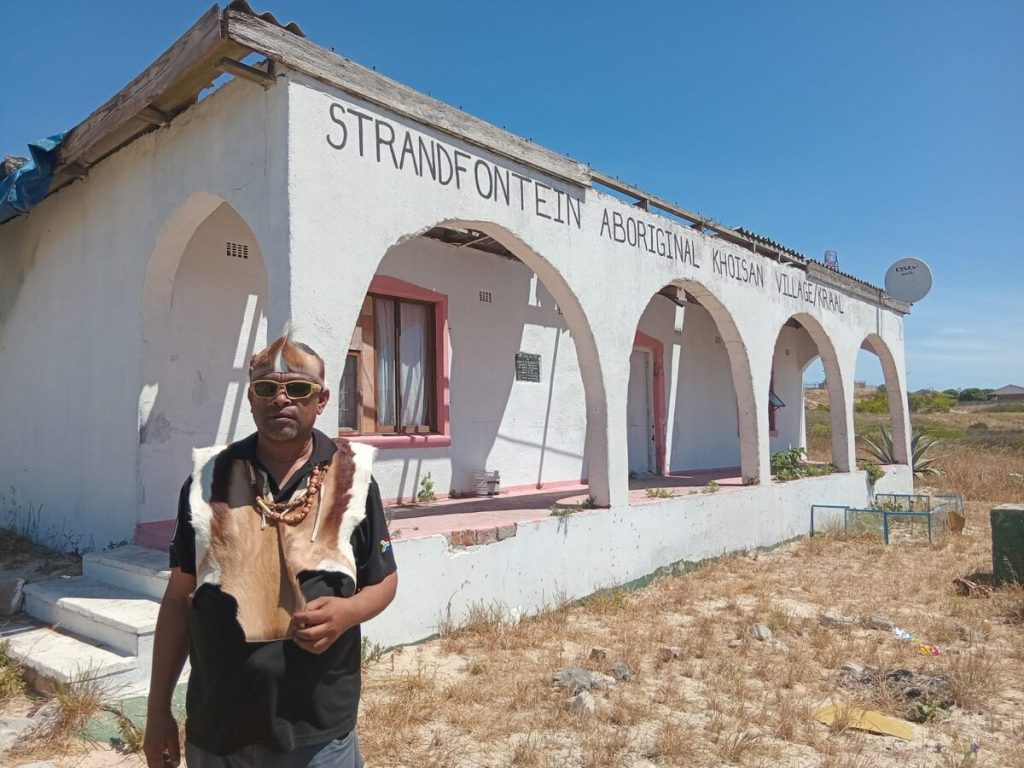
Also on the land are several informal settlements, including a section which a Khoisan advocacy group has claimed as an ancestral kraal.
For easy reference to more subcounil news, click on this link and bookmark the tab.



You must be logged in to post a comment.