
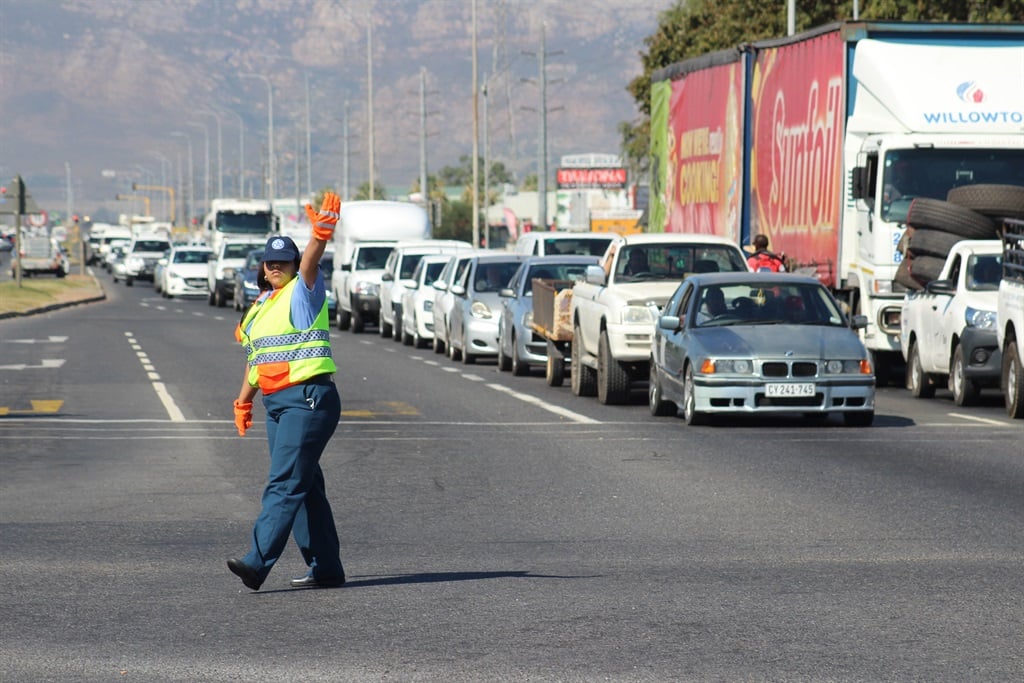
After a desperate call from residents to intervene, the City of Cape Town last week confirmed that it would do a peak hour site visit to the intersection at Brackenfell Boulevard and De Bron Road to monitor traffic congestion as soon as operational requirements and limited resources permit.
In response to the article “Verkeersnagmerrie!” published last week, Rob Quintas, Mayco member for urban mobility in the City, says the City of Cape Town acknowledges the importance of sufficient investment in the maintenance and expansion of infrastructure.
“The City continues to monitor congestion levels on the road network and as the traffic volumes increase, will look at ways to expand the network to cope with the additional demand. Areas with the highest congestion levels are then addressed first, within budget allocations, and the total metropolitan network is prioritised.”
He says implementation largely depends on available budget allocation of which the current demand is in excess of R3,5 billion.
“Apart from short-term intersection optimisations, the project that will alleviate congestion along Brackenfell Boulevard and adjacent parallel arterials according to Quintas, is the northern extension of the R300 Freeway from the N1 to Wellington Road, which is a Western Cape Government project.
“As part of our annual integrated development plan and budget formulation process, we then have to prioritise the overall needs in the city, and where possible, additional allocations to important maintenance and expansion of infrastructure is apportioned within the confines.”
High density development
Residents in Vredekloof and Vredekloofhoogte organised the Northern District Community Forum (NDCF) in 2018 to object against the high density development in Brackenfell Boulevard that they say has now resulted in the current traffic crisis in the area.
Their objection was unsuccessful and their application for appeal also denied by the City as they missed the cut-off date by one day, after the planning office in Subcouncil 2 provided them with a different cut-off date.
According to residents these developments added detrimentally to traffic congestion on roads such as Brackenfell Boulevard and Okavango Road during peak hours.
Responding to this Quintas says: “All development applications go through a formal, regulated evaluation process, as well as opportunities for objections and appeals.
“The City strategically aligns its road upgrades to the specific developments of an area.
“Development applications to the City must include a transport impact assessment if required, with the relevant transport impact studies being undertaken by private, professional traffic or transport engineers.
“These studies are assessed by our internal transport engineers from the City’s transport planning and network department who then determine the impact of those developments on the transport system.”
According to Quintas these engineers consider various factors, including the congestion during peak hours and the level of service at intersections pre- and post development.
“Thereafter, they determine whether road upgrades or transport system upgrades are required to meet the needs of the proposed new development. Generally, as part of the development approval, a developer will be required to provide these upgrades.
“The City then approves the proposed road designs and maintains these roads once completed,” he says.