
The City of Cape Town has dismissed claims that it plans to hit motorists with congestion charges, with Mayco member for urban mobility Rob Quintas saying such measures are off the table until Cape Town’s public transport is up to scratch, and that current national legislation doesn’t even allow for it.
This comes after Cape Independence Party (CAPEXIT) this week slammed the City’s proposed Travel Demand Management (TDM) Strategy as an “Orwellian dystopia,” warning it would punish motorists with higher parking fees, congestion charges and financial penalties simply for driving.
In his council speech last week, the party’s leader Jack Miller said the City’s strategy would burden motorists with unnecessary costs and restrictions.
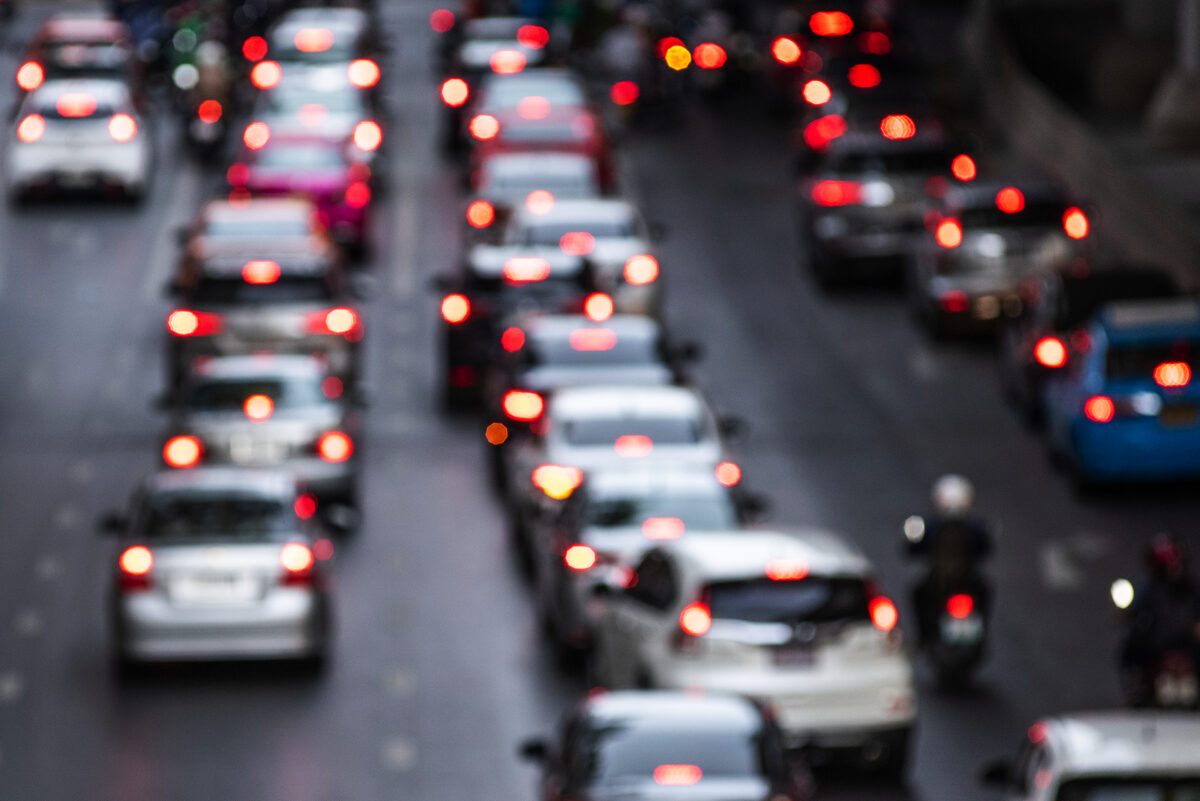
The strategy, approved by Council last month after a public participation process in October and November 2025, proposes measures to reduce traffic congestion, commuting times and carbon emissions in a city that is ranked the sixth most congested city globally, with drivers losing an average of 96 hours a year in traffic delays.
Miller argued the proposal would restrict the movement of Cape Town drivers rather than address the root causes of traffic.
“We are presented a strategy to control and manage the demand that Capetonians have to travel. And of course, the answer is various forms of punishment and more taxation,” he said in his speech.
Potential pricing measures
He referred to what is called “pricing measures” listed in the document, that proposes to make parking more expensive for motorists driving during peak traffic times, and to penalise drivers for driving by themselves in their own car.
“How exactly the City intends to implement these policies one can only imagine would require fleets of CCTV cameras tracking and monitoring the facial biometrics of drivers, counting the number of people in each car, and calculating how much to fine them at the end of the month depending on what hours of the day they were driving,” he said.
“If the City really wants to decongest the roads, they can stop pushing high-density, low-cost housing into every open crack, corner and crevice of Cape Town, and spending 75% of our budget on free handouts that invite economic migrants to come get a free house, free electricity and free water, and of course add to the overflowing traffic and collapsing water and sanitation infrastructure.”
In his direct response to Miller’s comments in the Council meeting, Mayco member for the City’s directorate for urban mobility Rob Quintas said that the policy document is unequivocally clear that the aforementioned pricing measures are not an option that will be considered as long as public transport in the city is not fully adequate and able to serve the needs of our community.
To TygerBurger, he confirmed this again, “A congestion charge is not something the City is introducing now, or in the near future. Also, current national legislation does not make provision for such a system.”
Quintas pointed out that congestion charging that is listed in the document as a potential measure, is “theoretical” and only to be considered once an effective, reliable and well-integrated public transport system and enabling legislation are in place.
“A congestion charge is mentioned as one of several long-term possibilities that may be considered only after we have achieved our primary goal of providing a reliable, efficient, and city-wide public transport network that serves as a viable alternative to private cars. We are a long way off and thus do not plan to introduce or even consider a congestion charge at this stage,” Quintas told TygerBurger.
“As for parking fees, the City charges R4.80 for every 15 minutes for the use of on-street parking bays in areas where the demand for parking is high. These are mostly business districts. Parking management ensures a turnover of parking bays and prevents any one motorist from occupying a parking space for extended periods. This method is used all over the world to ensure fair access to on-street parking for all road users.”
Future assessment
The TDM strategy document as seen by the newspaper details these pricing measures as, “Interventions that financially incentivise or penalise some behaviours and represent a critical component of TDM as they leverage economic incentives and disincentives to influence travel behaviour.”
It describes them as tools that aim to “internalise the external costs of car use such as congestion, air pollution, and greenhouse gas emissions” by assigning a monetary value to travel choices.
ALSO READ: Cape Town urges Transnet to fast-track port reforms
In this regard, parking tariffs can be imposed on public parking as a tool to increase turnover of bays and to encourage the use of alternative means to travel. It states that appropriately priced tariffs, accompanied by an effective parking management regime will be required for such purposes.
Insofar as congestion charges are concerned it is termed as a measure that imposes fees on vehicles entering designated high-traffic areas during peak hours, to encourage shifts to public transport, use of lift clubs, carpooling, off-peak travel, and alternative travel destinations.
“Beyond alleviating congestion, it contributes to reduced local emissions, enhanced urban mobility through increased use of public transport, walking and cycling,” the strategy document reads, adding that, “As public transport services improve, an investigation to understand the best suited scheme for Cape Town could be considered.”