

CAPE TOWN – McLaren Circus may soon have to leave its lions and tigers at home, or skip Cape Town altogether for its next tour to the Western Cape.
This after the tabling of a proposed amendments to the City of Cape Town’s animal keeping by-law, which would, among other changes, prohibit the use of wild and exotic animals in circus acts within city limits.
The draft amendments also tighten the screws on anyone displaying or exhibiting animals for show or financial gain. No person may do so without a permit from the City, and any application would first have to pass review by an animal welfare inspector before approval.
Keeping wild animals on any premises would require permits from both the relevant nature conservation authorities and the City, and no wild animals may be kept in public places at all. Law enforcement would also get sharper teeth as authorised officials will be able to search premises, vehicles, persons or structures without a warrant to seize any animal or item believed connected to an offence under the by-law.
ALSO READ: City calls for public comment on proposed animal keeping bylaw amendments
Other proposed changes include stricter regulations around working animals and a dedicated section empowering animal inspectors to enforce the by-law.
Animal-free entertainment
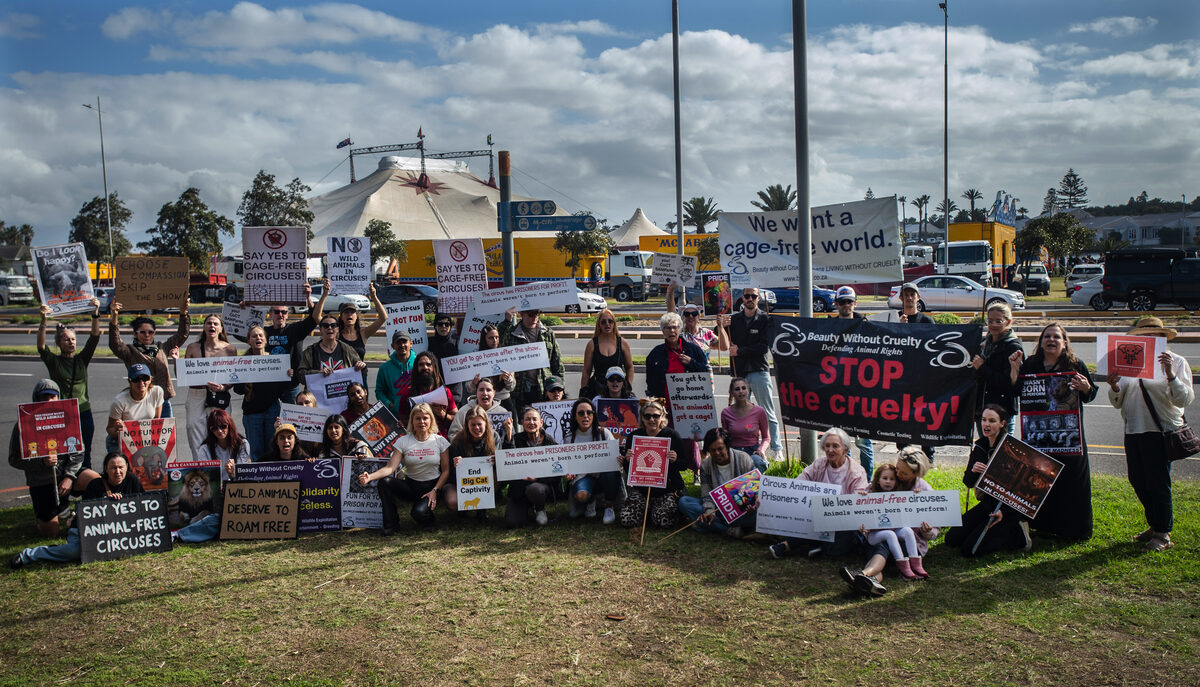
Long-time animal advocate Toni Brockhoven, chair of Beauty Without Cruelty (BWC), has welcomed the new draft by-law, calling it “an excellent new document.”
“We are delighted by the exclusion of wild and exotic animals in the circus. It has been a long time coming, it is long overdue and there will be great joy and jubilation when this finally passes,” she said, adding that the organisation have been advocating against the use of circus animals since 2009.
Brockhoven acknowledged that this progress reflects sustained efforts by BWC alongside other organisations and individuals. “The proposed changes are an encouraging outcome of that collective advocacy, with final adoption still awaited,” she says.
Chad Cupido, BWC executive officer of BWC Chad Cupido says the proposed prohibition on using wild or exotic animals in circus acts represents meaningful progress towards animal-free entertainment.
We support circus arts, but oppose using animals as circus entertainment. Families can enjoy extraordinary entertainment without making animals pay the price’.”
“Our position is straightforward. We support circus arts, but oppose using animals as circus entertainment. Acrobatics, music, comedy and human performance can provide wonderful family entertainment without animals being transported, confined and required to perform. Our concerns extend beyond what happens in the ring. They include animals’ living conditions, transport, training and opportunities to express natural behaviour. These concerns underpin our End the Circus of Cruelty campaign,” he says.
“The proposed circus restriction names wild and exotic animals; it does not expressly prohibit domestic-animal acts. BWC’s broader position remains that circus entertainment should be animal-free. Implementation must also protect animals already involved. Any transition should prioritise lawful, suitable lifelong care, veterinary oversight and proper welfare safeguards, rather than simply moving the problem elsewhere.”
“Our message is: ‘Keep the circus arts. End the use of animals. Families can enjoy extraordinary entertainment without making animals pay the price’.”
The Cape of Good Hope SPCA has added its voice to the growing call for a ban on wild and exotic animals in circuses and performances.
“This is something the welfare sector at large has called for for a long time,” says spokesperson Belinda Abrahams. “Repeated transport, confinement, noise, handling and being compelled to perform, place animals under conditions fundamentally incompatible with their natural behavioural needs. Public entertainment can never justify avoidable animal suffering.”
Circus to object against draft legislation
McLaren Circus confirmed that it will be making formal representations and objection to the proposed blanket prohibition on wild and exotic animals in circus performances, while fully supporting responsible animal welfare and regulation.
“We always maintain the best standard for our animals,” says circus spokesperson Karl Hildebrandt.
“Importantly, performing animals are already regulated under national legislation, including the Performing Animals Protection Act, as well as applicable ordinances and CapeNature permitting requirements in the Western Cape. We therefore believe that the proper regulation, licensing and inspection requirements already exists.”
We are currently the only operational traditional circus of this nature in South Africa. It is therefore concerning that a provision which directly affects our particular industry appears to have been developed without prior consultation with us.
“McLaren Circus has operated for approximately 21 years, with performing animals forming an integral part of the traditional circus. We are currently the only operational traditional circus of this nature in South Africa. It is therefore concerning that a provision which directly affects our particular industry appears to have been developed without prior consultation with us,” he says.
Hildebrand argues that the Constitution protects the right to choose and practise a trade, occupation or profession, subject to lawful regulation.
“Where a municipal by-law goes beyond regulation and potentially makes an established lawful business model impossible to operate, we believe the necessity, rationality and proportionality of that restriction must be properly considered in addition to the conflicts it potentially creates in all spheres of legislation,” he says.
Residents across Cape Town have until end of September to add their voices to the proposed amendment of the City of Cape Town’s animal keeping by-law, which are currently open for public comment.