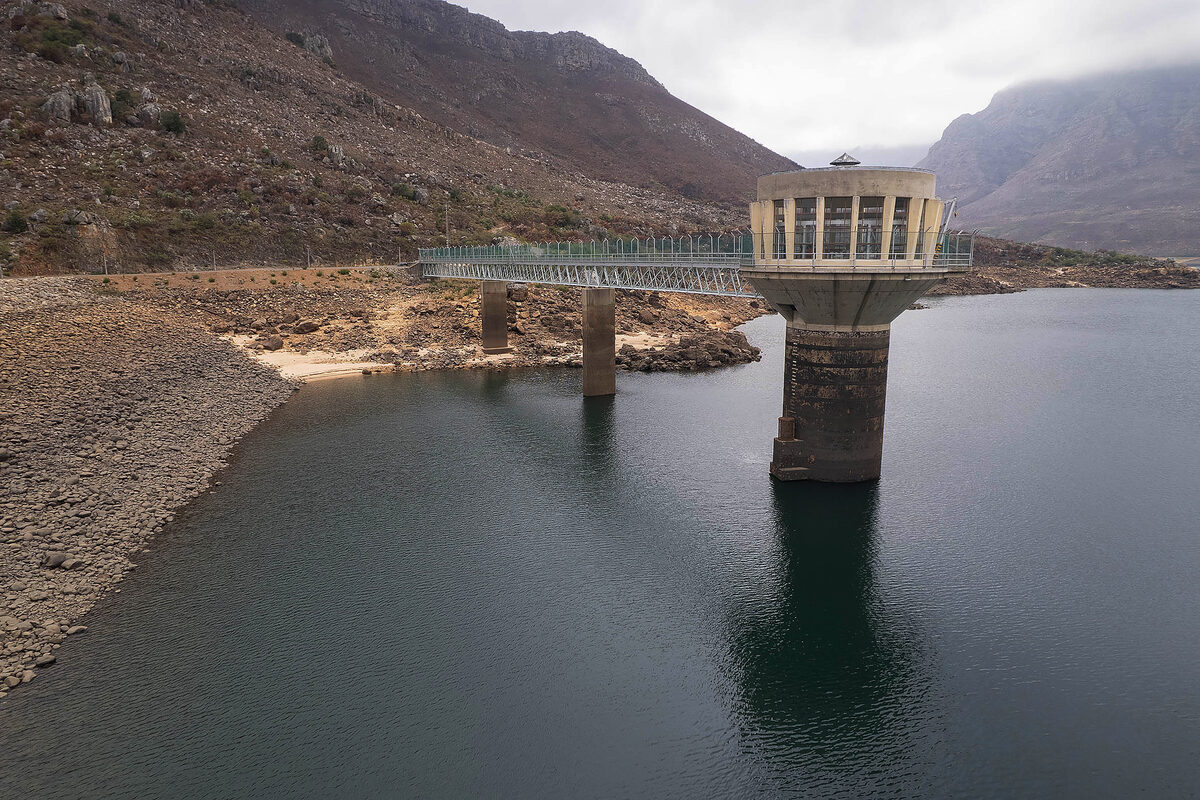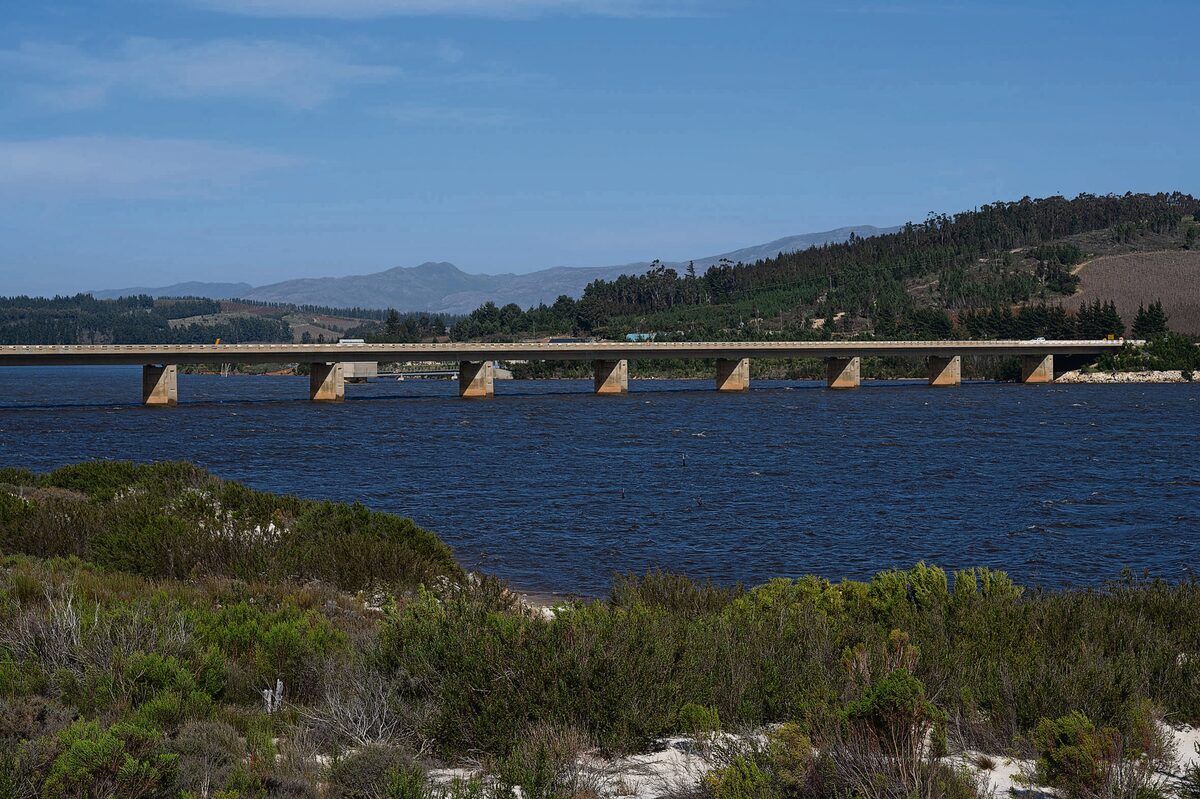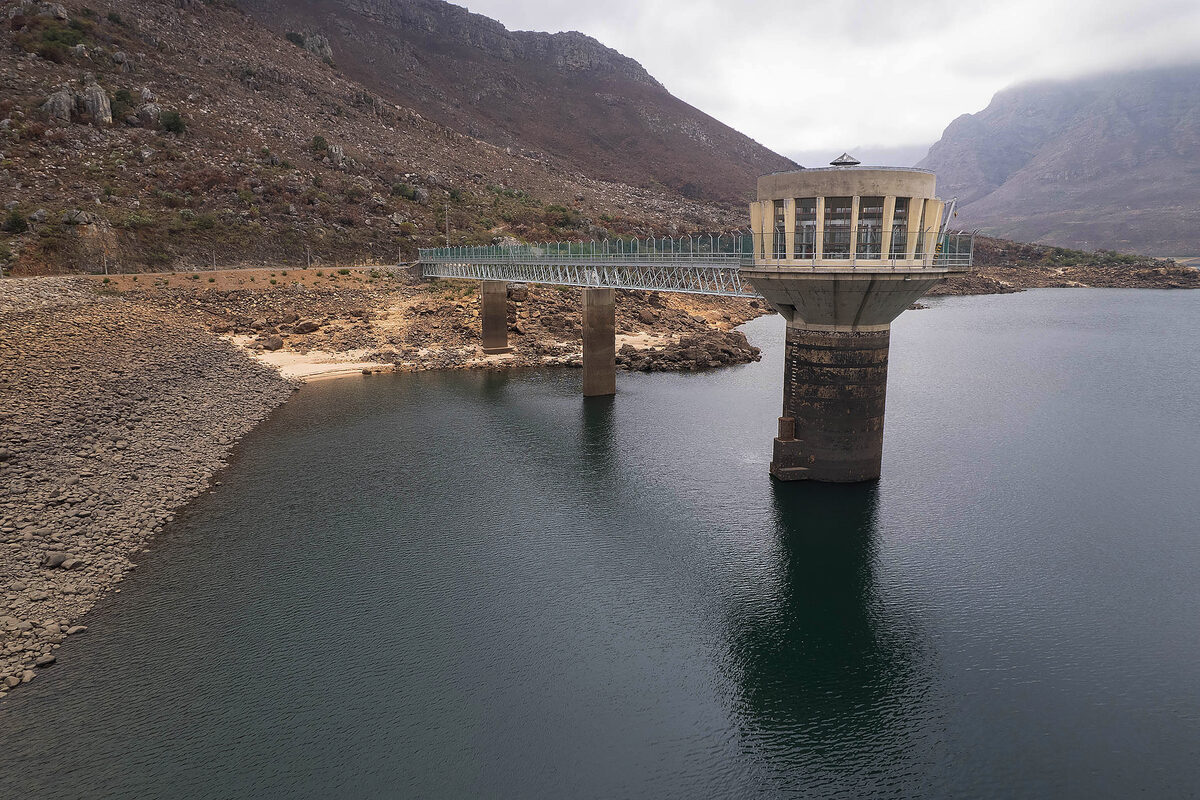


Cape Town’s water security plans are under renewed scrutiny as dam levels continue to fall, water demand remains above the City’s target and questions are raised about delays to major alternative water projects.
The City is introducing Level 1 water restrictions from Monday 1 December, calling on residents, businesses and visitors to reduce their consumption by 10%. The move comes as dam levels dropped to 68.6% on 23 November, compared with 82% at the same time last year.
The City says it is acting early to protect available supplies, while GOOD councillor and national youth organiser Kaden Arguile has criticised the pace of its water programme, warning that Cape Town could face greater risks if the winter of 2027 brings below-average rainfall.
City urges responsible water use
Mayco member for water and sanitation Angus McKenzie told TygerBurger the City is implementing restrictions as a precautionary measure following poor rainfall.
“We are implementing restrictions now as a pre-emptive measure. By acting early, we have a better opportunity to manage our available water responsibly and reduce the risk of harsher restrictions being required later,” he said.
The City reported that water demand had reached 951 million litres per day (MLD), 91 MLD above its target of 860 MLD. Under Level 1 restrictions, residents are encouraged to use no more than 85 litres per person per day.
McKenzie acknowledged the efforts residents had made since the 2015–2018 drought, saying the City’s population had grown while overall water use had only recently returned to pre-drought levels.He said the City was also responsible for addressing water losses and improving the efficiency of its network.
“Restrictions cannot be the City’s only response. Residents must see that, while we ask them to reduce their water use, we are also working to reduce avoidable losses and improve the efficiency of the network,” he said.
According to McKenzie, the City is focusing on leak reduction, pressure management, pipe replacement and maintenance. It also plans to replace old or inaccurate meters, expand smart metering and increase the use of treated effluent and alternative water sources for suitable non-drinking purposes.
McKenzie said the City would continue monitoring rainfall, dam levels, demand and the performance of its water supply system, adjusting its response when necessary.
Progress on alternative water sources
The City’s New Water Programme aims to add 300 MLD of water to Cape Town’s supply by the mid-2030s through groundwater, water reuse and desalination projects.
Its Water Outlook report, published annually, sets out the City’s plans and progress towards diversifying water sources and reducing dependence on rainfall.
The City said invasive alien vegetation clearing had recovered an estimated 18.77 billion litres of water annually. Since April 2019, 41,306 hectares have been cleared, with follow-up clearing carried out across a further 50,644 hectares.
Groundwater projects are also contributing to supply. The Table Mountain Group Aquifer Scheme and the refurbished Atlantis Managed Aquifer Recharge Scheme currently provide approximately 12 MLD.
However, the City said theft of power cables and vandalism had affected the rollout of projects at Atlantis and, to a lesser extent, Steenbras and the Cape Flats. The Strandfontein West zone of the Cape Flats aquifer scheme is expected to begin supplying drinking water in the first half of 2027.
The Faure New Water Scheme, which will treat wastewater for drinking purposes, is expected to deliver its first water in 2031. The project is the City’s first large-scale water reuse scheme and its first municipal public-private partnership.
The procurement process began with a request for qualification in September 2026, followed by a clarification session in November. The request for proposals is scheduled for the second half of 2027.
The planned Paarden Eiland desalination plant is expected to produce 70 MLD, with first water anticipated in 2036. The City said changes to the Port of Cape Town’s expansion plans had affected the project and that it was assessing alternative options.
GOOD questions delivery and long-term planning
Arguile said the City’s progress had fallen short of commitments made in its 2019 Water Strategy, which aimed to deliver more than 300 MLD of additional water within ten years and protect Cape Town against a one-in-200-year drought.
He said the original schedule had promised 347 MLD by the end of 2026, including 265 MLD from groundwater, water reuse, desalination and the Berg River–Voëlvlei scheme.
According to Arguile, several projects had delivered little or no additional water, while the Faure scheme had shifted from an original expected delivery date of 2024 to 2031. The wider programme’s completion target had also moved from 2030 to 2036.
He also raised concerns about the City’s revised drought planning assumptions, saying its 2026 Water Outlook accepted a one-in-50-year level of protection until around 2030, rather than the one-in-200-year standard set out in the earlier strategy.
“Drought was the reason for the 2019 plan, not an excuse for failing to deliver it,” Arguile said.
He warned that another dry winter in 2027 could leave Cape Town vulnerable, particularly if the City had not brought more non-rain-dependent water sources online.
Arguile also questioned the emphasis on desalination, citing its high construction and electricity costs. He said groundwater and water reuse should receive greater priority, alongside reducing leaks and water losses.
He called on the City to publish quarterly updates showing the progress and actual output of each water project, accelerate the Faure and aquifer schemes, and make the full lifetime costs of desalination projects public.He also urged the City to explain how rising water costs would affect households and ensure that poorer residents were protected from unaffordable increases.
Preparing for an uncertain future
The City maintains that building more dams alone will not protect Cape Town against drought, as rain-fed supplies remain vulnerable to changing weather patterns.Its long-term strategy therefore focuses on diversifying water sources, managing demand and strengthening infrastructure to meet the needs of a growing population.
McKenzie said protecting the city’s water supply required shared responsibility between residents and the municipality.
“By combining residents’ efforts with effective system management, stronger oversight and sustained investment in our water infrastructure, we can protect our available supply and build a more water-secure Cape Town,” he said.
For residents, the immediate priority remains reducing consumption as the City prepares to introduce Level 1 restrictions on 1 December.
ALSO READ: Western Cape faces water restrictions as Day Zero fears grow