
- The recent World Mental Health Awareness Day conference at Stellenbosch Business School focused on breaking the stigma surrounding mental health through expert discussions.
- Key speakers highlighted common myths about autism, ADHD, and the potential of psychedelics in treatment.
- The event emphasised the importance of compassion, understanding, and education in fostering a supportive community for those affected by mental health issues.
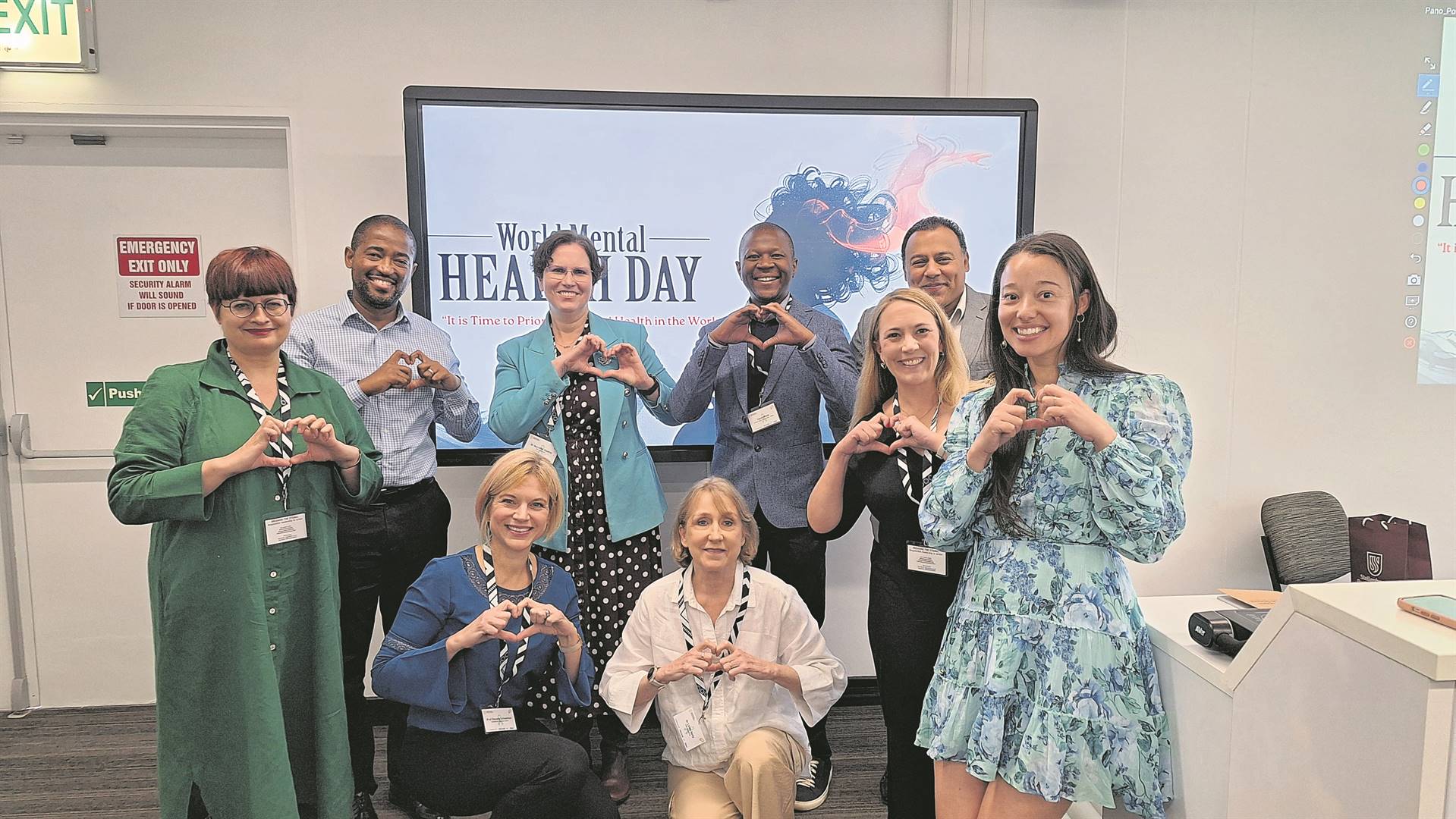
“Breaking the Stigma” was the highlight for this year’s World Mental Health Awareness Day at the Stellenbosch Business School in Bellville, showcasing professionals’ myth-busting and empathetic insights in the psychology, psychiatry and journalism industries.
This conference held on Wednesday 10 October sought to address Responsible Leadership in Action through speakers Prof Renata Schoeman, Linda Kelly, doctors Marcelle Stastny and Gagu Matsebula, to name a few.
In partnership with Cipla and Media24, talks centred around raising crucial awareness about the stigma surrounding mental health and exploring ways to promote understanding and compassion in communities. Including reminders as simple as: “Words matter”.
Autism
Kelly addressed the key myths surrounding those located on the autism spectrum, also characterised as a lifelong neurodevelopmental condition.
She said a formal diagnoses requires persistent deficits, “particularly in social communication and social interaction across multiple contexts. The first one includes deficits in social-emotional reciprocity”.
This means that those on the spectrum typically have difficulty with back-and-forth conversations, making small talk, sharing interests with people, sharing emotions with people and difficulty initiating conversations outside areas of particular interest.
“They also have deficits in non-verbal communicative behaviours, or body language. Meaning, a lack of facial expression, gesture, or other forms of non-verbal communication. And also difficulty understanding non-verbal social cues from other people.”
A second set of behaviours is noticed around restricted and repeated patterns of behaviour or of interests or of activities.
“So, stereotyped, which means repetitive and the same over and over, motor movements, such as clapping hands, or saying things in a repetitive way over and over in terms of speech.
“To the person, it’s very important that it’s done in that particular way. It can be extremely anxiety-provoking if that doesn’t occur. And, as I say, this includes ritualized patterns of verbal and non-verbal behaviour. They often have highly restricted and fixated interests that are abnormal in intensity or focus.”
ADHD
Prof Schoeman addressed myths commonly associated with attention deficit hyperactivity disorder (ADHD) which is also a neurodevelopmental disorder.
She started off by pointing out how ADHD is characterised by a tribe of core symptoms, inattentiveness, hyperactivity and impulsivity. “And it causes a wide range of functional impairment that affects your life, in terms of your working-, school- and interpersonal environment, as well as your emotional health.”
ADHD affects all ages, from early toddlerhood right through until your retirement and later.
“In any way, it affects your life. And it leads to the question that we had earlier today about the ‘spectrum’. Are we all on a little bit of spectrum of something? Yes, most likely. But not all of us have functional impairment. And therefore, we don’t necessarily have diagnosis.”
She addressed myths typecasting ADHD as a “psychiatric fad” in saying that it is not an invention of modern society. “First reports describing individuals living with ADHD date back to 1766. There’s German people that reported on it in the 1800s.
“The third myth that we often hear is that ADHD is just an excuse for bad behaviour. It’s a neurobiological struggle. The dopamine levels, the serotonin levels, the boradrenalgic levels which create the symptoms.”
Ketamine & magic mushrooms
Dr Stastny’s platform focussed both helpful and unhelpful consequences of prescriptions for ketamine and psilocybin, the latter otherwise known as the active ingredient in magic mushrooms, to pilot psychiatric treatments.
“Ketamine is an old drug, commonly used in hospitals to help with pain or sedation, even for children. It’s also known as a street drug (called Special K) and has significant abuse potential.”
But why do psychiatrists use Ketamine?
“Ketamine acts fast, helping people with severe depression feel better quickly, sometimes within 40 minutes. It has shown success in treatment-resistant depression when other antidepressants don’t work and can reduce suicidal thoughts effectively,” she explained.
Ketamine is given as part of a short-term treatment plan, typically over three weeks, “but its effects don’t last long, and patients often relapse. There are also increasing concerns about the growing number of ketamine clinics, some of which may not follow proper guidelines, leading to unsafe practices and possible abuse.”
She went on to illustrate that in the past, psychedelics like psilocybin were popular in psychiatry, “but they became illegal for political reasons. Now, there’s a resurgence in interest for their use in mental health treatments, particularly in clinical trials for severe depression or PTSD (Post-Traumatic Stress Disorder).”
However, psychedelics like mushrooms can dissolve personal boundaries, which might lead to abuse or inappropriate behaviour in some situations, even by trained professionals.
“There are also risks of mental health side effects, like psychosis or mania, especially when used in non-clinical settings, such as retreats.
“While ketamine and psilocybin offer exciting new treatment options, they come with risks, especially in terms of abuse potential, mental health risks and regulation issues. It’s important that these substances are used under strict medical supervision.”
Mindful mental health
Mental health is too often surrounded by silence, stigma and misconceptions, mainly due to a lack of understanding (or even sincere interest) of the mysteries contained by the human mind.
Events like these share significant insights to the daily challenges of those affected by an array of psychological conditions. It represents the necessary continuum to raise awareness, understanding and empathy towards lifestyles surrounding mental conditions.