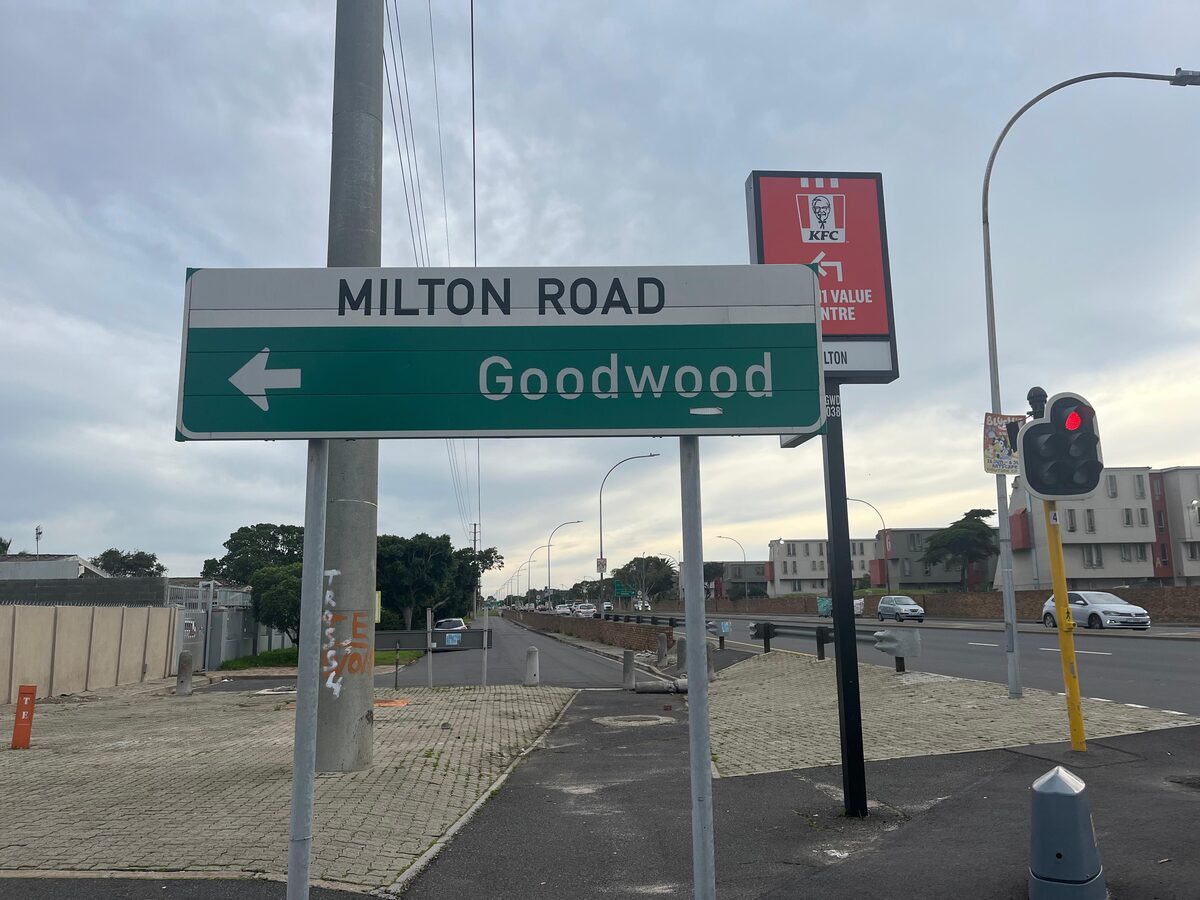


A group of concerned residents in Kenridge is mounting a fierce campaign against the proposed establishment of the Greater Kenridge City Improvement District (GKCID), slamming the initiative as an undemocratic “double taxation” scheme pushed through with inadequate public consultation.
A CID is a defined geographical area where property owners agree to pay an additional property rate to fund supplementary municipal services that go beyond what the City normally provides.
According to the opposition group, many homeowners only learned of the proposal during a public meeting held by GKCID organisers on 15 October. They claim they discovered at the meeting that the initiative had been underway for months and had already reached the final presentation of its business plan.
“Clearly the communication and consultation process with the residents has been inadequate,” the group stated, accusing organisers of simultaneously inviting comments on the final business plan while actively soliciting “yes” votes from an uninformed community.
Financial strain and “double taxation”
At the heart of the residents’ grievances is the financial burden the proposed CID would place on homeowners. The additional monthly levy, tied to municipal property valuations, is projected to start at R233 and exceed R435 per month, a figure that will climb alongside future City property revaluations.
Opponents argue this represents a severe financial strain, particularly for pensioners and single-parent households. It appears the City of Cape Town, municipal consultants, and GKCID organisers are working in tandem to impose “forced double taxation” for municipal services residents already fund through their rates, they say.
“Almost a quarter of the fees will be spent on administrators and salaries,” said resident spokesperson Brian Figaji. “In the small print, there is a forced levy for the CID, yet voluntary membership. Although you pay the levy, you still have to apply for membership of the CID company just to be able to vote at the AGM. This seems like some sleight of hand.”
Figaji also raised concerns over the backing of the proposal by local real estate agents, questioning whether their support stems from genuine concern for residents’ wellbeing or potential financial benefit. He further warned that while establishing a CID follows a set process, dismantling a problematic one is “an arduous process that is almost impossible,” leaving residents “stuck with a CID forever.”
Questions over security and crime statistics
Proponents of CIDs frequently point to enhanced security as a primary benefit, with the GKCID business plan heavily featuring camera installations and outsourced monitoring. However, the opposition group dismissed this pitch as “big on emotion, but light on strategy and effectiveness.”
GKCID organisers have acknowledged that residents will need to retain their existing private security contracts, as CID patrols would only cover streets and public spaces.
Opponents argue that current local security providers already patrol these areas at no extra charge, and pointed out that neighbouring Welgemoed, which has an established CID, recently recorded higher crime statistics than Kenridge.
“We are a mature community, and we know what we want,” said resident Mike de Villiers. “When there was a security concern in a part of Durbanville Hills, the community came together and paid for additional cameras monitored by CNI. This once-off cost was carried by the concerned residents.”
We did not need a CID then, so why do we need one now to impose costs we are already paying for? Who are the real beneficiaries?”
The group also raised red flags regarding the integrity of the voting and objection process. They noted that GKCID organisers are managing the entire process themselves, including the collection of “no” votes and formal objections.
The opposition group has vowed to continue fighting the proposal, stating they are “prepared to do whatever it takes to stop this abuse of our residents.”
City Cape Town responds
In response the City of Cape Town laid out the public participation and stakeholder engagement processes were undertaken in relation to the proposed GKCID.
According to the City, an urban management survey was conducted during 2025 to identify service delivery needs and priorities within the proposed area. Thereafter, the draft Business Plan was presented to affected property owners and residents at the first public meeting held on 6 August. Notice of this meeting was advertised in the TygerBurger newspaper. Following the meeting, a 30-day public comment period was provided to allow stakeholders the opportunity to submit comments and recommendations on the draft Business Plan.
The City refers to a second public meeting held on 10 October, which was also advertised in the TygerBurger newspaper. At this meeting, the final draft Business Plan, incorporating feedback received during the initial consultation phase, was presented to attendees and affected ratepayers.
“At the conclusion of the meeting, affected ratepayers were invited to indicate their consent to, or objection against, the proposed GKCID Business Plan. In addition, a further 30-day consent and objection period commenced following the second public meeting, thereby providing affected parties with an additional opportunity to participate in the process and submit their views before the application was finalised,” the City states.
ALSO READ: Kalk Bay residents fear proposed development could threaten heritage
“The CID initiative is a community driven initiative and we do not advocate for a creation of a CID in any community. It is the community that approaches the City to guide and facilitate them in starting the process of creating a CID.
“There are no consultants appointed by the City to promote CIDs in communities. The City can confirm that the CID branch within the City of Cape Town is there to provide oversight to all existing CID in terms of S20 of the CID by law.”
Guided by legislation
With regard to the issue of “double taxation” the City stated that the services proposed by the CID is not basic services, but enhanced and supplementary services over and above what the City delivers.
“It will not replace the City services. The funds of the CID are ring-fenced and can only be used within the geographical boundary of the CID.”
Furthermore the City noted that it only guides and facilitates the CID establishment process. “If the members of the community do not want the CID the consent and objection phase will reflect those results as the majority will not consent to it.”
On affordability the City stated that the amount levied by the City to fund the CID budget is not a tariff or a fee, but an additional property rate as provided for in the Municipal Property Rates Act (MPRA).
“The additional rate is levied in the same manner as that of property rates which is based on the valuation of a property. To assess the legality of this additional rate, it is necessary to consider the relevant provisions of the act, which is the national legislation underpinning the Cape Town CID model.”
ALSO READ: All appeals against Cape Winelands Airport authorisation dismissed
The City refers to Section 22 of the Municipal Property Rates Act (MPRA), which allows a municipal council to designate a specific zone as a special rating area. Under this legislation, the City is permitted to charge an additional property rate to fund improvements or upgrades within that zone, and it may differentiate between various property categories when applying the levy.
Regarding financial relief for vulnerable residents, the City confirmed that any property owner who currently receives a full or partial municipal rates rebate is automatically granted a 100% rebate on the additional CID rate.
“The role of the CID branch officials is to guide and facilitate. We have an oversight role only to ensure that the process is undertaken in terms of the CID by-law and policy. None of the additional rates collected are used by the City. Once the CID non-profit company (NPC) has been established, one-twelfth (1/12) of the approved annual budget is paid over to the NPC monthly.”
The steering committee of the proposed Greater Kenridge City Improvement District (CID) have mounted a detailed defence of their business plan, pushing back against criticisms over management structures, service duplication, governance, and voting transparency.
Steering committee defends proposal
Responding to critics of the administrative structure, the GKCID steering committee emphasized that a dedicated manager and board are essential to turning field operations into measurable results. Under the plan, management will align PSIRA-registered security providers with the police and the City, enforce strict performance indicators, monitor registered cameras, and attend quarterly Community Police Forum (CPF) and neighbourhood watch meetings.
Separate strategies will also govern cleaning, parks, and NGO-backed social programmes, including logging municipal defects via the City’s C3 system, while quarterly newsletters and an updated website will ensure public accountability. Without this layer, proponents argued, field teams would lack strategy, monitoring, and a direct link to municipal authorities.
Supplementing, not duplicating, City services
Addressing concerns over service overlap, the committee maintained that the CID is planned in direct consultation with City departments to fill operational gaps rather than replace baseline municipal duties. Proposed top-up resources include around the clock security patrols with three vehicles and a control room, 50 AI cameras, seven licence-plate cameras, and 720 metres of fencing at De Bron.
Furthermore, a four-person cleaning team will operate five days a week across all 26 parks, supported by two park wardens and extra mowing along with targeted social programmes alongside physical maintenance.
Defending the need for heightened security, the steering committee cited local crime statistics and neighbouring success stories, pointing specifically to Welgemoed as proof that monitored surveillance deters criminals.
Proponents highlighted the 2025 urban management survey, which revealed that 36% of respondents had been crime victims and 65% feel unsafe daily. While 92% deemed police presence inadequate, 93% backed expanded CCTV and licence-plate cameras. The committee warned that Greater Kenridge remains vulnerable without surveillance, especially as surrounding suburbs are heavily monitored.
Citing recent violent home invasions in nearby Aurora, suspected to be the work of an organised syndicate, the committee warned that Greater Kenridge remains vulnerable while surrounding suburbs are heavily monitored. It pointed specifically to neighbouring Welgemoed, where residents reported a noticeably safer neighbourhood after introducing 24/7 patrols backed by active CCTV monitoring.
Clarifying governance rules, the committee noted that while the initial vote to establish the CID follows a “one property, one vote” rule, ongoing Annual General Meetings (AGMs) adhere to municipal valuation policies. Membership in the managing non-profit company is open to every rate-paying owner, with registered members receiving one vote.
Addressing calls for a voluntary model, proponents argued that while once-off drives can fund limited capital items like cameras, they cannot sustain recurring costs like daily patrols, cleaning and maintenance of public areas.
Safeguards on vote counting
On the counting of “No” votes, the committee stressed that verification does not rest with them alone. Forms are audited against the City’s property roll, and the committee has committed to meeting every objector. Upon lodgement, the City’s executive director must verify compliance, followed by a mandatory public inspection window within 14 days.
To succeed, the application requires formal consent from 1 375 of the precinct’s 2 291 ratepayers, with official results still pending.
The steering committee states residents were notified via its City-approved public participation plan which includes the website, emails to City-listed owners, newspaper, notices at the library, shopping centres, schools, and Bark Park, plus Facebook and WhatsApp flyers. They say the process began well before the 15 October meeting.
The owner register opened in May 2025, and a September–October 2025 urban management survey drew 679 submissions (635 from owners). The draft plan was published before the 6 August 2026 meeting, generating 77 written comments that reduced the Year 1 budget from R7.1 million to R6.2 million and the residential rate from R90.66 to R77.82 per R1 million valuation.
“The overlap between voting and commenting is by design. Under the City’s By-law, consent collection starts only after the final plan is presented at the second public meeting, while written comments remain open for at least 30 days afterward.
Thus, 16 November closes written comments only while voting continues into the new year, with the City extending the submission deadline to 31 January 2027.
“No application reaches Council without consent from the required majority of at least 60% of ratepayers, and all comments plus committee replies must be recorded and attached (s6(13)). Conceding confusion over the dates, the committee has since issued a clarification to owners,” a spokesperson says.
The committee says the “nearly 25%” figure that those against the CID claims goes to management, does not match the budget as cited by critics.
“General expenditure is 17.4% of the Year 1 budget, 22.9% in Year 5, and about 21.4% over five years. Over five years, management fees are roughly 11% and office rental is about 6%,” they state saying the management fee is R540 000 for nine months in Year 1, rising to R961 412 in Year 5.
In terms of low-income relief they say owners who receive a full or partial rates rebate from the City pay no additional rate, a 100% rebate under the City’s policy.
“Compared with other CIDs, Greater Kenridge sits below the middle of the field. Its residential rate is R77.82 a month per R1 million of valuation. The median across the 36 other Cape Town CIDs is R96, and rates range from R42 to R221,” the spokesperson conluded.