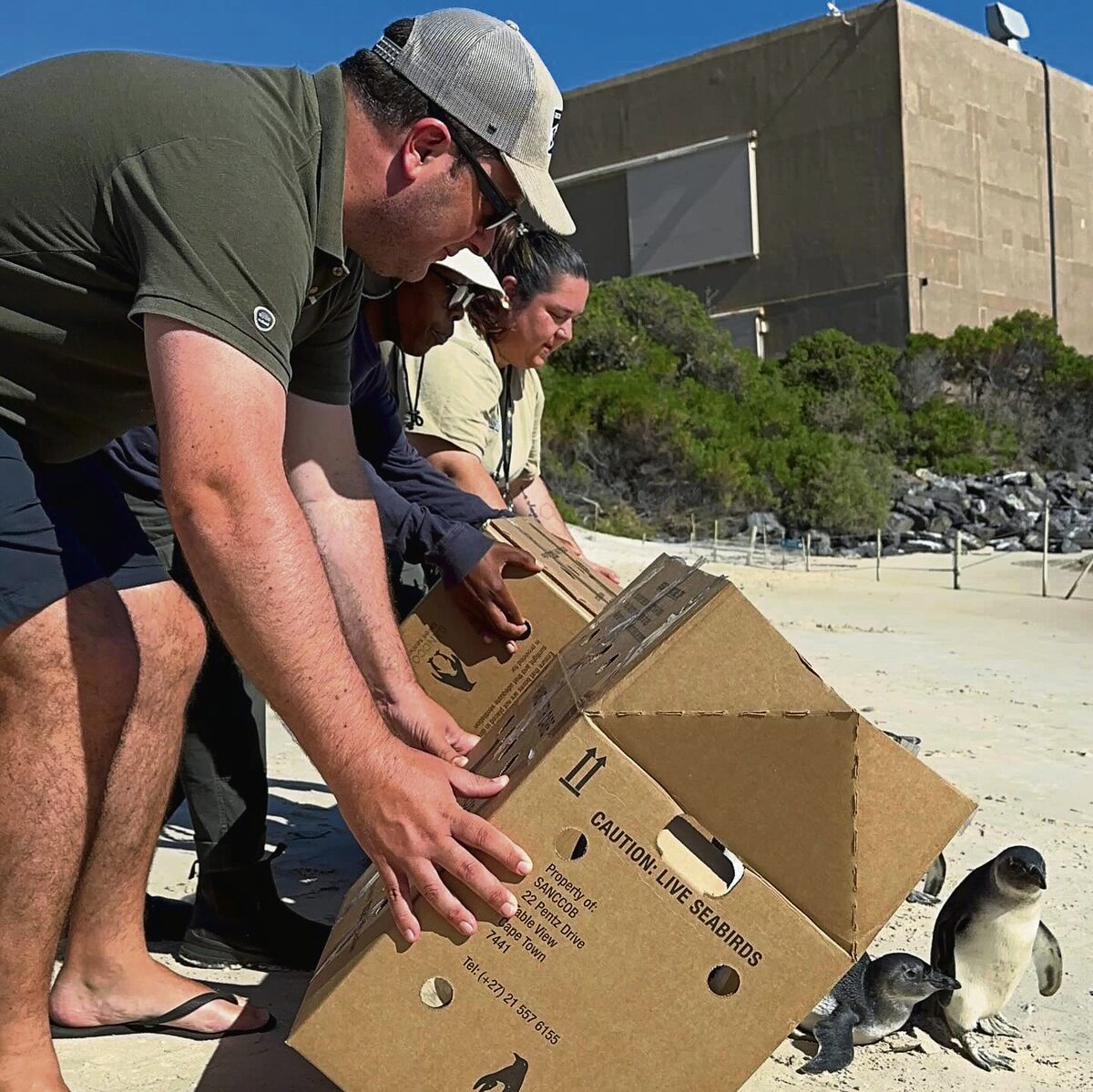


The Southern African Foundation for the Conservation of Coastal Birds (Sanccob) is currently hand-rearing 85 African Penguin chicks. These chicks will be released into the wild when they are old enough, helping to boost the penguin population in their natural habitat.
Sanccob says their research indicates that hand-reared African Penguins have as good a chance of success as their wild-raised counterparts, including breeding successfully over multiple seasons, further contributing to the species’ recovery.
“Additionally, we have 40 African Penguin eggs in our incubators, so we anticipate even more penguins joining the wild colonies in the coming months,” Sanccob says.
In the clinic
So far in 2025 Sanccob admitted 491 patients, the majority of which were African Penguins. Among the other species treated were several Kelp Gulls, suspected to be suffering from botulism toxicity, and emaciated Cape Cormorants.
“In January and February alone we have successfully released 150 rehabilitated seabirds, most of which were admitted to Sanccob in 2024, and one African Penguin who had been in recovery with us since 2023.”
This month saw 23 oiled patients in a single month in Cape Town. Among the oiled birds were a Kelp Gull, a Hartlaub’s Gull, a Reed Cormorant and 20 African Penguins.
“These birds are going through our rehabilitation process and the first few have already been released. We also admitted 54 African Penguins from Robben Island, all suffering from a mysterious condition causing inflammation and swelling of the skin and underlying tissues around the tail and legs (cellulitis). We visited Robben Island to investigate but have yet to identify a definitive culprit. Sanccob is working tirelessly with our partner, the Robben Island Museum, to discover the root cause of this affliction. The affected penguins are currently healing under the care of our rehabilitation team.”
Vet cases
In January and February Sanccob admitted 59 gulls suspected of having botulism, with most of them being Kelp Gulls. Eight of the affected birds were Hartlaub’s Gulls, and, more unusually, they also admitted five Sabine’s Gulls – a rare species for Sanccob as these birds are pelagic.
“Botulism is a life-threatening disease that affects a wide range of wildlife species. It is caused by a neurotoxin produced by the bacterium Clostridium botulinum, which can spread through consumption of infected fish, maggots, or other contaminated foods. In birds, botulism typically presents as progressive paralysis of the legs, wings, and neck. Affected birds may struggle to swim or fly and may be unable to hold their heads up. Botulism mostly affects scavenging species so thankfully penguins are seldom impacted; gulls, sadly, are at high risk for this disease,” Sanccob says.
Sanccob urges the public to report any sightings of seabirds in distress to 021 557 6155 (office hours) or 078 638 3731 (after-hours).