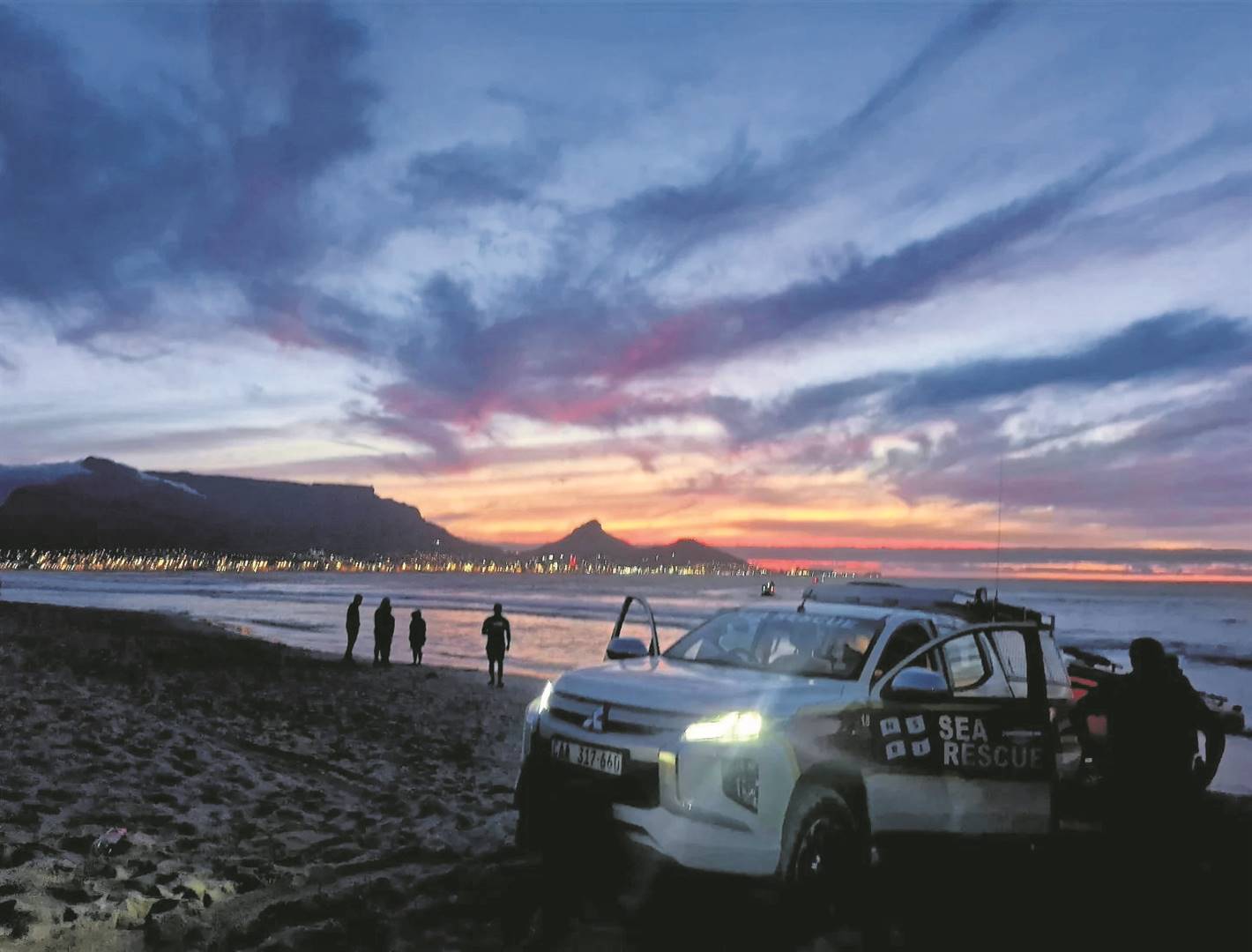

Despite an extensive search, there is still no sign of the missing teen who was swept away by a rip current at Sunset Beach on Sunday.
According to the National Sea Rescue Institute (NSRI) in Melkbosstrand, at least four teenagers were swept away by rip currents.
“On arrival at the scene it was determined that four males, aged in their late teens, were in difficulty in the surf,” Terence Lawson, NSRI Melkbosstrand duty coxswain, says.
One was rescued by two bystanders – a husband and wife from Mauritius – using an NSRI pink rescue buoy.
“Then an additional bystander had launched into the water with a bodyboard to go to the aid of two of the teenagers, while the Mauritian man also returned into the water, with the pink rescue buoy, and two of the teenagers were rescued to the shore,” Lawson says.
The three teenagers who were safely on the shore were assessed by paramedics and they were not injured and required no medical care, Lawson adds.
However, an 18-year-old from Mandalay was missing in the surf.
“NSRI Melkbosstrand, NSRI Table Bay, Milnerton Surf Lifesaving, WC Government Health EMS rescue squad and ambulance, Life Healthcare response paramedics, City of Cape Town (CoCT) law enforcement officers, Community Medics, Cape Town fire and rescue services and the police responded,” Lawson says.
As of Monday 14 February, police divers were still at the scene and continued in an ongoing search.
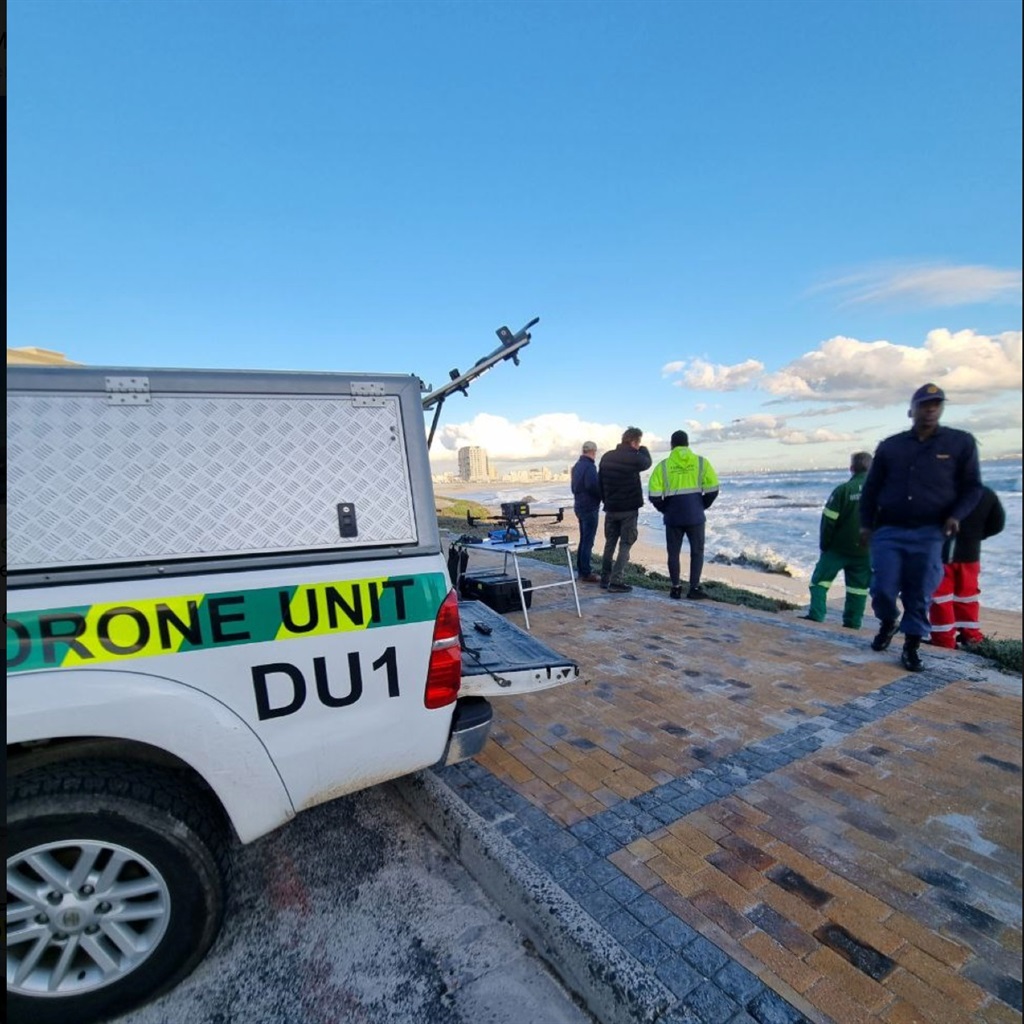
“A Milnerton Lifesaving lifeguard inflatable rigid hull boat (IRHB) rescue craft and three NSRI IRHB rescue craft, NSRI Table Bay’s Spirit of Day and NSRI Melbosstrand’s Rescue 18 Alpha and Film Industry Fund Rescuer 2, searched in the surfline, and shoreline search efforts were conducted. The EMS/AMS Skymed rescue helicopter conducted an aerial search and EMS rescue paramedics used a search and rescue drone to assist in the aerial search,” Lawson says.
Despite an extensive search, there remains no sign of the missing teenager.
It was reported that only minutes before the four boys got into difficulty, two unidentified good Samaritans had used the NSRI pink rescue buoy to rescue a woman who had been caught in the same rip current.
She was rescued to the shore and before her cousin could warn the four teenagers of the strong rip current, they were swept away.
“The bystanders are commended for their efforts,” Lawson says.
Rip currents often move slowly enough to go barely detected. But given the right circumstances of waves and beach profile, they can develop into currents moving at speeds of up to two metres per second – faster than any of us can swim, the NSRI says.
Ranging in width from just a few metres to a hundred metres, they pull to just behind where the waves form and then lose their power.
This is what you should look out for:
. Water through a surf zone that is a different colour to the surrounding water;
. a change in the incoming pattern of waves (often the waves are not breaking in a rip channel);
. seaweed, sand “clouds” or debris moving out to the backline where waves are forming through the surf zone;
. turbulent or choppy water in the surf zone in a channel or river like shape flowing away from the beach.