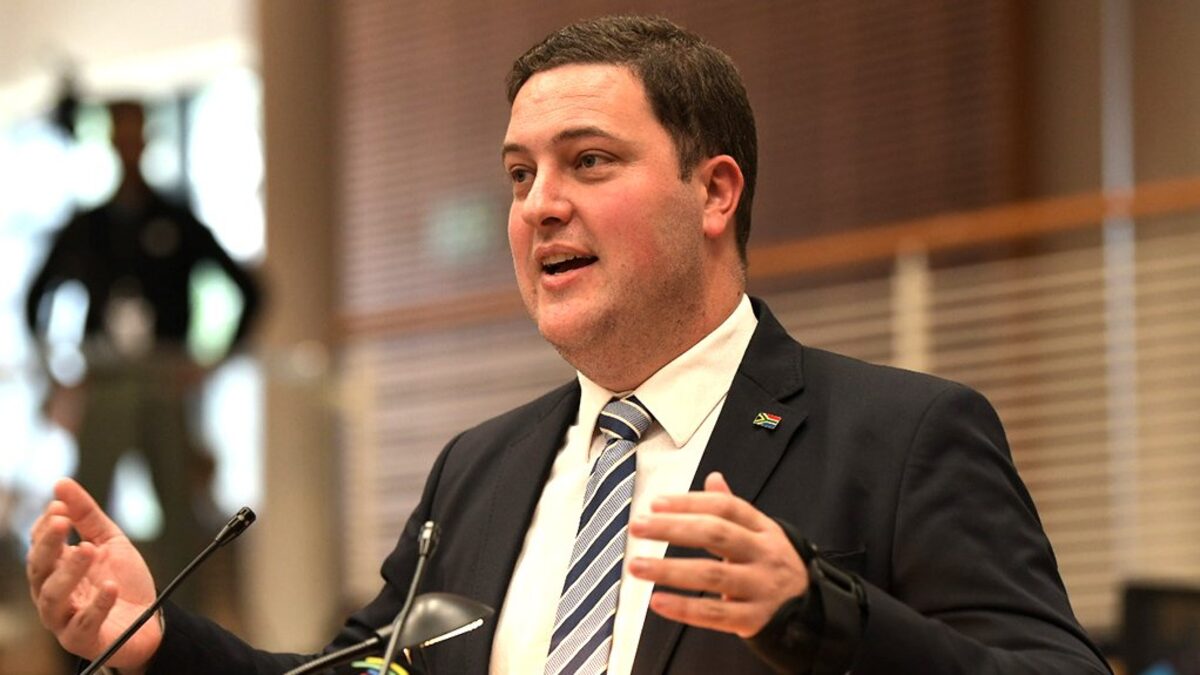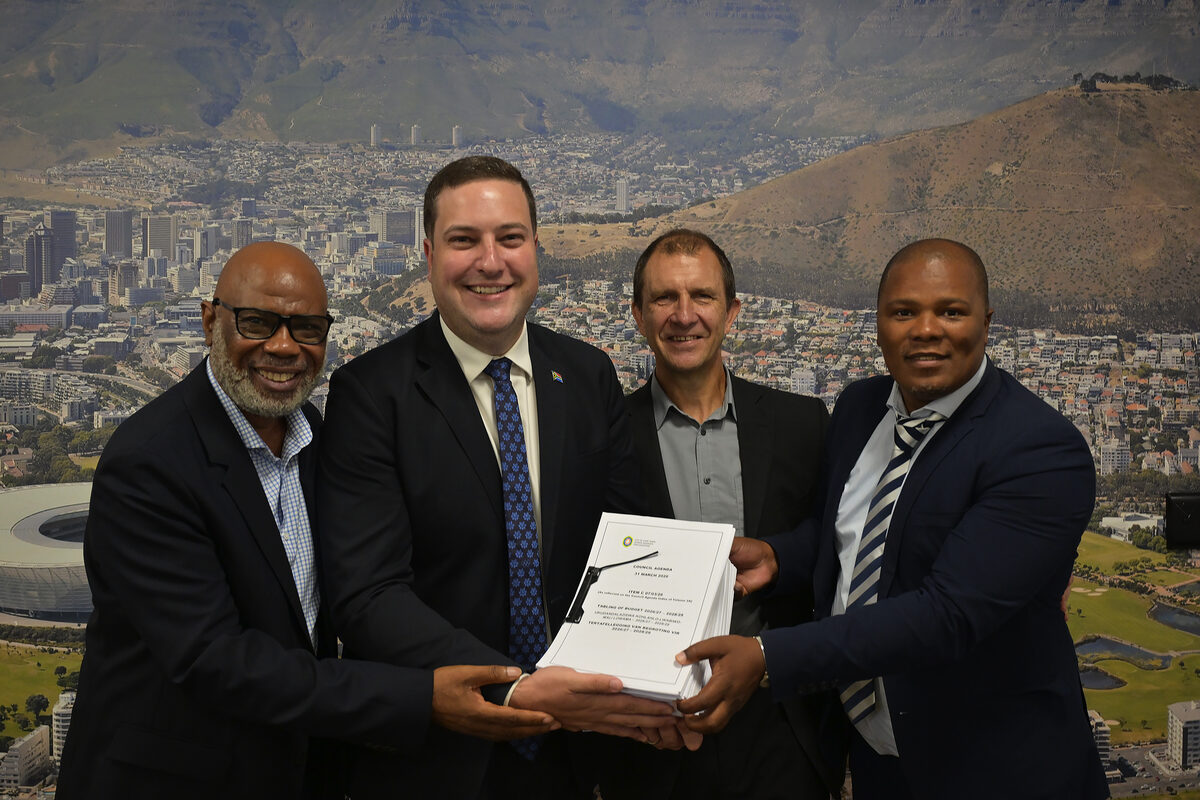


Major construction and infrastructure investments for economic growth is the cornerstone of the 2023-’24 draft budget, tabled by Cape Town Mayor Geordin Hill-Lewis last week and is now open for public comment.
The total budget quantum for the 2023-’24 financial year is R69 850 million, of which R58 889 million (84,3%) is allocated to the operating budget and R10 961 million (15,7%) to the capital budget.
Hill-Lewis said the draft budget will make possible the most ambitious future planning and investment ever undertaken by the City, while taking into account the City’s ratepayers.
“The balancing act in a big city’s budget between the needs of vulnerable residents, the scale and scope of future planning, and the economic pressures on ratepayers is one of the toughest challenges to solve,” he said to a full sitting of council last Thursday.
He described the budget as both progressive in its pro-poor focus, as well as proactive as it plans far ahead.
“Today we are considerably widening the safety net of care and relief for vulnerable Capetonians. And we are making possible the most ambitious future planning and investment ever undertaken by this City. We have done so with the utmost care and respect for the City’s ratepayers.”
Sewer system upgrades
The City’s record R10,9 billion infrastructure budget is 40% bigger than the current year, with spending set to increase to R18 billion in the third year of the medium term revenue expenditure.
Major sanitation network investments include a 100% increase in sewer pipe replacement budgets, 330% increase in sewer pump station upgrades over the next three years, and a R8,6 billion for wastewater treatment works upgrades.
“In the last year alone we have begun to see a real, steady decline in the number of sewer spills in communities thanks to the investments we’ve begun to make,” Hill-Lewis said.
A total of R265 million was budgeted for the dredging of the Milnerton Lagoon and Zeekoevlei to remove decades long build-up of pollution.
Furthermore, the City is investing R2,2 billion in its New Water Plan for more water security in Cape Town, with major groundwater projects underway to tap into aquifers.
Electricity Lifeline tariff changes
According to Hill-Lewis the City has been able to reduce Eskom’s 18,49% increase to 17,6%, and offer significantly more protection for lower income customers on the subsidised Lifeline tariff, while still funding plans to end sole reliance on expensive Eskom power as soon as possible.
“What hurts me, and I know it hurts every Capetonian, is the massive 18,49% Eskom tariff hike to municipalities. We fought against Eskom’s increase at every step of the way because it cannot be the job of the City, or its residents, to keep on subsidising Eskom’s increases. I know how much people are struggling to make ends meet right now, and that Eskom’s spiraling electricity prices wreak havoc in household budgets.”
Changes have been made to the tariff structure for residents who qualify for the subsidised Lifeline electricity tariff.
Currently, customers consuming more than 350 units would pay R3,71. “Because of the Lifeline shift we are making today, those customers will now pay R1,84. We have also raised the property value criteria for Lifeline customers to R500 000, up from R400 000, to compensate for residents’ property value growth,” said the Mayor.
R2,3 billion to end load shedding
Hill-Lewis said Cape Town was aiming to protect residents from the first four stages of Eskom’s load shedding within three years.
The R2,3 billion end load shedding plan includes R220 million to buy power on the open market, R288 million for the Power Heroes voluntary energy savings incentive scheme, R1 billion to operate Steenbras hydro-electric plant, R53 million in “cash for power” payments for solar power from residents and business, R640 million on City-owned solar plants, and R50 million in battery storage technology.
“We are confident that Cape Town will be the first metro to break free from the suffocating hold that Eskom has placed on our country, and in doing so we will show that there is a bright electric light at the end of this Eskom tunnel,” he said.
Fifty percent rates rebates
The City’s total social support package is up more than half a billion rand in 2023-’24, from R3,75 billion to R4,3 billion including R1,96 billion in rates rebates and R2,37 billion for free basic services.
Furthermore, the budget proposes a 50% rates relief increase for all residential properties of R5 million and under, with the first R450 000 of property value now rates-free.
According to Hill-Lewis more pensioners and social grant recipients will also benefit from rates rebates, by raising the upper qualifying limit from R17 500 to R22 000 total monthly household income.
Over 192 000 properties valued at R450 000 or below, or with household income below R7 500, will receive a 100% rebate for property rates and refuse removal, 5 kl free water and 10,5 kl free sanitation and up to 60 free units of electricity.
More metro police, refuse trucks
Regarding safety and security, the City is proposing its biggest ever safety budget of R5,8 billion for 2023-’24, including funds for 85 new metro police officers this year alone, and R166 million to expand its Metro police training college.
“The budget includes a major R860 million investment in safety technology over three years to make Cape Town Safer. This includes CCTV, drones, aerial surveillance, licence-plate recognition, dashcams and bodycams for officers,” he said.
R100 million was set aside for extra road maintenance this year, and R659 million will buy new refuse removal trucks and equipment.
Levies questioned
Sandra Dickson from civic group STOP COCT welcomed the change in electricity tariffs.
“STOP COCT has been pointing out the unfair tariffs for Life Line users when they use more than 350 units for several years now and it is therefore welcomed that this was finally addressed by council,” she said to the newspaper.
“The Lifeline user’s block is now adjusted to cut off at 600 units before that tariff jumps to the same as Domestic and Home user,” she said.
However, according to Dickson not nearly enough was done by the City to soften the blow of the huge electricity tariff increase approved by Nersa.
“The City increased the entire electricity tariff by 17,6% while the portion of the City’s bulk electricity costs which directly relates to Eskom is only 60%. This 60% purchased from Eskom should be the only portion of costs affected by the Eskom tariff,” she commented.
Dickson also questioned the increases in fixed electricity and water tariffs that she says points to inefficiencies in the City’s management of overheads.
“The fixed electricity levy was increased by the same shopping 17,6% taking it to R252 per month, way above the 6,9% inflation rate; as was the water levy that increased with 8,6%.”