
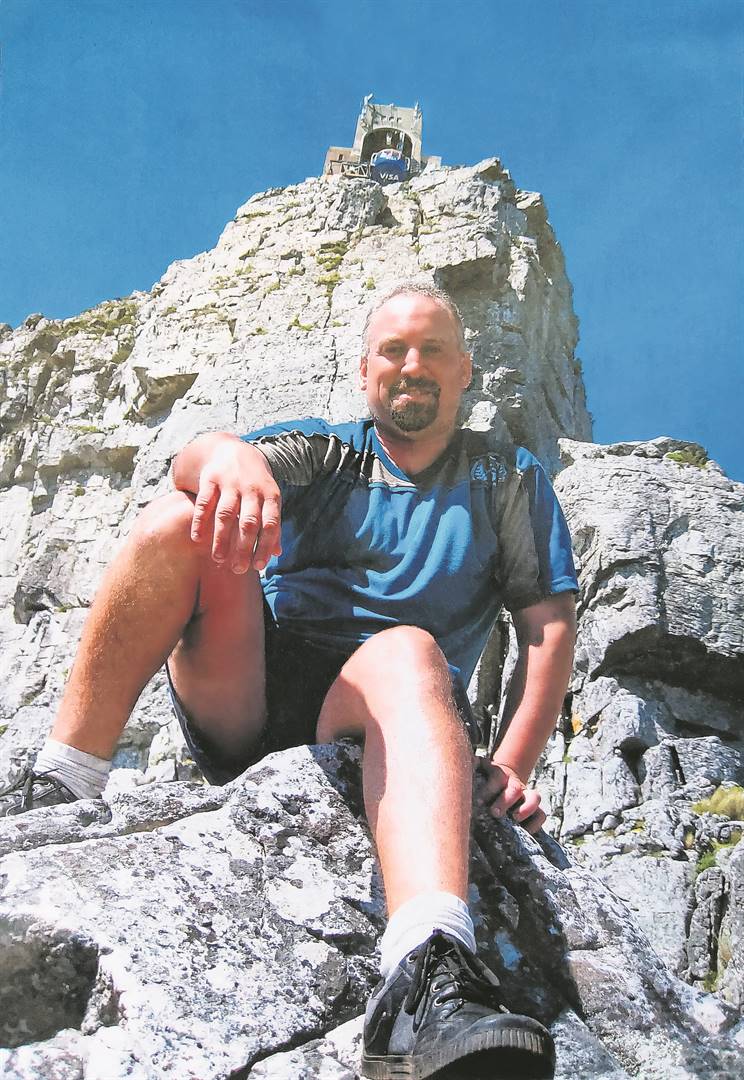
It’s been almost six months since the death of their beloved son and brother, yet his family is still struggling to get his remains from the state.
Vassilios (Basil) Viglatzis’s family have been sent from pillar to post without answers, despite identifying his body in hospital on the day he died.
His remains have become unidentifiable since, and the family says they were told in March to pay over a thousand rand for a DNA test before the process could continue.
“(This situation) is terrible,” his mother, Patricia, says.
“You can’t plan anything. You can’t carry on with your life. All you think of is your son.”
It all started when Basil complained of stomach cramps and went to Karl Bremer Hospital for treatment. He sat in the waiting room and when he started having seizures he was rushed to the emergency room, where he died the next morning, on 20 October 2022.
His distraught family identified his body in the hospital, not realising they would soon start on one of the most harrowing and frustrating quests of their lives.
At the time of Basil’s death the family was told hospital staff suspect foul play may have caused his death and procedure dictates the body then goes to the Forensic Pathology Laboratory.
The coroner soon ruled he died of natural causes and the police closed the case.
This was still at the end of October, a few days after his death. The family went on their way, not having dealt with a similar situation before.
Decomposition
When they received no communication by 6 February they called the laboratory, just to hear they were required to re-identify Basil’s body at the Tygerberg Forensic Pathology Services (FPS) facility.
The family says no-one had told them this and they were never called to come and do the identification.
When they went to the FPS facility the official told them Basil’s remains had decomposed to such an extent that they would not be able to identify him visually.
They were sent to the police because of an administrative issue. The police could not help.
For many weeks they were asked to call FPS and then call the police, who then told them to call FPS again. Suddenly, despite the police and the FPS facility saying they didn’t have their numbers, they were called by both.
His sister, Olivia says they gave their numbers to Karl Bremer right at the beginning. When they finally returned to FPS they were told to cough up over a thousand rand to have DNA tests done which would show they were related.
Basil’s sister, Olivia, says they couldn’t believe it. And at this point they were beyond outrage.
“It feels like someone else made a bugger-up and we have to pay for it.”
She says nobody ever asked for fingerprints or gave an alternative way of testing.
Response
Within a few days after TygerBurger contacted the department of health, an official at the FPS facility called Olivia asking her whether Basil had a criminal record with fingerprints.
The provincial department of health in essence says it was the police’s fault for not contacting the family, whereas the Bellville Police Station’s spokesperson says they didn’t have contact details and once they obtained it through a third party, called multiple times with no success.
Byron La Hoe, assistant director of communication at the provincial department of health, acknowledges they usually also contact the family “after a short period of time”, but in this instance, it did not occur.
“This is being addressed internally at the FPS.”
La Hoe says they had the next of kin’s number but called without success. Olivia says she has no records showing this.
La Hoe also says no family is expected to pay for DNA costs if it is done via the police.
“If the family requires it to be expedited, then they can utilise the services of a private laboratory but at their cost. The family was also informed that as there is no record at the SAPS Local Criminal Record Centre, the FPS would send the fingerprints to the Department of Home Affairs in Pretoria, but that this also takes some time.”