
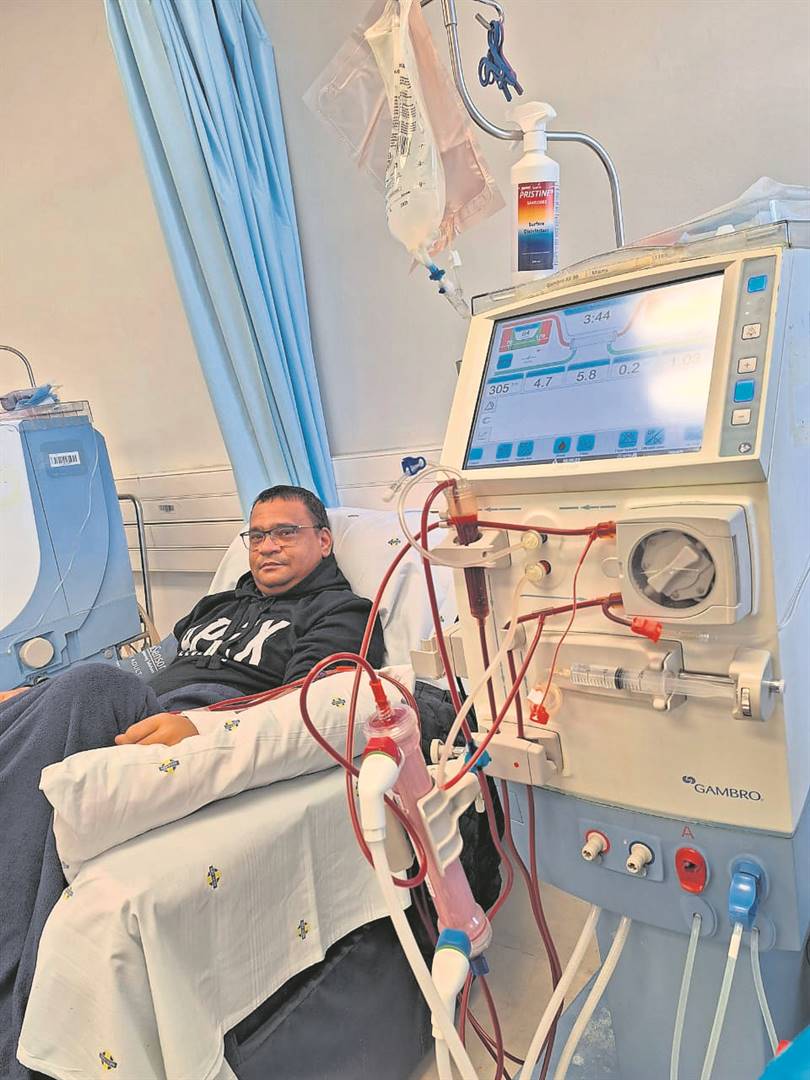
Emmanuel Classen (38) from Blackheath was diagnosed in mid-2021 with stage-4 chronic kidney disease (CKD) and around 16% kidney function.
“Now I am on stage 5 with only 3% function,” he said.
Classen said he has had high blood pressure for around nine years. Before the diagnosis being made at Tygerberg Hospital he was “in and out of local clinics with high blood pressure readings over 250/170 every time, and not one doctor or nurse ever thought to check my kidney function.”
Last week, from 4 to 8 September, was Kidney Awareness Week in South Africa. According to the National Kidney Foundation of South Africa (NKFSA), chronic kidney disease (CKD) is a growing health-care problem that affects around 10% of people worldwide, and up to one in eight in South Africa.
CKD can develop to an advanced stage without any noticeable symptoms. Severe kidney failure requires dialysis (a process to filter waste products from blood) or a kidney transplant.
The kidneys’ main function is to remove waste products and excess fluid from the body. The kidneys also produce important hormones responsible for regulating red blood cells, ensuring healthy bones and controlling blood pressure.
NKFSA data suggests the main cause of kidney failure locally is high blood pressure (60-65%) or Type-2 Diabetes (20-25%).
Emmanuel’s journey
It took a year before Classen could get access to dialysis. As he was new to his medical aid there was a waiting period before they would cover the cost of this expensive treatment.
“A rough estimate to go private and pay cash was R400 000 per year,’’ he says.
He suspects sooner access to dialysis could partly have prevented the disease worsening. “There was nothing I could do. I could not get help from the government hospitals as they were full. They have many patients coming from Caledon, Worcester, all over. Tygerberg and Groote Schuur (hospitals) are the only government facilities (in Cape Town and surrounds) that offer dialysis.”
Currently he receives dialysis at Netcare Kuils River Hospital three times a week, taking four hours at a time.
Classen, who works in waste management at Mpact recycling company, is grateful he can still work. “Well, it’s fine (he hesitates for a moment), but I can feel my body deteriorating.
“Walking is becoming tougher day by day – that is, because of my kidney function – but I will walk until I can’t walk no more. I’ve got to push through; I’ve got a wife and daughter.”
He’s been married to wife Kim for the past 12 years and their daughter is 10 years old.
Not simple
Classen is not on the list for a transplant. “That could take a while. It takes about a year to a year and a half before they put you on the list. If you come in for dialysis there are already a lot of ailments…”
He explains there are different checks and balances to increase the chances of a successful transplant.
“Then they have to present your case to the board, and they will decide if you go on the list or not.”
As it is possible to live with one kidney, family members often consider donating to a loved one.
Classen says his wife and a cousin want to be tested as possible donors. “We may have the same blood type, but the tissue type also has to match, or they will not do a transplant. There are lots of things they need to test to see if it really is a match.”
Last week he was in hospital with pneumonia as his immune system is struggling. “They also gave me four pints of blood as I was anaemic because of the dialysis. There are pros and cons with dialysis – there are risks, nothing is 100% safe.’’
Live healthy
Besides being time consuming dialysis also involves needles, but it seems Classen takes it in his stride. He admits CKD is not an easy journey, but he tries to focus on the positives.
“I’m grateful I can still move around and work. There are people with the same stats on paper than mine, that can’t move, who are bedridden – I’m glad I’m not.”
If he must give advice for looking after your kidneys, he said: “People should have themselves checked out regularly. Stick to a healthy diet, just try and live more healthily.”
He has started a backabuddy campaign to help save for the day he can no longer work to continue paying his medical aid.
Visit https://www.backabuddy.co.za/emmanuel-classen-5698913339372804523