
- More and more parents in an ever-growing Brackenfell struggle to get their children into already overcrowded schools.
- Only three primary schools and two high schools serve a population of 53 185 people in 18 000 households.
- The school crisis has been bemoaned by the community every time a new property development, mostly high density, is approved by the City of Cape Town.
A crisis ensues as more and more parents in an ever-growing Brackenfell struggle to get their children into already overcrowded schools. This, in part is due to a lack of schools in the area and the fact that the provincial education department never declared feeder zones.
According to national policy, a province can declare a feeder zone which would determine the areas from which schools must prioritise learners.
“Some schools include this as a preference in their admissions policy.
“However, this can result in exclusion of groups of learners and schools that are not diverse. The school governing body makes the final decision on who will be accepted based on their admission policy. The department can thus not guarantee a place in a parent’s school of choice,” says Kerry Mauchline, spokesperson to provincial education minister David Maynier.
This has left scores of parents and children living in Brackenfell in the lurch, where only three primary schools and two high schools serve a population of 53 185 people in 18 000 households, as per the 2011 census information.
Since then, property development in Brackenfell exploded due to a constant growth in population, and there are no immediate plans to build another school.
The school crisis has been bemoaned by the community every time a new property development, mostly high density, is approved by the City of Cape Town, a fact that points to a disconnect between local and provincial governments.
Role players in the property development sector projects R22 billion in the mixed use residential markets in the next 10 years for the greater Brackenfell area.
This necessitates children, who can’t find space in a local or neighbouring school to enrol in unaffordable private institutions.
Appeals fail
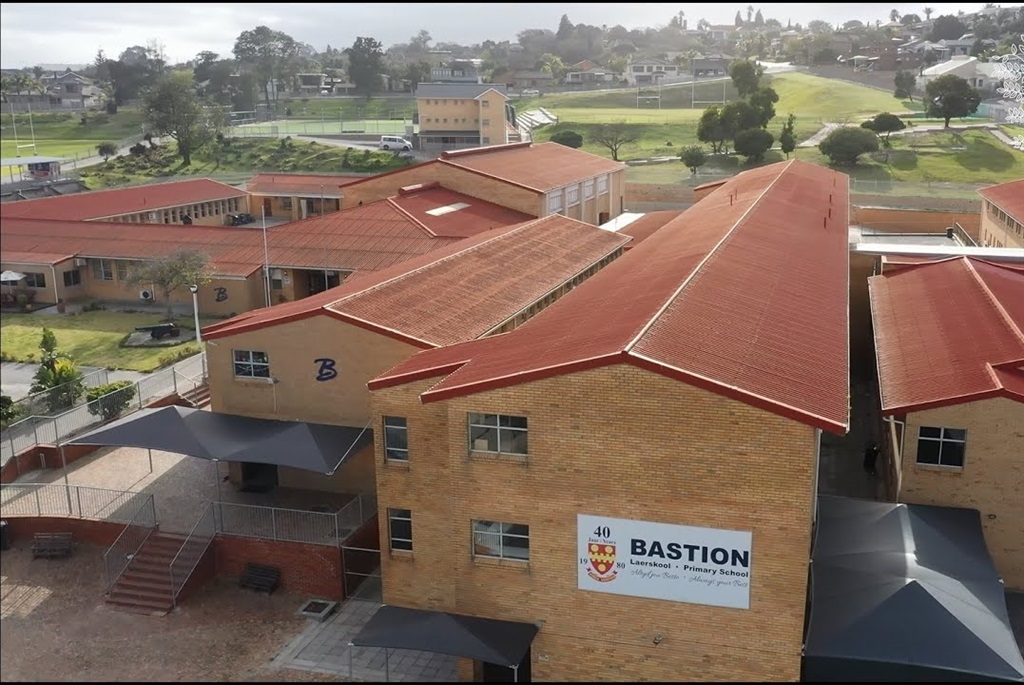
Stacy Ramjugath who lives down the road from Bastion Primary school in Protea Heights has been trying for six years to get her child into this primary school.
“It’s always full, but I live in Brackenfell. My child is now in Northpine Primary in Kraaifontein,” she says.
With about 1 776 learners, Bastion Primary is the biggest school in the Western Cape. Brackenfell Primary has about 1 683 learners and Vredekloof Primary, 860.
In the case of the first two schools, numbers translate to more or less 36 learners per class. Vredekloof Primary has a capacity of 1 200 learners.
According to an informed TygerBurger source, the learner to educator ratio is determined by the floor size of the classroom, as well as outside space for extracurricular activities.
With limited space at local schools, says this source it is very difficult to do justice to learners.
Marisa Calvert who also lives four minutes from the same school has been denied a place since her son was in Grade R.
“We couldn’t find space in any school in Brackenfell and had to make financial adjustments that are not working for us. But we don’t have a choice as our son needs an education. We had to go private, bleeding money! We cannot afford it anymore. I’m sick of this system,” she says.
Calvert says the school did not give her an explanation, nor did the department help them.
“I went to the district office, and they tried, but the school didn’t respond at all. When you phone the school they just say, ‘we are full’ and that is the end of it,” she told TygerBurger.
Charlaine Abrahams has battled since 2021 to find a place for her daughter in all three Brackenfell primary schools.
“We were told by all the schools that they are oversubscribed, and we have been on waiting lists for seven schools in Brackenfell, Bellville and Kuils River since 2021,” she says.
“We eventually found place at a school in Goodwood, and I travel 60 km a day to take and fetch my daughter from school. Its costs us R2 500 per month in fuel and due to travelling time and traffic congestion in the late afternoons she can’t even take part in any after-school activities or sport, but we have no choice.”
Like Calvert, their appeal to the education department also failed.
“We moved to Brackenfell to be in a better area, but may be forced to sell our house and move back to Goodwood if we can’t find a school in Brackenfell. If we can’t find space in a primary school, how will we find space in a high school?” she says.
At between R4 500 and R6 000 per month, home schooling centres and private schools are out of the question for this family.
“Who can afford that? The cost of food and petrol alone has become too much for us, and salaries don’t keep up with it. As parents we feel like failures.”
Budgetary concerns
The provincial education department recognises the fact that schools in Brackenfell historically receive more applications than they can accommodate.
“Some of the schools are seen as schools of choice, and therefore receive applications from learners outside of the vicinity. The education department is aware of the demand, however, there is also competing demands in other areas that have required our immediate attention and focus. Any future delivery in this area will be based on available budget,” says education spokesperson Bronagh Hammond.
She says land has been identified for a possible site for a high school, but planning has not yet commenced due to budgetary concerns that have arisen when National Treasury in August instructed government departments to cut costs for the rest of the financial year.
In guidelines issued to national and provincial departments on 31 August, National Treasury pointed to a large drop in tax revenue for the first five months of the year.
“There is significant admissions pressure in the Brackenfell area, and we are working hard to expand the number of places available in and around the suburb.
“We know that it is extremely stressful and disappointing for parents not to have their child placed yet, but we advise parents to stay in touch with the schools applied to and to request that they be placed on a waiting list.”
She encourages parents to continue to approach the district office for assistance with placement.
“And if a parent feels that the school made a mistake or acted unfairly in any way, they may appeal to the provincial minister explaining why they think the school’s decision should be overturned and attaching any evidence or documents in support of this,” says Mauchline.
TygerBurger has approached local schools for interviews, but have been informed that principals are not at this stage at liberty to discuss the issue with the media.