
After 14 years of massive sewage spills in a Vredekloof street, the City Improvement District (CID) has turned to the Mayor of Cape Town in a desperate plea for help.
Since 2012, residents in Plataan Street have had to put up with three to four sewage spills a year from a main sewer line running through one of the families’ backyards.
The most recent of these spills occurred two weeks ago.
When this happens, the family’s property is completely flooded, from where it then runs down into their neighbour’s home to dam up in front of their elderly mother’s front door. In effect residents, their children and their animals are trapped inside their homes for days on end.
Between 2012 and 2017, 16 different reference numbers for complaints were registered with the officialdom, but according to resident Willem Malherbe it is a case of rinse and repeat.
“After every spill, contractors would come out, unblock the drain, clean up and leave, only to return a few months later to do the same. Long term solutions have never been looked at,” he says.
In 2021 the City finally conducted a CCTV inspection and found that the blockages in the sewer line were caused by tree roots, a contention in part rejected by Malherbe and the CID.
In a 2017 letter to the City’s then Mayco member for water and sanitation, Xanthea Limberg, Malherbe outlines the problem.
“I am at my wits end. We have battled for years to have the sewage issue sorted out. In short, we have the lowest sewage inspection point in a sewage line running through the middle of Vredekloof and when there is a blockage in the line, it spills out into my backyard and seeps through to my neighbour’s property, straight into her front door.
“After countless attempts over the last 10 years, I now draw the line. What is an emergency for us is not an emergency for others anymore. Heck, after 10 years, what is the emergency really?” he wrote.
‘Bad town planning’
Malherbe puts the blame at the door of the City’s planning department.
“Let’s state the obvious, it is bad town planning that brought a mainline sewer into a residential backyard. So, it’s planning and engineering’s problem to get it out of my backyard or to come with a viable alternative,” he says.
“The health and safety of our properties are compromised as we have raw sewage dumped into our backyards in very high volumes. We all have pets and children; how does this affect them and who needs to take responsibility for it and what needs to be done post a spill?
“We have been paying rates and taxes for services like everyone else, but do not get a level of service. What does the lack of service hold for the value of my property and surrounding neighbours?
Public health risk
Malherbe says he has had to clean up the sewage sludge himself on several occasions.
“I’m losing count on when it happened. The sewage pushback was so bad that it blocked the drain into my house. I sat with a backyard full of sludge. We are using quite a lot of water to clean up, when the teams ‘forget’ to return to sanitize and come to collect the sludge. Do we get a water refund to sanitize our own homes? Or do we get penalized for these events which are entirely out of our control?”
A few years back officials indicated that the line would have to be checked regularly for root damages, something Malherbe says never happened.
Following a string of emails to and from the City, with as many as 30 officials copied in, the City’s health department on a few occasions confirmed the health risks associated to the spills, but despite this, nothing changes, according to CID manager Leon Brynard.
“After 14 years there is still no solution to the sewage problem. It is disturbing that the health department has confirmed that this is a health risk and that in some of the e-mails in 2022 the City was still looking for a reference number to confirm that the problem had indeed been reported. We are now in 2024 with still no solution,” he said to TygerBurger.
Unclog bureaucratic drain
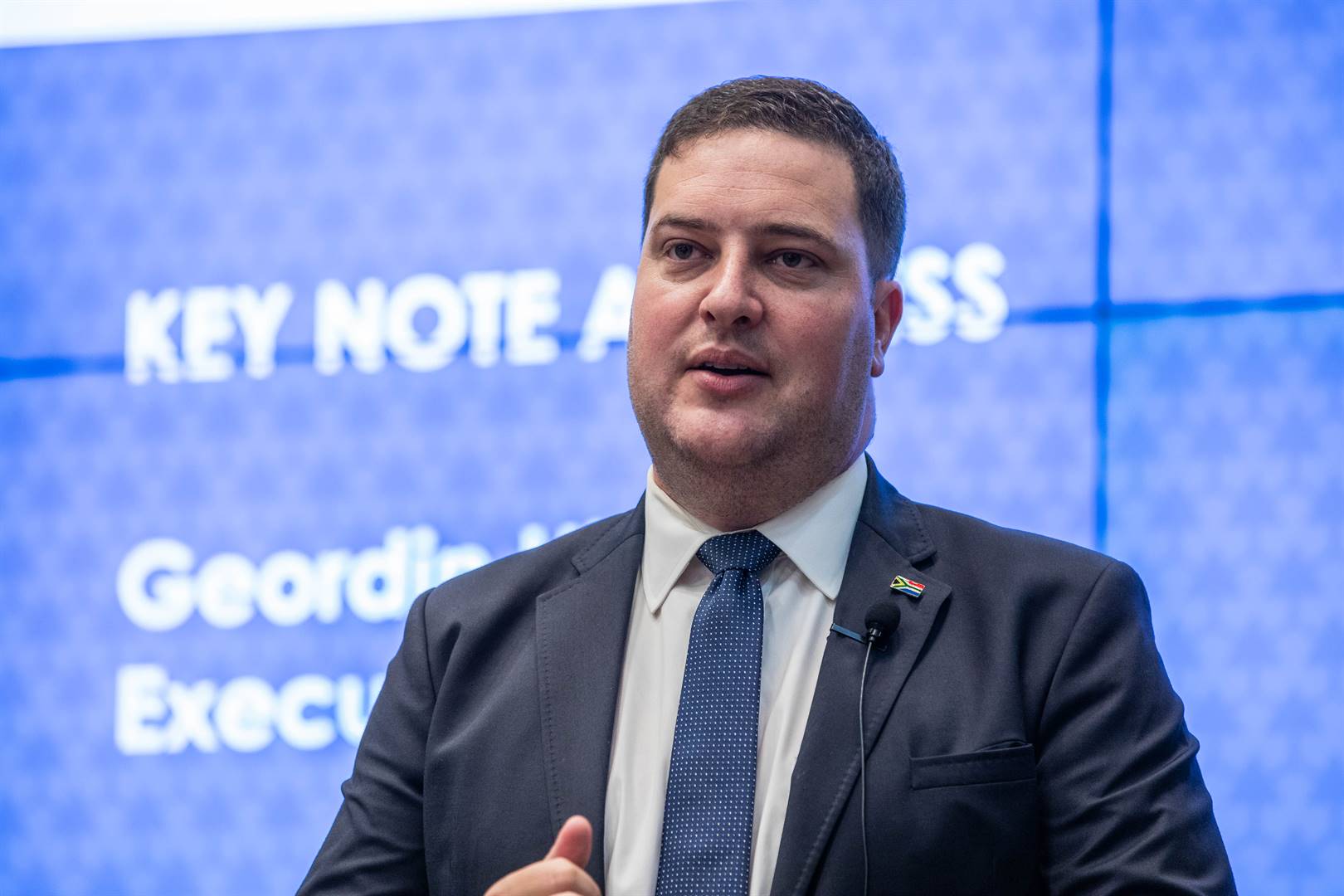
In his letter to Cape Town Mayor Geordin Hill-Lewis Brynard writes, “Your health officials have indicated the risks. Your legal department has been very quiet on the risk and your finance department even more quiet on the contingent liability for the risk you are exposing us too. Your engineering department runs around with a band aid, none of them coming with any concrete solutions to date and none willing to engage on a permanent solution. Could you please unclog your bureaucratic drain so to speak, so we can get to a resolve?” the letter reads.
In response to a media inquiry Mayco member for water and sanitation, Zahid Badroodien, last week confirmed that the City’s water and sanitation teams carried out another CCTV inspection at 22 Plataan Street on 13 February after the latest spill, and is sticking to their guns about the tree roots.
“It was confirmed that the cause of blockages is the growth of tree roots that enter the pipeline through a manhole. There are no other defects. The team invited the resident to the source of the problem where he was able to view video footage of the manhole. The work required to resolve the problem has been noted and routine sewer maintenance of root intrusion in the pipelines has been added to the work schedule,” Badroodien told TygerBurger.
To this Malherbe says, “Nonsense! It’s not only the trees, it’s the infrastructure.”
“Three years ago, I was told that contractors would inspect and clean up the line every three months but I never saw them again. The fact is the manhole is not properly sealed which is why the roots grow into it. I showed them this. I feel like I’ve been taken on a ride for 14 years,” he told TygerBurger.
“Still hammering on the idea that it’s the trees. I had to show the officials that the sewage was seeping out the side of the manhole. The engineer was expecting the run to go downhill and was amazed to see it following the boundary wall parallel with the street, with a very little drop in the line. I showed them where the sides have sand caving into the drainpipe and was no longer a serviceable manhole and the reason why the roots have grown into it.
“All the manholes on this line must be checked, resealed, and recapped to ensure we have a working sewage line.”
Brynard adds that the sewage problem in Vredekloof is more complex than mere tree roots, and engineers would have to take a more holistic view of the entire infrastructure.
“To find long term solutions they would have to investigate the entire line. To just clean up and cut roots every time is a waste of time and money. The entire sewage line must be investigated from top to bottom to find the real cause of the problem. There are many other sewage spills in Vredekloof and I suspect that it might be linked to a stormwater pipe that floods into the sewer line after hard rain.” .