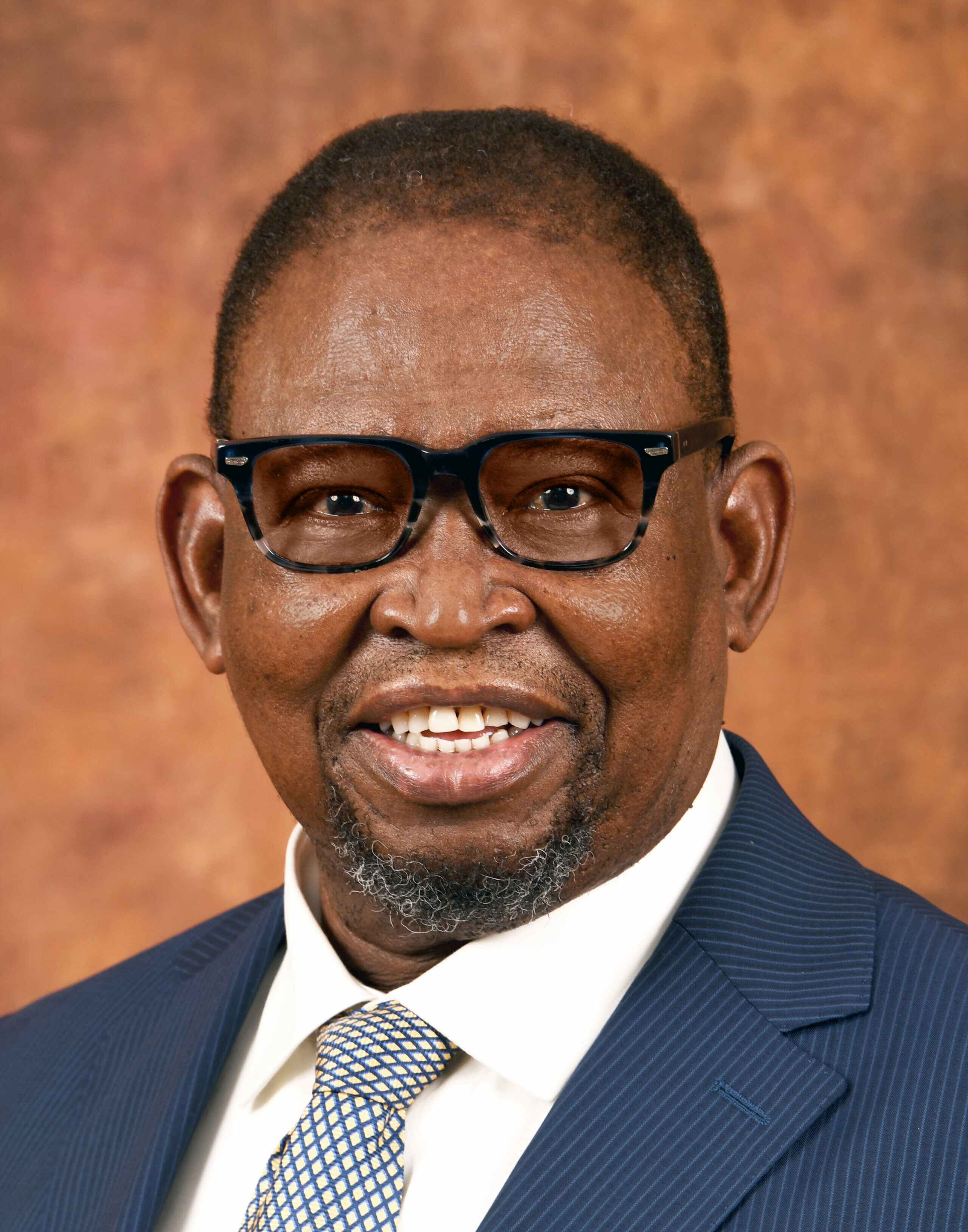

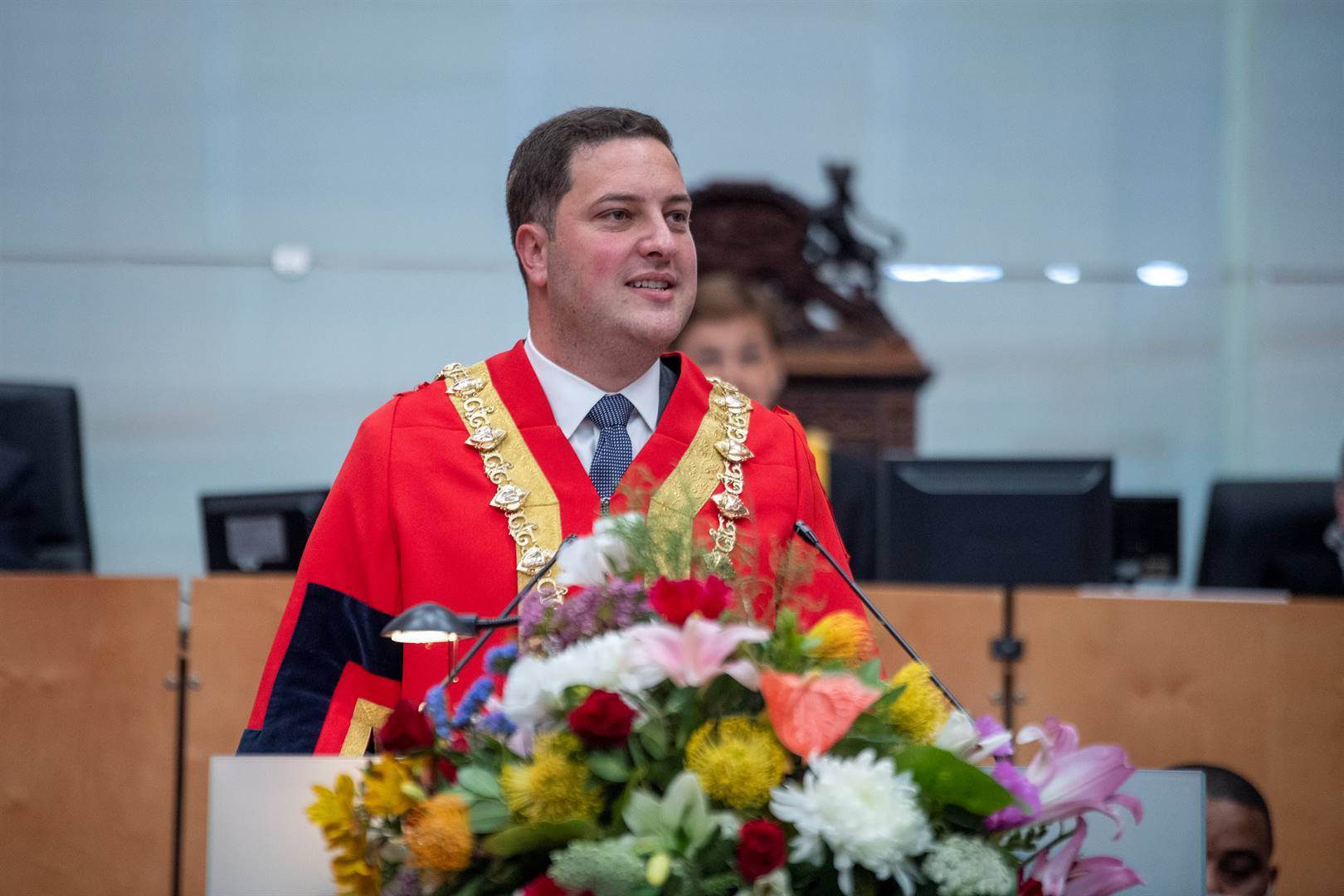
Cape Town Mayor Geordin Hill-Lewis has condemned a major R540 million cut in national funding to Cape Town over the next two years amid growing population numbers. This forms part of nationwide cuts announced by finance minister Enoch Godongwana in the national Budget Speech on 21 February.
Cape Town will receive R353,28 million less in equitable share funding over the next two financial years compared to last year’s medium-term budget figures.
This is part of a national reduction to Division of Revenue funding shared among all municipalities and provinces on a population-based formula.
National grant-funding cuts have been particularly severe for job creation grants, with Cape Town’s Expanded Public Works Programme (EPWP) funding slashed by almost 60%, from R62,59 million in 2023-’24, to R26,66 million in the coming 2024-’25 financial year. Over 83 000 EPWP work opportunities were created in Cape Town in the last two years, with the programme offering valuable training aligned to skills gaps in the economy.
Pep funding
There has also been a R100 million reduction to the City’s Presidential Employment Programme (PEP) funding allocation, from the current R230 million to R130 million in 2024-’25. PEP funds a range of job creation initiatives in the city and nationally.
Cape Town will further receive R52 million less than forecasted in last year’s national budget for infrastructure grants for housing, basic services and informal settlement upgrading over the next two financial years.
The affected grants are the Urban Settlements Development Grant (USDG), Informal Settlements Upgrading Grant (ISUPG), and Neighbourhood Development Partnership Grant.
This follows a R107 million cut already effected to the USDG and ISUPG for the current 2023-’24 financial year alone, as confirmed in the minister’s October 2023 Medium-Term Budget Policy Statement.
“South Africans should not be fooled that these cuts were the only option: it is possible to make budget choices that are progressive, pro-poor and pro-growth, as we have shown in Cape Town.
“The National Cabinet had every opportunity to make these cuts from wasteful national government departments that serve no meaningful purpose, or from the estimated R3 billion which goes to VIP security.
“Instead, they have taken the easy way out by making anti-poor budget cuts to grant-funding and equitable share allocations to municipalities over the next three years. This will have far-reaching consequences across the country, and will make a deep impact on Cape Town’s pro-poor job creation and infrastructure programmes for basic services and housing.
Fight for funding
“We will continue to fight for the protection of critical grant funding, and for an increased equitable share for Cape Town. A growing population must come with increased national equitable share funding, especially now that the census confirms our city will soon overtake Jo’burg as South Africa’s biggest city with over five million residents.”
Mayor Hill-Lewis said Cape Town had ensured grant-funding was spent on the intended purpose of housing and informal settlement upgrades, with 99% of the USDG spent or contractually committed over the last three financial years since 2020-’21.
He added that the budget shows no sign of passenger rail devolution intent.
“While we have made every effort to form a joint committee with national government to fast-track devolution, the President and his Cabinet have again failed to act with urgency, which will ultimately necessitate an intergovernmental dispute,” said Mayor Hill-Lewis.