
When she was asked to help, her first reaction was total nervousness.
Candice Mostert, founder of the Waste-Ed project, still remembers the day clearly. She was asked to be part of an innovative project to reduce waste at the Bellville Public Transport Interchange (PTI).
“I thought: give me anything other than the Bellville Public Transport Interchange (PTI),” she laughs.
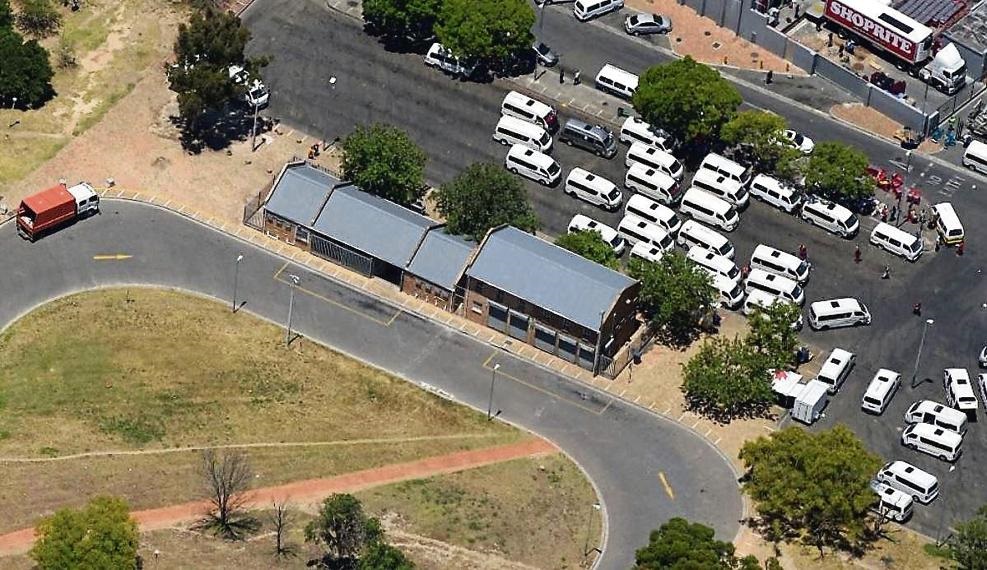
Besides being the main transport hub for taxis, trains and buses, the PTI in Bellville has become synonymous with all the wrong things: crime, filth and crowds of busy people.
The last thing people associate with it is recycling and sustainable living.
This is slowly but surely changing, thanks to the better. bellville. together campaign, the City-funded initiative that has roped in people like Mostert to change Bellville for good.
These days Mostert weaves through the taxi rank like a local, greeting acquaintances where she goes.
It’s hard not to get caught up in her enthusiasm for the project. Nerves are long gone. Things are working.
It’s been over a year since they started working in the area and the momentum is obvious.
Bin bonanza
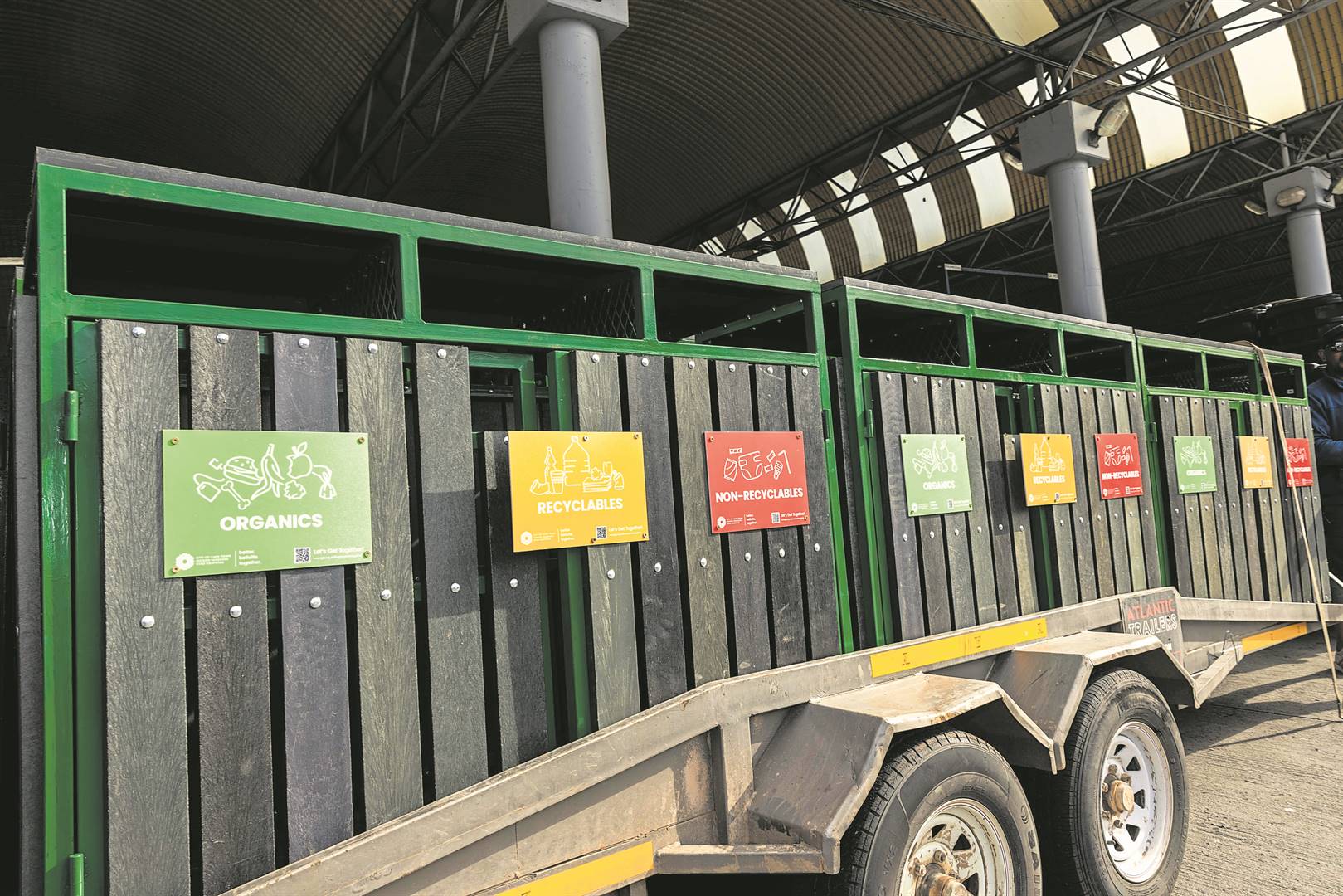
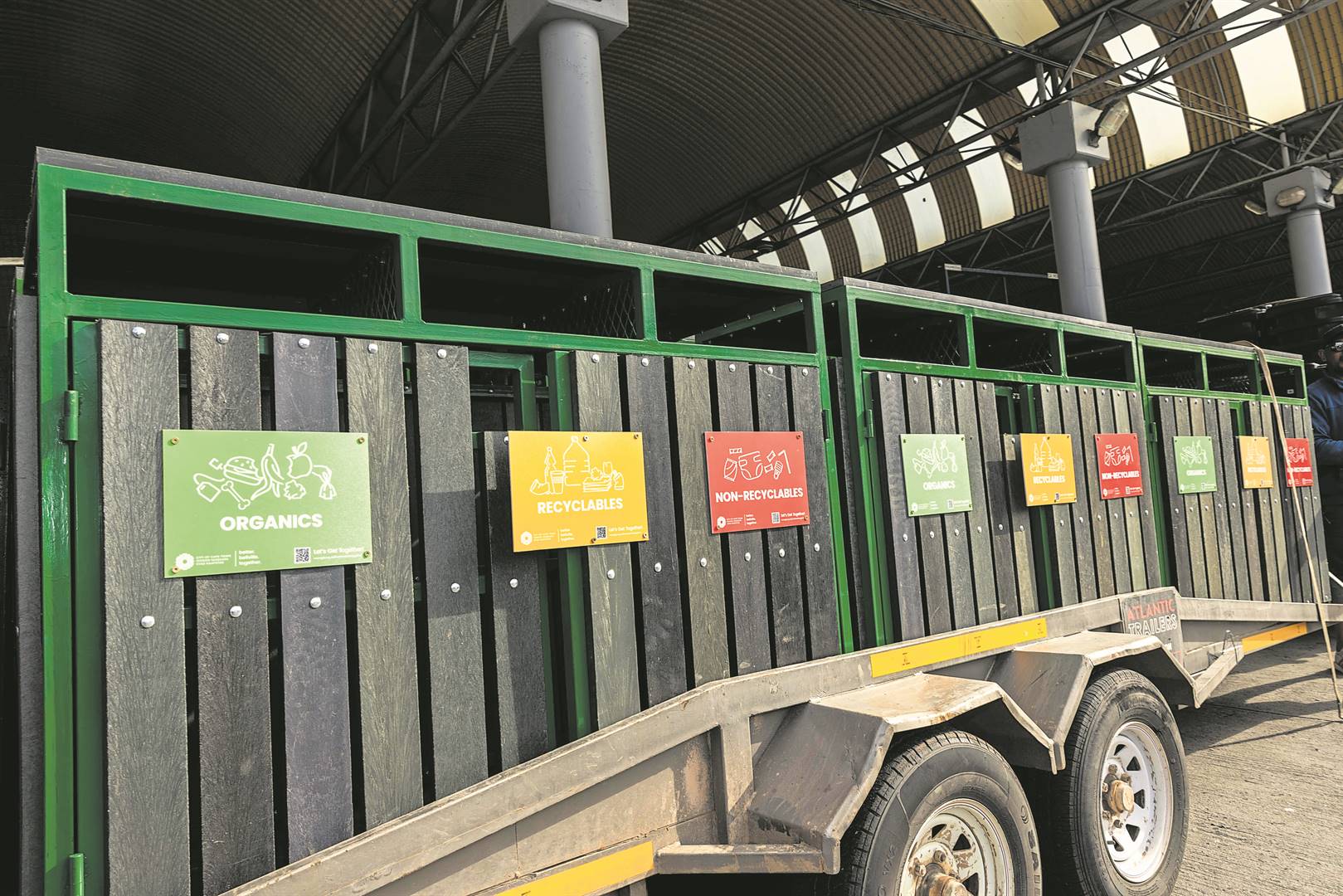
The Greater Tygerberg Partnership (GTP), the organisation that leads and implements the campaign, recently announced the implementation of new waste separation bins to be used in the area. These aren’t just any bins. These are custom-built, strong-as-steel and ready for any issue Bellville’s commuters can throw at them.
The 20 sorting bins are colour-coded – red, yellow, and green – and are designed for specific waste categories. Green bins are for food waste and compostable materials, yellow bins for recyclable materials, and red bins for non-recyclable waste destined for landfills.
“The Bellville PTI currently sends between 7,5 and 10 tonnes of mixed waste to landfill per month,” Mostert explains. “By implementing simple waste separation infrastructure and practices like waste education and these new bins, we estimate that 0,5 to 1 tonne of food waste and two to three tonnes of recyclables can be diverted to local solutions every month, showcasing the huge potential of this programme.”
Another white elephant?
It’s easy to dismiss these bins as just another white elephant, destined to stand in the way of commuters, who, at best, throw their rubbish away, let alone sort it. Yet, nothing hasn’t been considered a hundred times over. Cleaners at the PTI have all been trained on proper waste separation practices.
The bins can only be locked and opened with a specific mechanism, ensuring waste pickers or others don’t dump out what’s been collected.
What’s more, 39 people have been trained to help commuters understand the importance of waste sorting and recycling. These workers, colourfully clad in blue, stand around bins, waiting for unsuspecting commuters who have come to throw away their rubbish.
Once close enough, the workers engage them in the wonders of recycling. There are games where commuters can learn while playing. The area has been colourfully decorated with plastic bottle tops. If ever there was a fun place at Bellville’s taxi rank – this is it.
Even before the arrival of the bins, the campaign has seen significant improvements.
A total of 9 tonnes of recyclable waste was diverted from landfills as well as 52,8 tons of organic waste such as food scraps and garden material from local businesses and civic places.
The organic waste was recycled locally and used for compost at The Bellville Life Changing Garden behind MES in AJ West Street. Another pilot project is seeing select food vendors using recyclable packaging, sponsored by Nude Foods. Two waste diversion solutions have also been implemented including a daily local recycling collection and a local organics collection plan with solid waste management.
James Vos, the City’s Mayco member for economic growth, waste and recycling, says the campaign has made significant strides in fostering community development so far. “The success of the better. bellville. together. initiative has demonstrated the remarkable potential of community-driven projects to effect positive change,” says Vos.
Warren Hewitt, CEO of the GTP, says the collaboration between the community, businesses and government agencies has made all the difference.
“The initiative has laid a strong foundation for the project’s upcoming endeavours, and this ongoing partnership will continue to play a pivotal role in the success of the better. bellville. together. programme as it moves forward with its ambitious plans,” he says.
The goal is to create a circular economy – where products are reused or recycled instead of filling up landfills.
Mostert shows the bottletop artworks adorning the walls and poles at the taxi rank. The informal traders have told her they’re asked about these daily.
For more information visit: www.bettertogether.africa