

- Businessmen in Kraaifontein Industrial are frustrated with severe traffic congestion caused by heavy trucks, impacting 71 businesses and threatening the local economy.
- After four years of appeals to city authorities, they are now seeking help from Western Cape Premier Alan Winde and Cape Town Mayor Geordin-Hill Lewis.
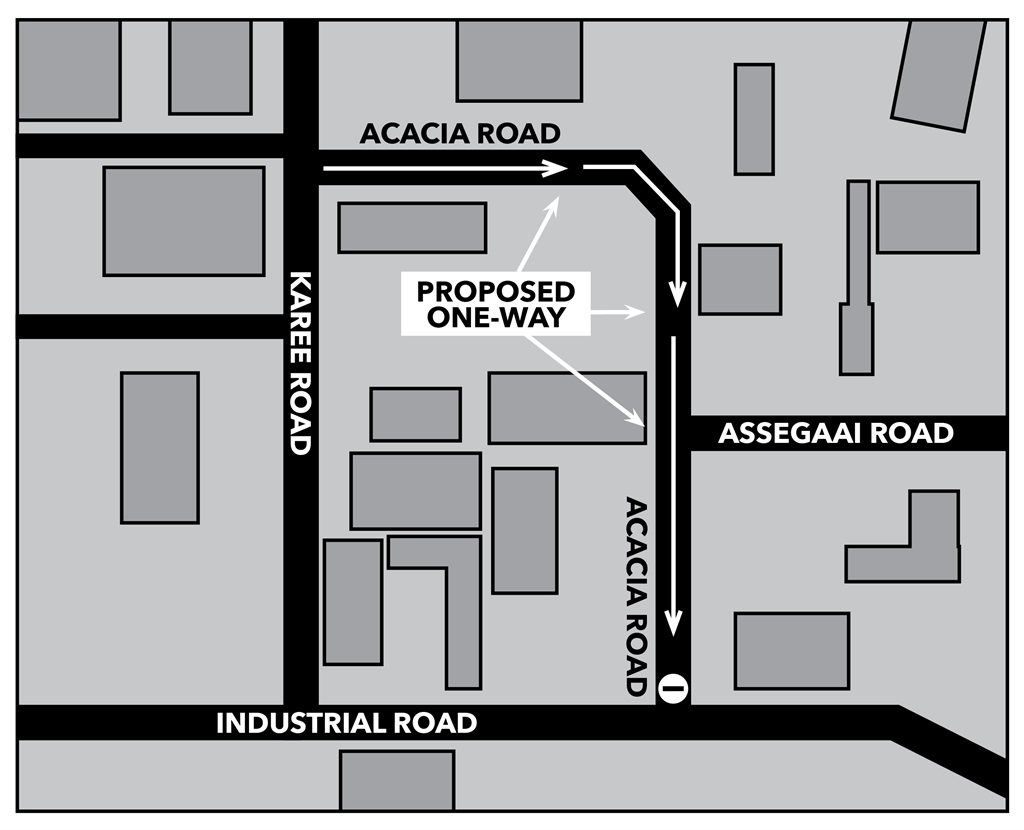
- The City of Cape Town is considering converting Acacia Road into a one-way street to alleviate congestion.
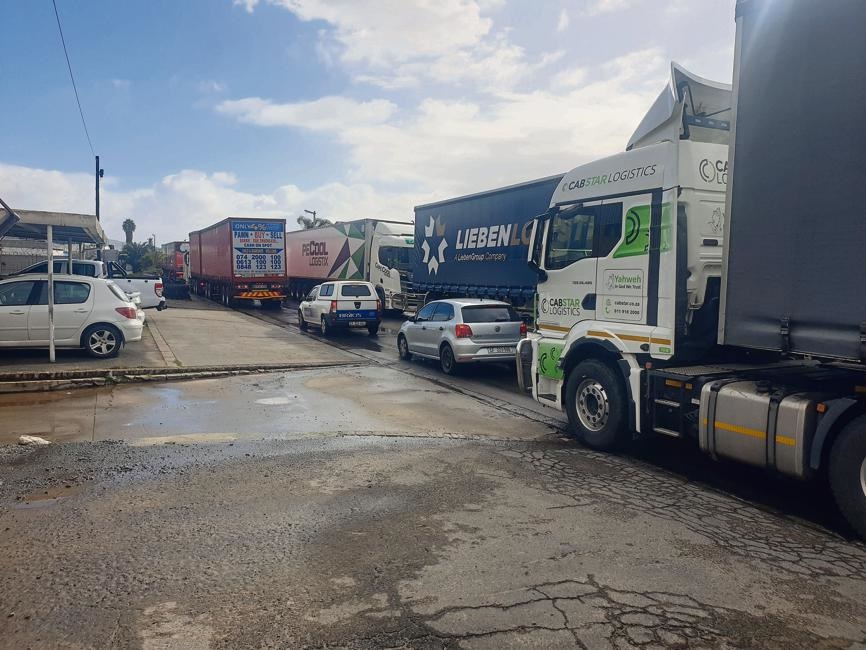
Businessmen in Kraaifontein Industrial are fed up with ever growing traffic congestion caused by fleets of heavy trucks that threaten the economy of the entire area.
Entrance roads are blocked in both directions at least three times a week as trucks entering and leaving Cape Town on the N1 flock into the industrial area to fill up at the diesel depot.
In total 71 businesses are negatively affected thereby threatening the viability of the entire area as a place of business and employment.
After a four-year battle with City authorities pleading for intervention, as reported by TygerBurger, stakeholders have drawn up an urgent appeal to both Western Cape Premier Alan Winde and Cape Town Mayor Geordin-Hill Lewis, seeking help.
According to local businessman Hannes Rheeder, everything including business comes to a standstill on these days when the trucks stack up all the way from the N1, down Industrial Road and into Acasia Street in both lanes. As a result these and surrounding streets become totally inaccessible to any other traffic and entrances to business premises are blocked making it impossible for clients, suppliers or employees to get in and out.
” says Rheeder.
“We have raised these concerns with the City of Cape Town for more than four years, yet we have not seen any significant improvements beyond the installation of ineffective red lines, which are consistently ignored by truck drivers. Considering the substantial property taxes contributed by these businesses to the City of Cape Town annually, we strongly believe that the City should allocate resources to address the following traffic and road issues within our area.”
Damaging pavements
Exacerbating the problem, trucks damage pavements and other infrastructure as they illegally park over it, and illegally dump rubbish on the pavements and in business entrances.
In the petition the group proposed suggestions for road maintenance and infrastructure improvements such as widening Industrial Road and Acasia Street to accommodate two-way traffic, and designating one-way entrances and exits for certain streets to streamline traffic flow.
Rheeder says they last week received an acknowledgement letter from Winde’s office referring them to the City of Cape Town, that has not to date replied on the petition.
However, in response to a media inquiry sent by TygerBurger, The City’s Mayco member for urban mobility Rob Quintas confirmed that the City is aware of the traffic concerns and that the Urban Mobility Directorate is currently investigating the feasibility of converting Acacia Road in Kraaifontein from a two-directional roadway to a one-way road.
The City will undertake a public participation process to allow residents and businesses, and the general public, the opportunity to submit comments.
“It is important to note that no street may be turned into a one-way, or closed, without the statutory requirement of a public participation process, and Council’s approval. One-way streets are a viable intervention to regulate traffic flow in heavily congested areas. However, the City must also ensure that the measure does not negatively impact the surrounding street network, mobility and access, nor the social equity of the residents along the street. In addition, one-way streets often transfer traffic onto adjacent roads where these are not currently impacted by through traffic,” says Quintas.
He said the City will inform the public once the public participation process is to commence.
Lengthy process
Spokesperson for traffic services Maxine Bezuidenhout says the City’s traffic service has informed the community of the Kraaifontein industrial business area on numerous occasions that changes to road infrastructure and approval thereof is a lengthy process.
In this regard Traffic Service and the City’s Urban Mobility Department have been engaged in discussions to alleviate the congestion.
“The congestion in the area is mainly caused by trucks queueing to refuel at the diesel depot and the regulating of interlink trucks while in queue is not possible. We have submitted our proposal to change the road layout into a one-way, which will allow better flow and alleviate blockages in front of business entrances.”
Meanwhile, stakeholders remain frustrated as they continue to lose money.
“People who can’t afford to wait hours every week are now taking their business elsewhere. The City will have to hasten their plans,” Rheeder concludes.