
Cape Town’s proposed permanent desalination plant in Paarden Eiland – estimated to cost R5 billion – has drawn criticism from opposition parties, who say the City is repeating costly mistakes and placing an unfair financial burden on residents.
The proposed plant
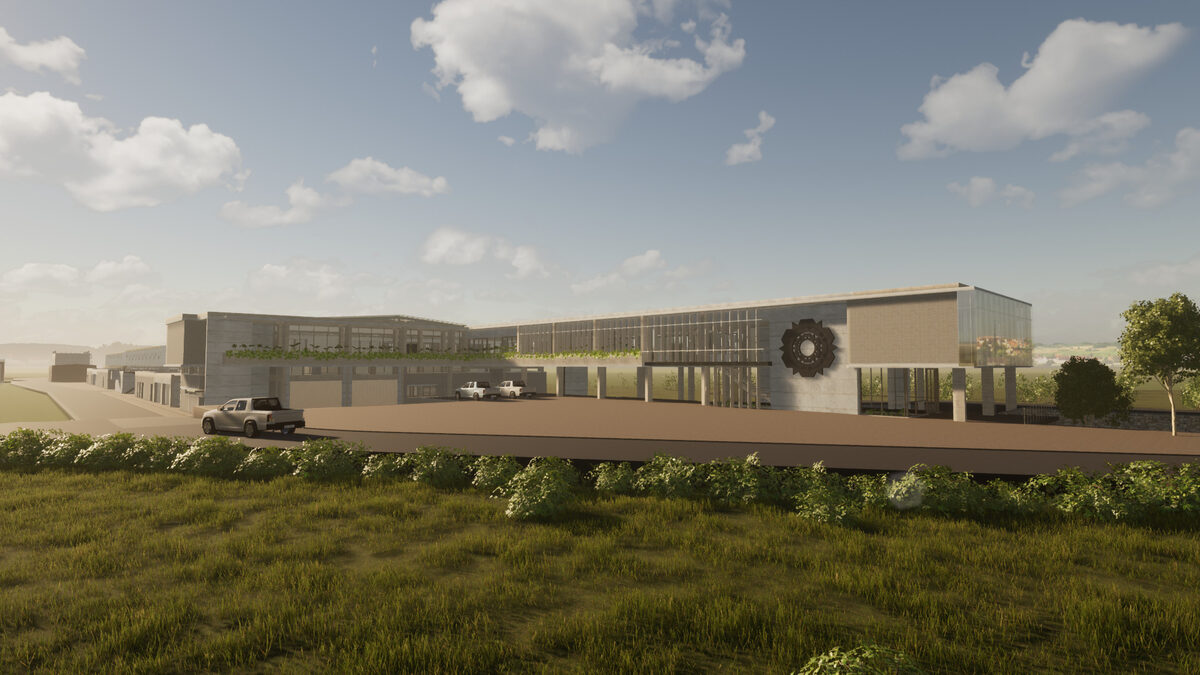
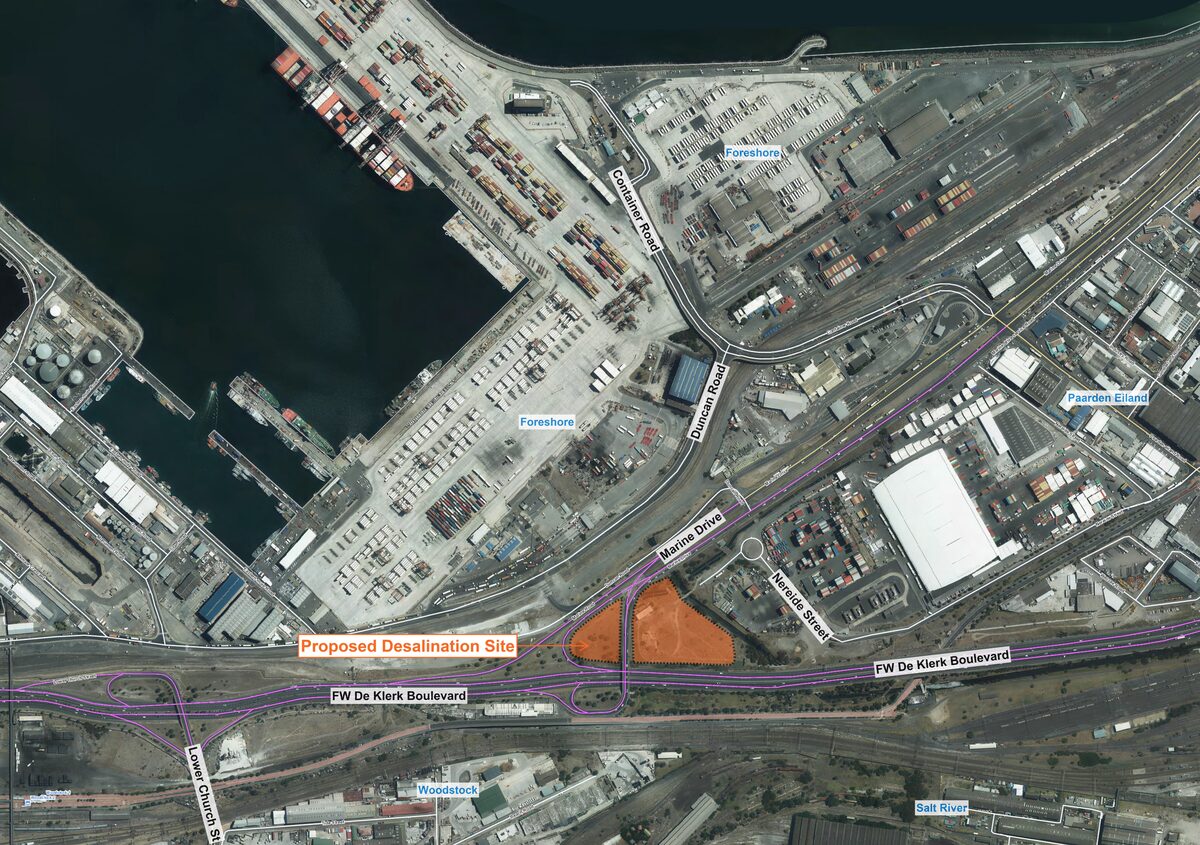
The City plans to build a permanent seawater desalination facility at Paarden Eiland, designed to produce between 50 and 70 million litres of drinking water per day. The plant forms part of the City’s New Water Programme, which aims to add 300 million litres of water per day from a mix of sources – including desalination, groundwater, water reuse and the clearing of invasive alien plants – to secure Cape Town’s water supply by 2032.
Council has given in-principle approval for the plant to be delivered through a public-private partnership. Under the recommended model, a private company would design, finance, build, operate and maintain the facility for 20 years before handing it over to the City. The City would remain the owner throughout.
An environmental impact assessment is underway and the City has held public participation meetings.
Opposition raises the alarm
The GOOD party has criticised the project, calling it a lesson the City refuses to learn.
“The GOOD Party has consistently raised alarm about the City of Cape Town’s proposed permanent desalination plant at Paarden Eiland and our concerns have only deepened as the project edges closer to procurement. This is not a new conversation – it is one the City’s DA-led administration has repeatedly refused to engage with honestly,” said GOOD councillor Suzette Little.
Little said the Paarden Eiland site sits adjacent to the harbour and near the City’s own marine sewage outfalls at Green Point, which sweep around Table Bay – making it, in the view of experts, one of the most polluted stretches of ocean along the Western Cape coastline.
GOOD also warned of the financial impact on residents. A City-commissioned feasibility study has confirmed that residents face additional project-specific tariff increases of approximately 6.57% and 6.63% in the first two years of operation, on top of already above-inflation annual increases. Little said these increases would fall hardest on working-class families in lower-income communities.
A short and troubled history
Cape Town has been down this road before. During the worst drought in the city’s recorded history – the crisis that brought the prospect of “Day Zero” – the City built two temporary desalination plants at Monwabisi and Strandfontein. Together, the plants produced 14 million litres of water per day.
The two facilities jointly cost ratepayers approximately R500 million. Both were built as emergency measures. Critics pointed out that they never contributed meaningfully to Cape Town’s water reticulation system. A third plant, at the V&A Waterfront, had its contract terminated early by the service provider.
The Strandfontein plant began to be wind down in June 2020, while the Monwabisi plant made its final contribution to the city’s water supply on 26 September 2020, when it was shut down at midnight after delivering approximately 4,3 billion litres over two years. The surrounding areas were subsequently restored to their original condition.
At the time, Mayoco member for water and waste, Xanthea Limberg, said the plants had provided “valuable hands-on experience” and had “built confidence that this is a viable way of reliably producing good quality drinking water.”
GOOD’s Little questioned what exactly had been learned: “Residents at the City’s own public participation meetings in February 2025 noted that the City has ‘an absolutely horrific track record when it comes to reverse osmosis.’ We share that concern.”
Securing Cape Town’s water future
The City says it remains committed to building a water-secure future and is not relying on desalination alone. Since the drought, it has been upgrading ageing water pipes, improving pressure management, fixing leaks more quickly and improving metering across the water supply network.
The broader New Water Programme includes groundwater schemes, water reuse and desalination – all aimed at adding 300 million litres per day to Cape Town’s water supply. The City says 11% of Cape Town’s water will ultimately be sourced from seawater desalination.
Councillor Zahid Badroodien, Mayco member for water and sanitation, said the City was pursuing a diverse range of expertise and options.
“We are committed to advancing our water security by developing a permanent desalination plant, among all other interventions which comprise the New Water Programme. By leveraging on a diverse pool of expertise and exploring all feasible options for implementation, we are confident that Cape Town will establish quality technologies in water treatment from diverse sources, which meet safety, technical and regulatory standards,” he said.
Dam levels holding steady
Cape Town’s dams are currently at healthy levels, offering the City some breathing room as it plans for the long term. As of 3 June 2026, the combined storage of the major dams supplying the city stood at 72.5% – well above the 60.2% recorded at the same time last year. The largest of these, Theewaterskloof Dam, stood at 73.8%.
The Western Cape Department of Water and Sanitation has noted that dam levels have continued to improve, describing the trend as “encouraging.”
Nonetheless, water planners warn that climate change, unpredictable rainfall and a growing population make long-term water security planning essential, regardless of current dam levels.
ALSO READ: Public meeting about city’s first permanent desalination plant draws large crowd