
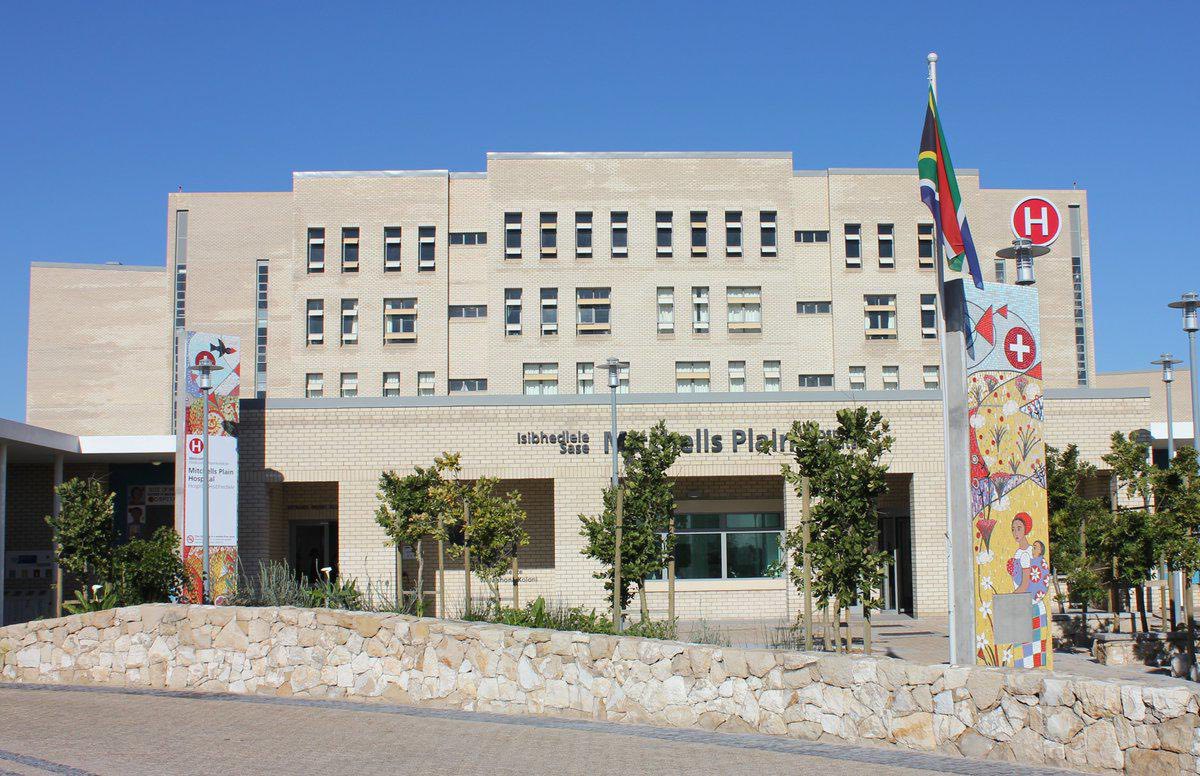
The psychiatric ward at Mitchell’s Plain District Hospital is managing more patients than it was built to hold, with drug-related admissions making up a significant share of its daily caseload.
That was the picture presented to subcouncil 17 on Monday, 18 May, at the Lentegeur Administration Building, where two Department of Health and Wellness officials called on councillors to support establishing a local drug action committee.
Pauline Perez, a social worker with the department’s Violence Prevention Unit, said substance use is one of the main drivers of violence in Mitchell’s Plain. She said organisations working in isolation, without first understanding the specific dynamics of the community, may not be effective.
“Communities are not the same,” she said. “It has to be area specific.”
Perez called for a broad coalition — including liquor authorities, housing officials, substance treatment facilities, the Department of Social Development, and the City of Cape Town — to build a shared local response.
A ward built for 30 now holds far more
Grant Remmitz, operational manager of the hospital’s psychiatric ward, outlined the numbers.
The hospital opened in 2013 and serves a community of roughly one million people. Its bed count has grown from 260 to about 415, though on any given day it accommodates between 460 and 470 patients across all wards.
There was no psychiatric ward when the hospital opened. A 30-bed unit for male and female patients was added later. A second, off-site ward now houses female patients. The female ward has 14 beds but regularly holds 20 patients. The male ward has 32 beds and often accommodates 40 or more. Average bed occupancy sits above 100% most of the time, with the female ward at 125%.The hospital is the busiest trauma unit in the Western Cape, seeing about 160 patients a day. Of those, roughly 30 present with mental health or substance-related conditions. Between 8 and 10 patients are admitted each day, and at least 30% of all admissions are drug-related.
In 2023, the hospital recorded 2 715 mental health admissions, compared with 793 at Helderberg and 800 at Khayelitsha.
Same community, same conditions, same result
Between 25% and 30% of mental health patients return to the hospital after discharge. Remmitz described this as the “revolving door phenomenon”.
“We contain them, we start treatment… but the reality is that these clients or patients go back to the same community, the same conditions. So they often relapse and come back to our doors,” he said.
He added that repeated substance use can lead to lasting psychiatric illness, including schizophrenia and bipolar mood disorder.
Most drug rehabilitation programmes are voluntary, meaning patients must choose to attend. Without a court order for compulsory treatment, many do not go. The 72-hour observation period set out in the Mental Health Care Act stretches to an average of 10 days — and sometimes close to two weeks — because beds are not available elsewhere to transfer patients to.
“The revolving door phenomenon reflects a deeper societal failure,” Remmitz said, citing poverty, unemployment, family breakdown, trauma, and a lack of opportunity for young people.
Impact on staff and other patients
Patients arriving with drug-induced psychosis require additional staff attention and can disrupt care for other patients in the ward and trauma unit. Other patients being treated for conditions such as hypertension, diabetes, tuberculosis, and heart disease are affected.
“Patients recovering from illness require calm and a therapeutic environment,” Remmitz said. “With repeated disturbances, this compromises healing, sleep and emotional stability.”
Staff experience burnout and are, at times, physically assaulted. Additional security, trained staff, and faster emergency responses all carry a cost to the state.
No hospital can fix this alone
“The drug abuse cannot only be treated as a hospital problem,” Remmitz said.
The recommendations put to the subcouncil included a local drug action committee, school-based prevention, community rehabilitation centres, recreational and sports facilities, job creation, visible law enforcement, community reporting systems for drug hotspots, and expanded psychiatric services.”Ultimately, the revolving door phenomenon is not only a healthcare issue, it is a social, economic, psychological, and a community crisis,” Remmitz said.
“Without a coordinated intervention at community level, hospitals, as well as our emergency centres will continue to carry unsustainable burdens while our patients and our families, healthcare workers and communities continue to suffer the devastating consequences of substance abuse and drug-induced psychosis.”
Subcouncil responds
The subcouncil chair thanked the presenters and noted that members needed to consider their own roles in addressing the issue. They named Westridge councillor Ashley Potts, who has a history in addiction treatment and recovery advocacy, the champion to get the local drug action committee started.
ALSO READ: ‘Mayor of Mitchells Plain’ recounts journey from addiction to hope