

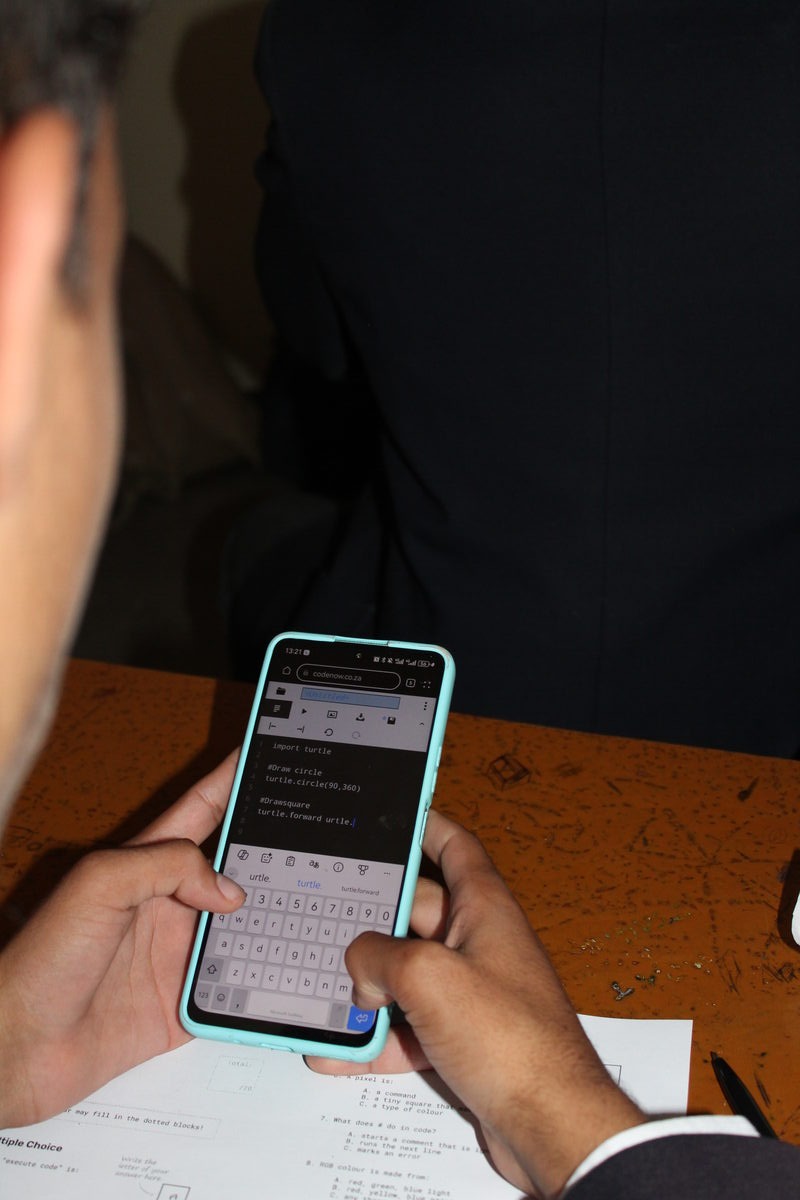
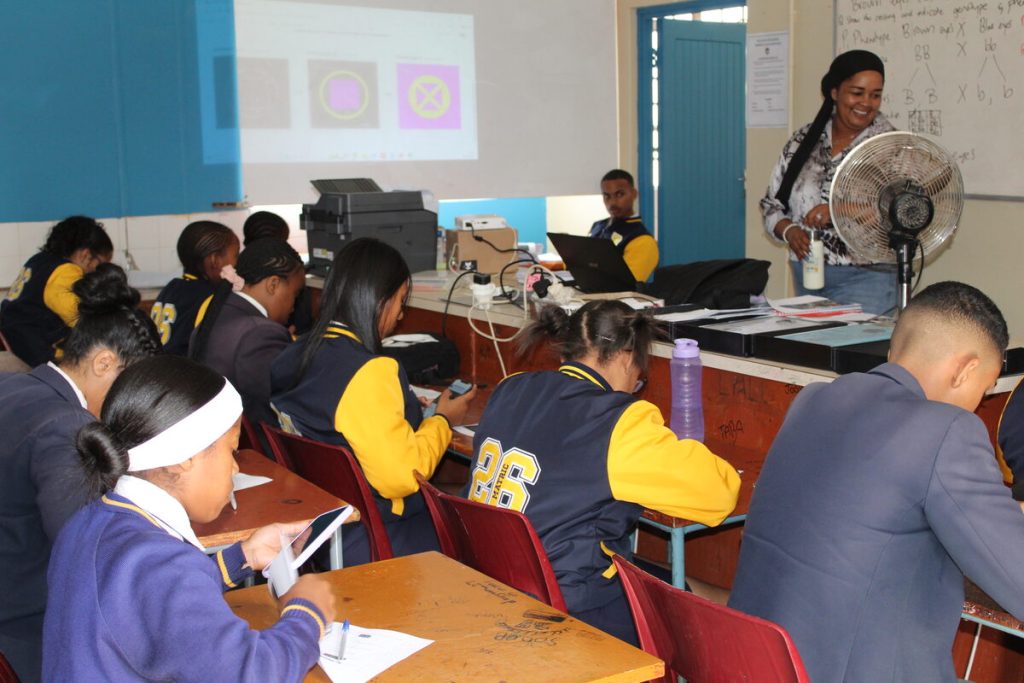
Dozens of learners crammed into a classroom during interval at Rocklands High to do an exam that did not contribute to their grade average.
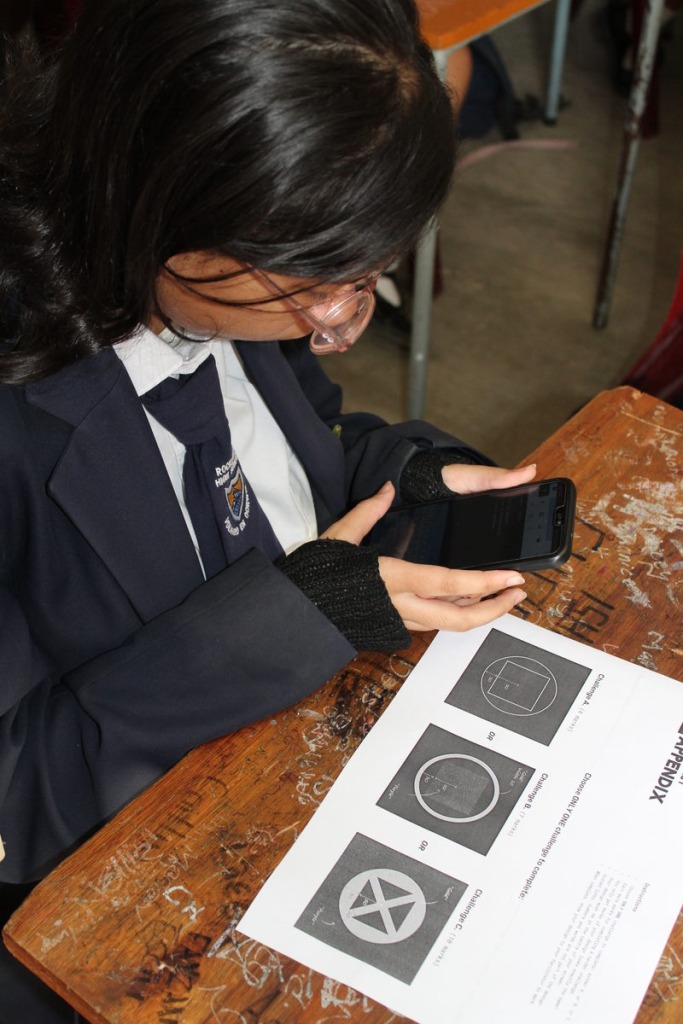
The learners, who were too many for the space, filled every available gap to do an online “Test Your Might”.
The learners are among more than 100 others who meet once a week, during interval, to learn coding thanks to sponsorship and expertise by two private companies.

Boosting CAT numbers
“They thought it was more about robotics, but when they got here they realised that you can’t do robotics if you don’t have a background in coding, because ultimately you need to give that robot the instructions,” said teacher Vivienne Roberts, who facilitates the club at Rocklands.
She said this understanding got learners more interested in Computer Applications Technology (CAT), with more Grade 8 and 9 pupils now wanting to take it in Grade 10.
“So that’s going to spur our numbers in CAT in Grade 10 as well, so that’s a positive impact with regards to retaining certain subjects and posts at the school.”
Part of bigger programme
The club, which at Rocklands is called Coding Cartel, is one of 58 other schools in Cape Town. The clubs are run by WeCode24 through sponsorship by Naspers.
The year-long programme operates outside the formal curriculum and is designed for learners in quintile level 1 to 3 schools. It has been active since 2018 but only started at Rocklands last year.
Rocklands’ club has a mix of learners from every grade.
Life-changing impact
Roberts said the programme was life-changing for some learners. She related how one learner, usually very shy, has now become a leader at the club.
“This particular programme sparked something in him and now he is just telling everyone what to do and helping everyone. It’s not just transformative with the application of coding, but it’s transformative in their lives as well, and their characters.”
Josh Hudson (14) of Tafelsig agreed. He said the classes taught him “there are more things for me to be free about. It helped me to think outside the box.”
You can hand someone Jarvis, but that doesn’t make them Iron Man.
Shahid Moosa, a 17-year-old matric learner from Rocklands, said: “The classes helped me be more confident, more focused and willing to learn.”
He hoped to explore a career in IT and said the classes had increased his interest in the field.
Abdush-Shakoor Abbas, also a Grade 12 learner, said it was a “new experience”, which was sometimes frustrating.
“If the book didn’t explain well how it works I’d Google it and try different things until I got it right,” Abbas said.
Learning by doing
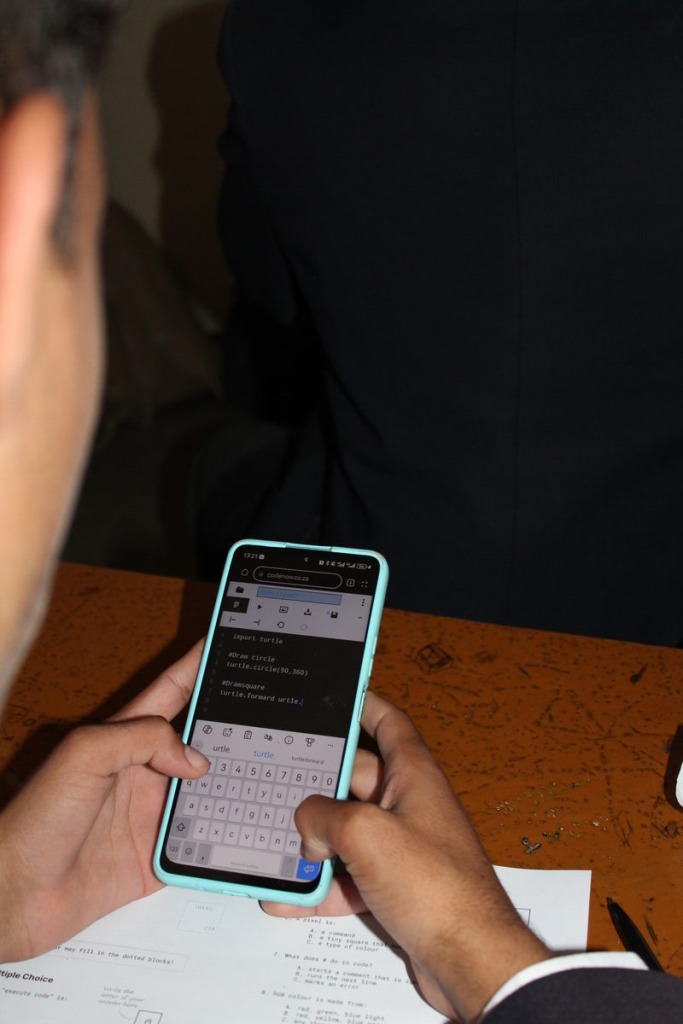
Roberts said this was exactly how the classes were designed, so that pupils learned collaboratively by doing. There are no lessons or pre-training. The learners are given small A5 comic books, called zines that give step-by-step instructions, which they then followed, helping one another and talking it out, figuring it out together as they went along.
The programme requires no fee from schools, but needs a staff member to act as club facilitator and commitment to regular club meetings for the full academic year.
Still relevant in AI age
TygerBurger asked if learning coding was still relevant with the new era of artificial intelligence. Zahn Venter, Operations Manager at WeCode24, replied that powerful tools such as AI actually increased the need for skill rather than removed it.
“Learning to code isn’t primarily about producing code. It’s about learning how to think: breaking problems down, making precise decisions, and turning ideas into working systems. That’s what lets you direct tools like AI, instead of being directed by them.”
She compared computers to musical instruments: “You can put a piano in every classroom, but that won’t give you a music culture that lives in people.”
Venter said the goal was to develop people who could think and create rather than just consume.
“If you don’t understand the tools, you don’t shape the future,” she said. “You only consume it. When someone can think, make and adapt they are not limited to the opportunities they are given. They can create their own.
“You can hand someone Jarvis, but that doesn’t make them Iron Man.”
READ ALSO: Robotics learners from Belhar needs help to go to Australia


You must be logged in to post a comment.