


Our family is very strict about screen time. To explain the reason, I’m going to get all nerdy before I weigh in with experience from raising seven daughters.
Our tech reluctance is because of the prefrontal lobe. This part of the brain is in the forehead and keeps developing long after the rest stops. It actually only stops when one is about 25.
It is responsible for impulse control, emotion regulation, and weighing long-term consequences. It will become the filter that will influence decision-making.
Put another way, this is where your wisdom sits and it takes at least 25 years to grow.
So what has this got to do with screen time?
Well, screens, and any other activities from the plethora of instant gratification stimuli readily available nowadays, damages the development of the prefrontal lobe.
If you don’t believe me, look it up. There are dozens of peer reviewed articles easily accessible online that say the same thing.
So, for this reason, my husband and I try, really, really hard, to limit our daughters’ screen times. Ideally we’d cut it out altogether but unfortunately, the world, the school system and my own relatives seem to be against us.
Gone are the days when pupils used a diary to record appointments and homework. Nowadays even my six-year-old’s homework is sent via google classroom.
And I have first-hand experience of how my children’s moods and marks decline when they have access to too much screen time.
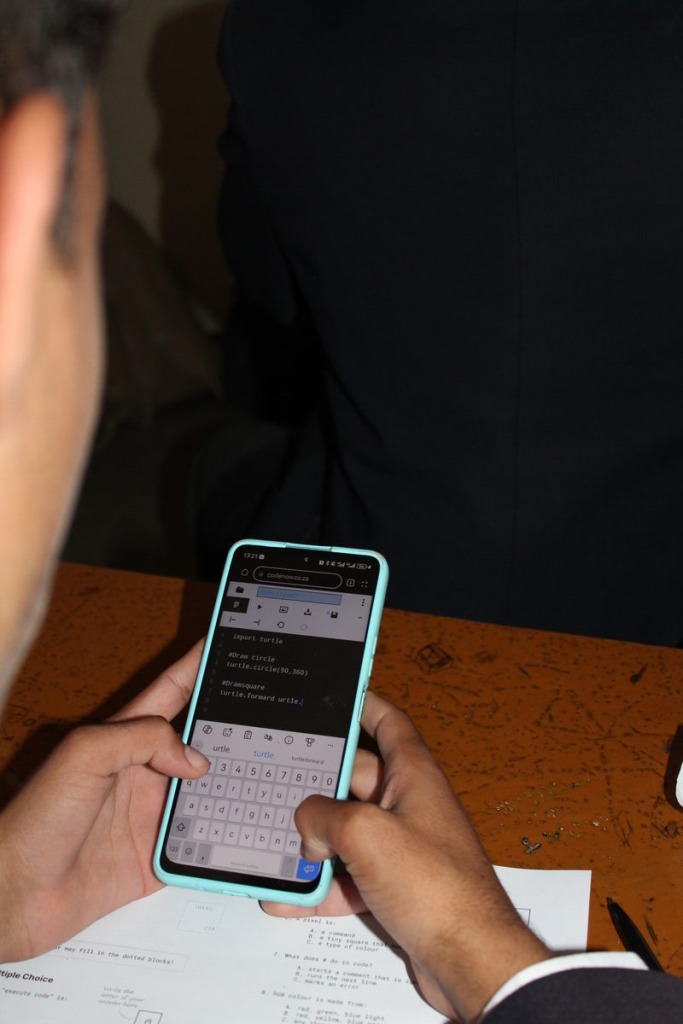
Take for example my second eldest.
For years, before we had a TV, she and her sisters would draw, read, play boardgames, skate, cycle, play outside, write their own little comics and entertain themselves easily without any help from us. When we had no TV, my children would automatically navigate to their hobbies, but then my sister gifted us with one and all creativity in our home had a sudden and dramatic drop.
Soon after, when the same Santa sister gave my second eldest a cellphone when she turned 14, it was accompanied by a dramatic change in personality. That year she failed a subject for the first time and all her marks dropped.
We took away the phone. She regarded it as a punishment. We didn’t care.
She moved on from being a very morose, moody, anti-social teenager to a slightly less morose, moody, anti-social teenager
Her first phoneless week, she meandered around the house like a poltergeist; head lowered, face scowling, speaking to no one and answering anything addressed to her in growly monosyllables. She also behaved like an addict. She threw epic tantrums, cried, and tried all manner of manipulation. She searched our room and stole it back a few times, but, eventually, after a whole week of phonelessness, she moved on from being a very morose, moody, anti-social teenager to a slightly less morose, moody, anti-social teenager. But, more importantly, within one school term, her marks improved and she was back in the top quarter of the class again.
We would have gladly never given her phone back but, unfortunately her teachers started sending homework on WhatsApp chats.
While modern tech is a necessary part of life and I do not hate it, I do feel that in the classroom it should be limited to only what is absolutely necessary and I am not alone in my thinking.
The growing philosophy worldwide is for a complete ban of cellphones in schools. Yet, last term, I got letters requesting that I register all three my primary school-aged children on Google Classroom.
Principals, help us out here, please!
READ ALSO: THINKING OUT LOUD: Birthdate surprises


You must be logged in to post a comment.