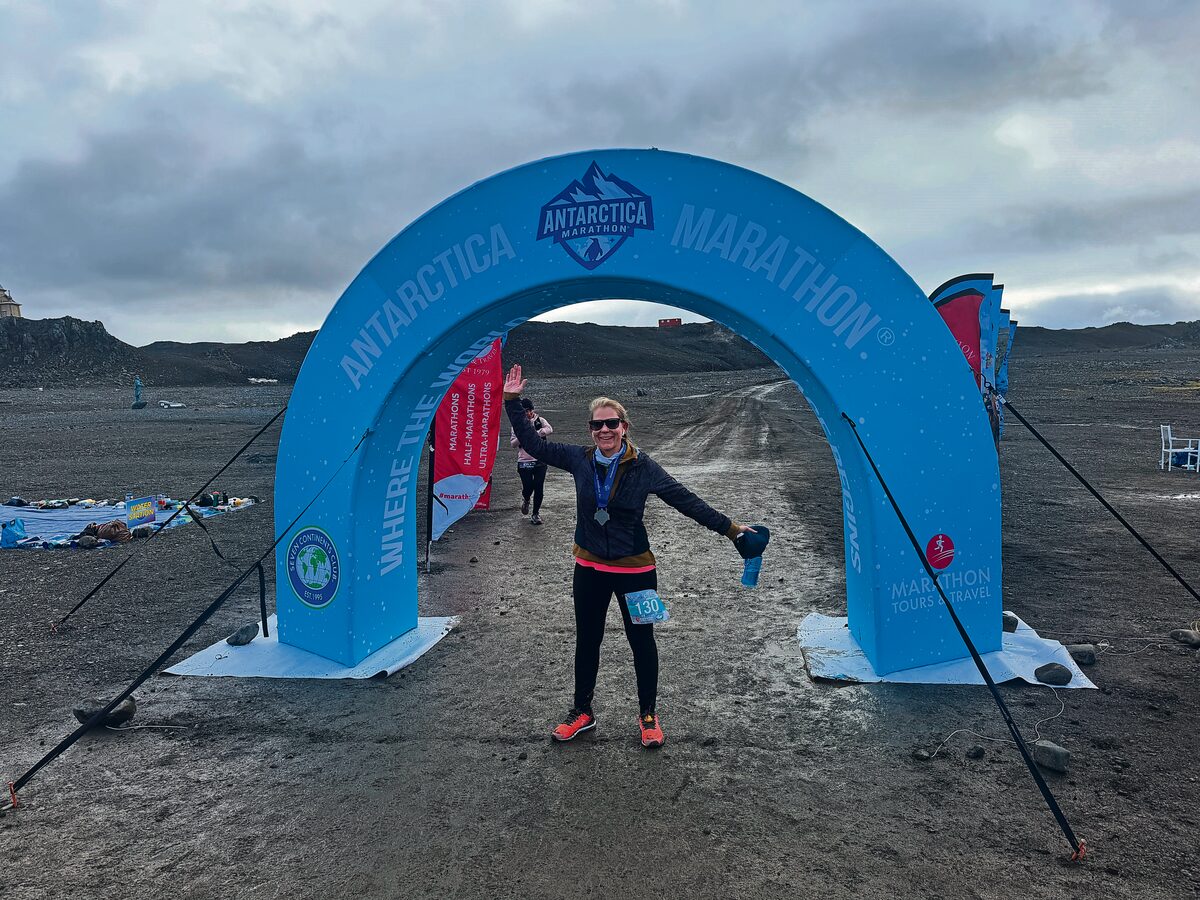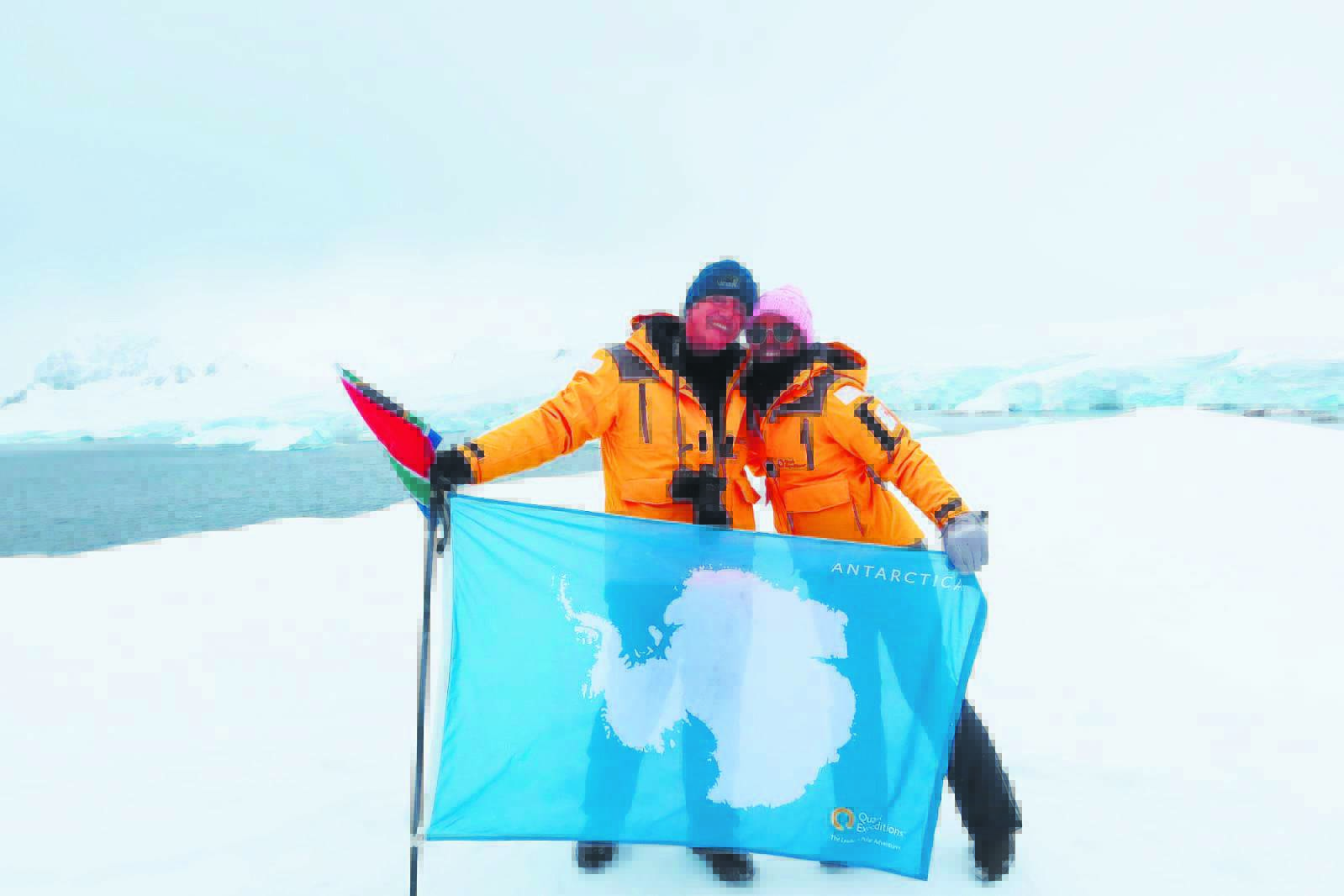

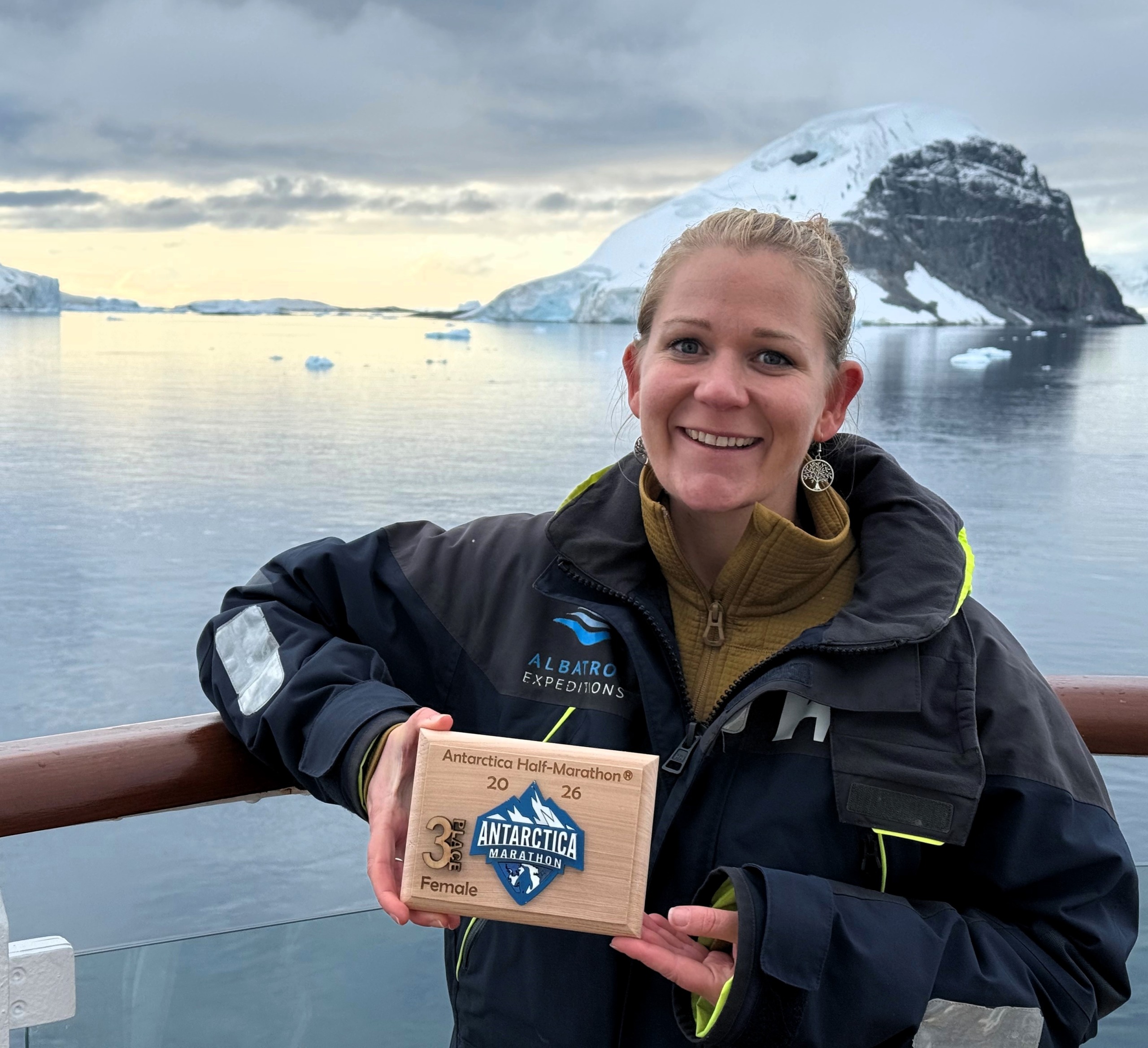
A local woman has just completed the Antarctica half marathon on King George Island in temperatures of only 1°C and icy terrain — not just completing it, but coming in third in the women’s category!
The 36-year-old Tania Jeken from Goedemoed achieved this milestone on 19 March.
She grew up in Herbertsdale, a small village near Mossel Bay. Never would she have thought she would be running a half marathon in Antarctica, she told TygerBurger.
Work on board cruise ships
Jeken, who grew up on Dwarsrivier Country Getaway farm near Herbertsdale, is currently working on board expedition cruise ships as the first aid responder and general naturalist, “which basically means I am medically responsible for all guests and crew when off the ship, and I also assist the doctor on board if needed, as well as guide, driving zodiacs, lead hikes, and interpret what animals we are seeing, why they are there, history, geology and everything in between,” she explains.
Marathon Tours, the only company presenting this once-in-a-liftetime race on Antarctica, chartered the company that she works for and booked the entire ship just for their clients.
Borrowed running clothes
“There were two voyages back-to-back. I went on the second voyage with them — in borrowed running clothes, as I didn’t know I would ever be allowed to participate,” she explains.
“Working in the expedition cruise industry means living a life where no two days are ever the same. I am used to the unexpected — but nothing quite compared to what lay ahead. What began as a simple idea, soon grew into something far more extraordinary: I was going to run a half marathon in Antarctica.
“We set sail from Ushuaia, crossing the legendary Drake Passage — a stretch of ocean infamous for its wild, unpredictable seas. This time, however, we were lucky. The crossing was unusually calm, almost as if the ocean itself was giving us permission to pass.”
Biosecurity protocols
“Before reaching Antarctica, we followed strict biosecurity protocols — every layer, every bag, every shoelace carefully cleaned to protect the fragile ecosystem we were about to enter. Even our running shoes had to be spotless.
“We arrived at King George Island just before race day. My role as first aid responder meant working side by side with the MarathonTours doctor — constantly on alert to protect every runner against the brutal cold and unforgiving conditions, where even a small mistake could quickly become dangerous. Only once everyone else was ready, did I allow myself to switch roles — from caregiver to competitor.
“The first race day was surreal. In freezing temperatures, we peeled off heavy expedition layers and stood at the start line in running gear — surrounded by nothing but rough gravel, a handful of research stations, and a vast, unforgiving landscape,” she says.
No ordinary race
“The course consisted of repeated loops due to environmental regulations, winding past research stations and marked water points. But this was no ordinary race. Along the way, penguins waddled across the path as if they owned it, and fur seals emerged from the icy ocean, watching us with quiet curiosity.
“The weather refused to settle — gusting winds, falling snow, and sudden bursts of sunlight all played their part. Every step was a reminder of just how small we were in such a powerful, untouched landscape.
“When I finally crossed the finish line, it hit me: I had just completed my very first half marathon — without formal training and in borrowed running clothes — in one of the most remote places on earth!”
No time for training
“I had no time for training on board while working. We work up to 15 hours a day on some days and the last thing you feel like doing is going to the gymnasium after a long day,” she says.
“I finished tenth overall and came third among the women. But the numbers hardly mattered. What stayed with me was the experience — the challenge, the unpredictability, and the quiet beauty of Antarctica.
“It wasn’t just a race. It was a reminder of how far you can go when you step outside your comfort zone … even if that step happens to be taken on the edge of the world.”
This is not the end of her adventures. Jeken is leaving for the United States of America in a week’s time to attend some additional training before she heads up for the Arctic season (the North) where she is hoping to run the half marathon there as well.
READ ALSO: Huis Andries Olivier champions complete Absa Cape Epic