

Gang members switching sides is driving a surge in violence across Cape Flats communities as loyalties shift and retaliatory killings escalate.
This is according to the Western Cape Gang Monitor quarterly report, which was released yesterday.
The report was compiled by the Global Initiative Against Transnational Organised Crime or Gi Toc, an international network of hundreds of experts who explore and debate strategies against organised crime.
The March report, which was the eighth edition, said that in recent months members from some of the province’s most powerful gangs switched their allegiances to rival groups, sparking deadly conflicts across multiple townships.
READ ALSO: Gang monitor report debunks outdated statistics
“While not a new phenomenon, floor-crossing is becoming increasingly common and playing a more prominent role in gang warfare. A former gang general describes it as an ‘accelerated trend’, adding that ‘almost every gang has started doing it’,” the report said.
According to Lieutenant General Thembisile Patekile, the Western Cape police commissioner, the practice is directly linked to recent spikes in violence: “That is when the conflict starts. [Gang members] are leaving, with secrets, from one side to the other. They must deal with you, which often means killing.”
The trend has been driven by economic incentives, with gangs offering money, guns and drugs to recruit from rivals. Younger members reportedly find it easier to abandon gang traditions for better financial prospects.
Trust breakdown
One gang boss is quoted as saying: “They have no loyalty, because they are children and they can be pulled with a packet of sweets. I find it very hard to trust my own soldiers.
Another gang general says: “Guns and secrets crossed the floor with those mutineers.”
The defections escalate violence as defectors bring insider knowledge to enemy gangs while simultaneously becoming targets for their former allies. This expands the pool of potential targets and sustains cycles of retaliation.
READ ALSO: Report unpacks drivers of gang violence and rise in warfare
Floor-crossing has been particularly visible in areas including Factreton, Kensington and Mitchells Plain, where violent conflicts between the two gangs and a splinter group erupted in October 2025 following defections.
The root of the tensions was the defection of splinter group members, led by a lieutenant, to their rivals. The defectors reportedly took some of the gang’s weapons with them, prompting social media threats between rival groups.
Recruitment tactics
One gang has been particularly successful with floor-crossing tactics, offering money, guns and drugs to rival gang members. Since adopting this strategy, they have rapidly expanded their territory across the Cape Flats and increased their pool of foot soldiers.
Other gangs have followed suit.
The account of one youth who crossed territories shows that those who join gangs and defect become caught in a cycle of fear and violence.
“The Americans are there and they want to shoot me, because I shot one of their people,” the young man is quoted as saying.
Age-driven attitude differences have been identified as a key factor, with younger members reportedly more willing to abandon gang codes for better economic opportunities.
Early warning system
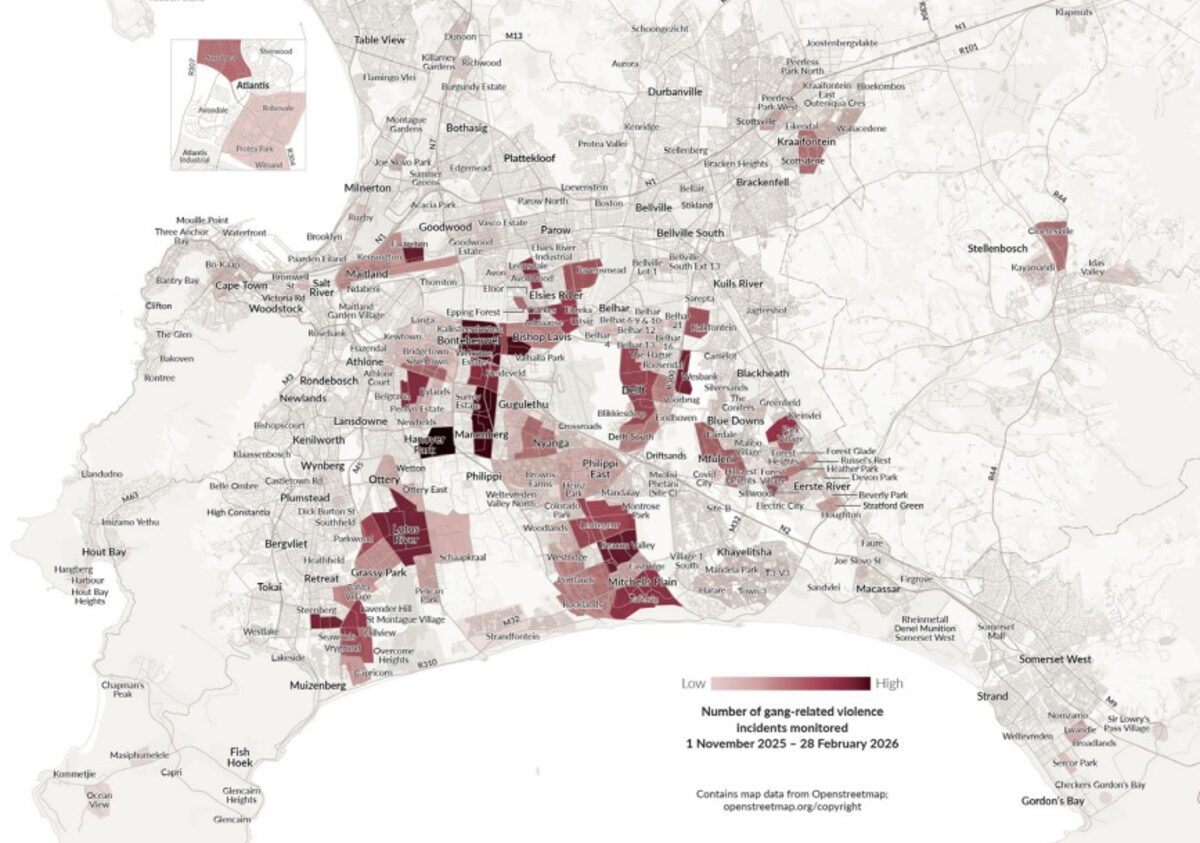
Monitoring between November 2025 and February 2026 showed hotspots of gang violence closely linked to these loyalty shifts and territorial expansion attempts. Conflict triggered by floor-crossing is fuelling instability across multiple areas.
Gang experts warn that floor-crossing serves as an early warning sign of heightened violence and community insecurity. The practice highlights limitations of reactive policing approaches.
“Monitoring defections and signs of internal distrust can help anticipate escalations,” according to researchers. “This would allow additional resources to be allocated to hotspot areas, thereby reducing the risk to affected communities.”
The findings emphasise the need for intelligence-led approaches that can identify organisational changes within gangs and anticipate the heightened risks these pose to affected communities.
Violence prevention experts argue that enforcement strategies relying solely on territorial control are unlikely to curb violence during periods of internal fragmentation, requiring more sophisticated monitoring and intervention approaches.
You can read the full report on the Global Initiative Against Transnational Organised Crime website.