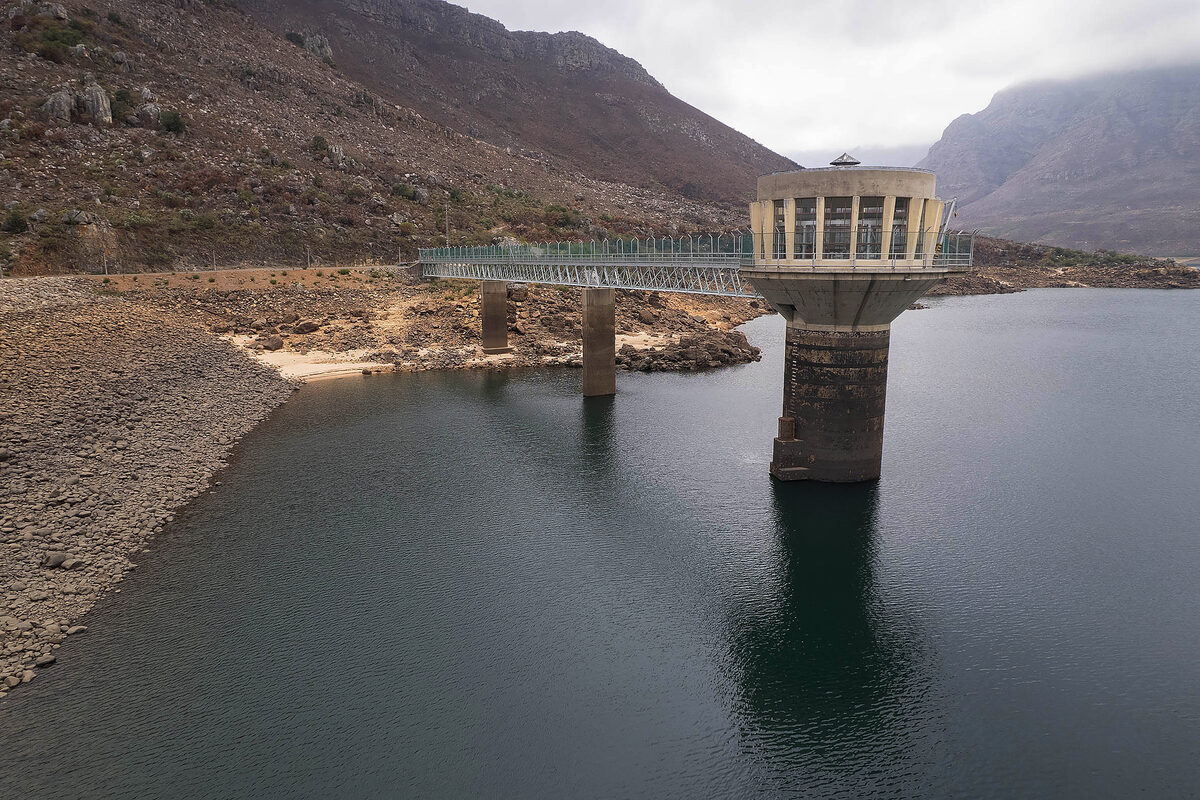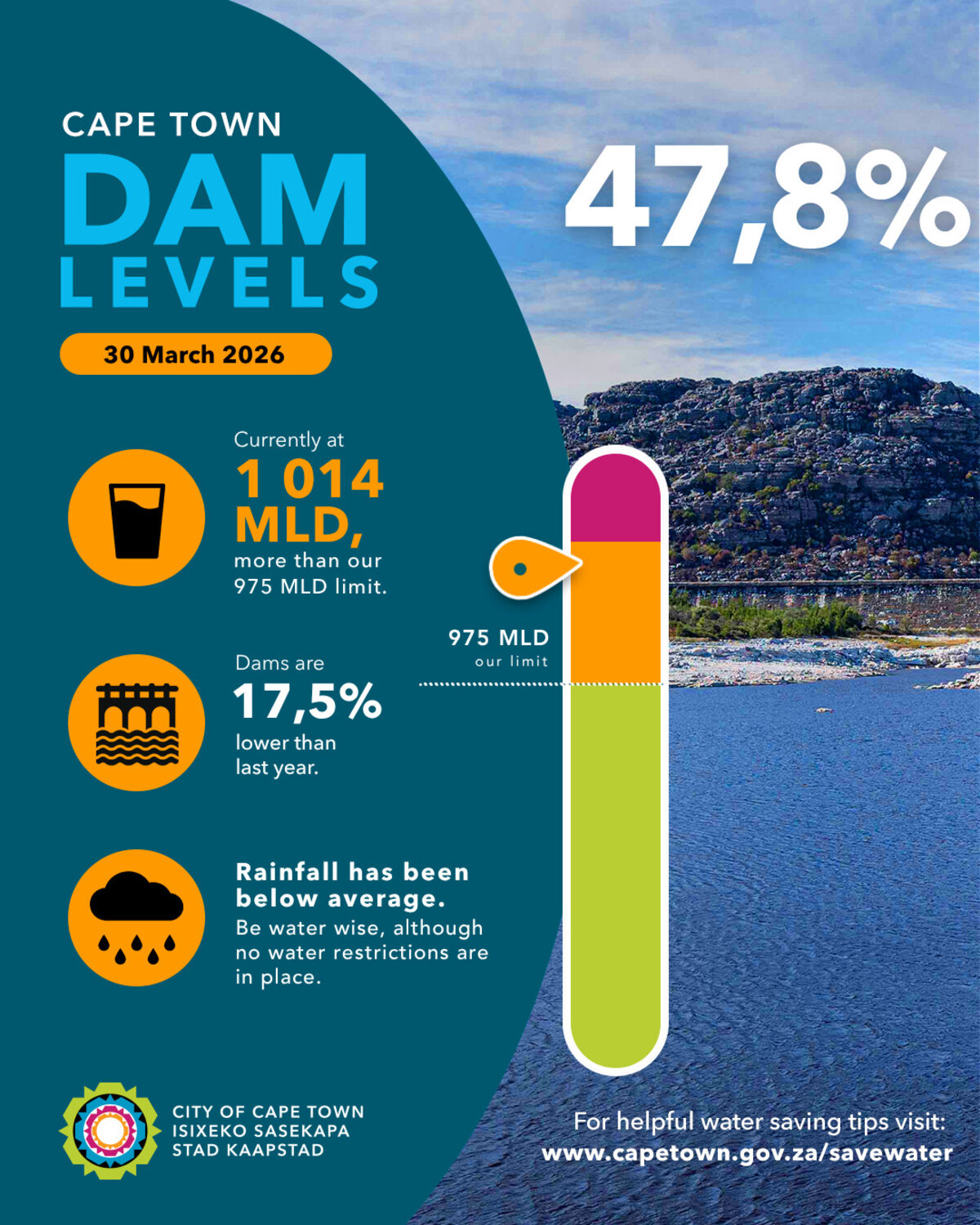


With Cape Town’s dam levels now 19% lower than at the same time last year, the City is urgently calling on residents, businesses and visitors to reduce water consumption as usage continues to rise during recent hot weather.
Lower annual rainfall has resulted in reduced inflows into dams, placing growing pressure on the City’s water supply system. While taps are not at risk of running dry at this stage, continued high water use could rapidly change the situation and lead to restrictions unless consumption drops as quickly as possible over the summer months.
The City’s dam storage currently stands at 69.1%, a level that must sustain Cape Town until the next seasonal rainfall cycle.
Consumption remains well above target
Recent data published in the City’s weekly water dashboard shows that average daily water use remains well above the target of less than 975 million litres per day (MLD):
- 10 December 2025 – 1 029 MLD;
- 15 December 2025 – 1 029 MLD;
- 22 December 2025 – 1 039 MLD;
- 29 December 2025 – 1 010 MLD;
- 5 January 2026 – 1 048 MLD.
These sustained high levels of consumption are raising concerns about water security in the months ahead if usage does not reduce urgently.
Fix leaks and report burst pipes immediately
Residents are encouraged to find and fix water leaks on their own properties, as dripping taps, leaking toilets and faulty plumbing can waste significant amounts of water over time.
Burst municipal pipes should be reported immediately through the City’s official channels:
- Call: 086 010 3089 (select option 2)
- SMS: 31373
- WhatsApp: 063 407 3699
- Email: water@capetown.gov.za
Residents are urged to provide an exact location or address and always insist on a reference number.
Re-use treated effluent where possible
To ease pressure on potable water supplies, the City promotes the use of treated effluent for industrial irrigation, construction and other suitable purposes. Treated effluent is supplied to large water users such as industry, sports clubs, golf courses, schools and large new developments.
The City continues to invest in upgrading ageing water infrastructure, improving pressure management, strengthening metering and resolving reported leaks and pipe bursts as quickly as possible.
Building a water-secure future
“All of us have a part to play in reducing our water usage now,” said the City’s Mayco member for water and sanitation, Zahid Badroodien.
“This is a critical moment for us, where we must reduce the unnecessary litres of water used in our homes, in industrial and agricultural processes and at work. We can’t afford to be complacent any longer.”
Badroodien said early, proactive measures are far more effective than emergency restrictions. In the long term, the City is progressing with strategic plans to reduce reliance on rain-fed dams, including adding new water sources such as desalination and water reuse from 2031.
Residents are reminded that around 70% of water use occurs in homes, making household water saving especially important. Simple steps include monitoring water usage, watering gardens at night to reduce evaporation and avoiding unnecessary topping up of swimming pools.
For more water-saving tips and resources, visit www.capetown.gov.za/savewater