

Gangsterism has its own economy and its chief resource is vulnerable youth. This was the underlying message at two different events last week.
The first was the draft Mitchell’s Plain Safety and Development Plan dialogue at Mitchell’s Plain police station on Wednesday 23 July. The meeting was the third of a series called by MEC for Police Oversight and Community Safety, Anroux Marais, in response to the recent spate of gang violence in the area in which seven people were killed and 17 others wounded in dozens of shootings.
At the meeting, Mitchell’s Plain station commander, Brig Brian Muller, said there had been 11 consecutive days without any serious crimes in the precinct.
Hilton Arendse, the acting HOD of the Department of Police Oversight and Community Safety, said Wednesday’s meeting was to look at the draft’s “overarching strategy”.
Break the gang economy
He said that later meetings will call on the community and other relevant stakeholders to fill in the finer details.
“There are proposed projects in the plan, but it’s not finalised. Tonight is more to agree on the alignment, to look at what are the key areas that we are focusing on and to get off the cuff inputs on how we can strengthen it,” Arendse said.
He said the key goal of the strategy is to break the gang economy.
“How do we stop the flow of youngsters moving into that space? By providing them with alternatives,” he said. “The plan aims to bring all the relevant government departments and the City of Cape Town into the room so that we can start coordinating a safety structure.”
The long term plan is to roll out the strategy to every area afflicted by gang warfare.
“What we are doing in Mitchell’s Plain is a pilot. It won’t be perfect but we need to do something,” Arendse said.
One of the initiatives of the plan will be the creation of safe zones.
“The idea is to create safe zones in those areas, and then growing them.”
Ben de Vos, secretary for the Mitchell’s Plain Community Police Forum, said: “The community needs to take ownership of the plan so that they don’t feel like it is a top down approach. The community needs to participate.”
Arendse added: “The idea is not to usurp any structure’s role. The idea is to get the government to work with the community structures. How do we align all the work that is being done by all the different structures? There is so much work that needs to be done in Mitchell’s Plain. I don’t think we have enough organisations. This is not a competition. It’s not about who wins. It’s about ‘what value can I add to this process?’ It’s also about acknowledging the existing structures and the work that is being done and looking at how we can add to it. There’s so much work in Mitchell’s Plain, there is no need to compete.”
Arendse said that while he represented the Department of Police Oversight and Community Safety, he was not the driver of the plan which would be championed by Premier Alan Winde.
“This is about making sure that the government is accountable to the community of Mitchell’s Plain and to make sure the residents of Mitchell’s Plain are accountable to themselves too, because the government can’t do it on its own.”
Planet Youth programme
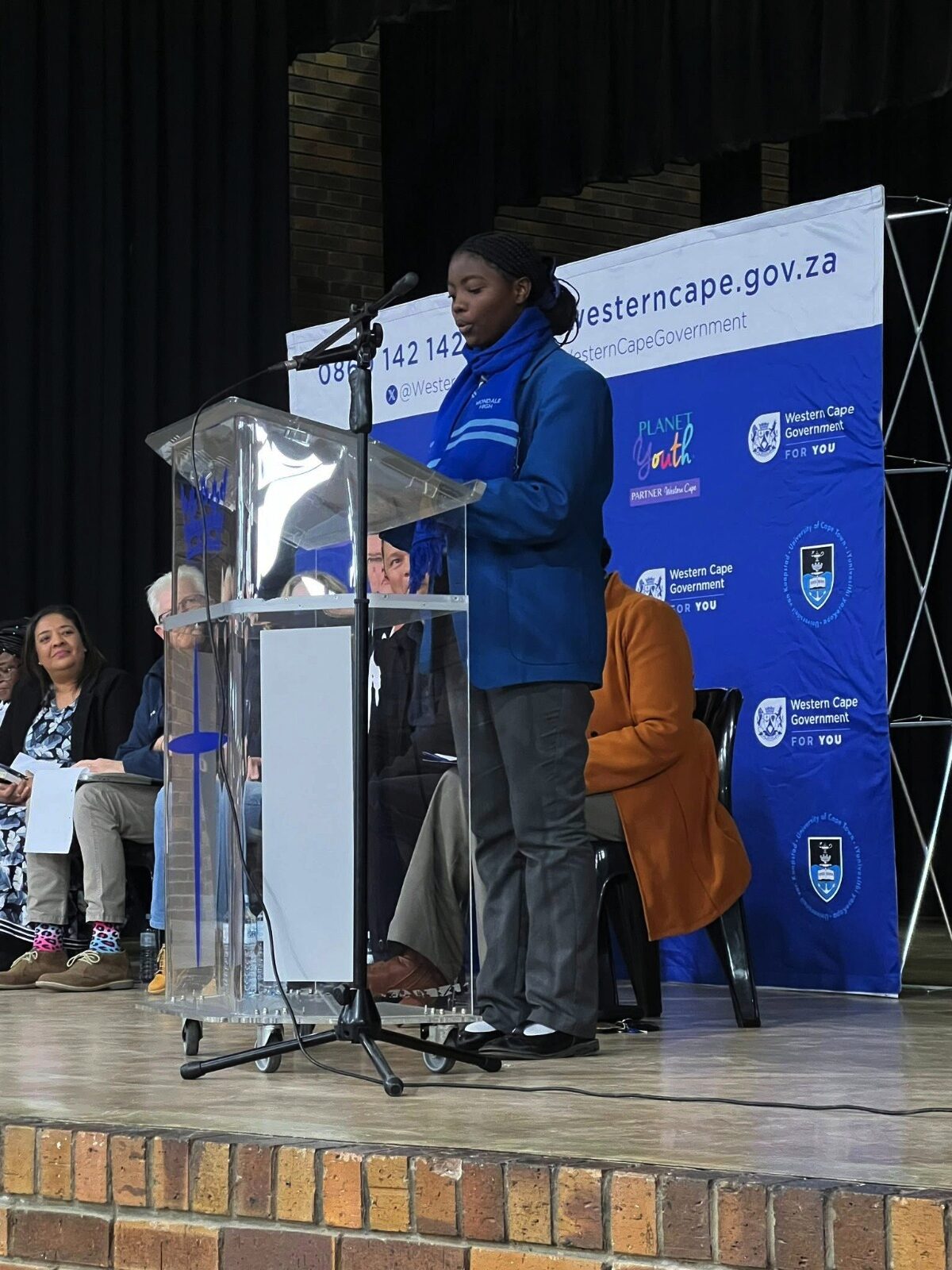
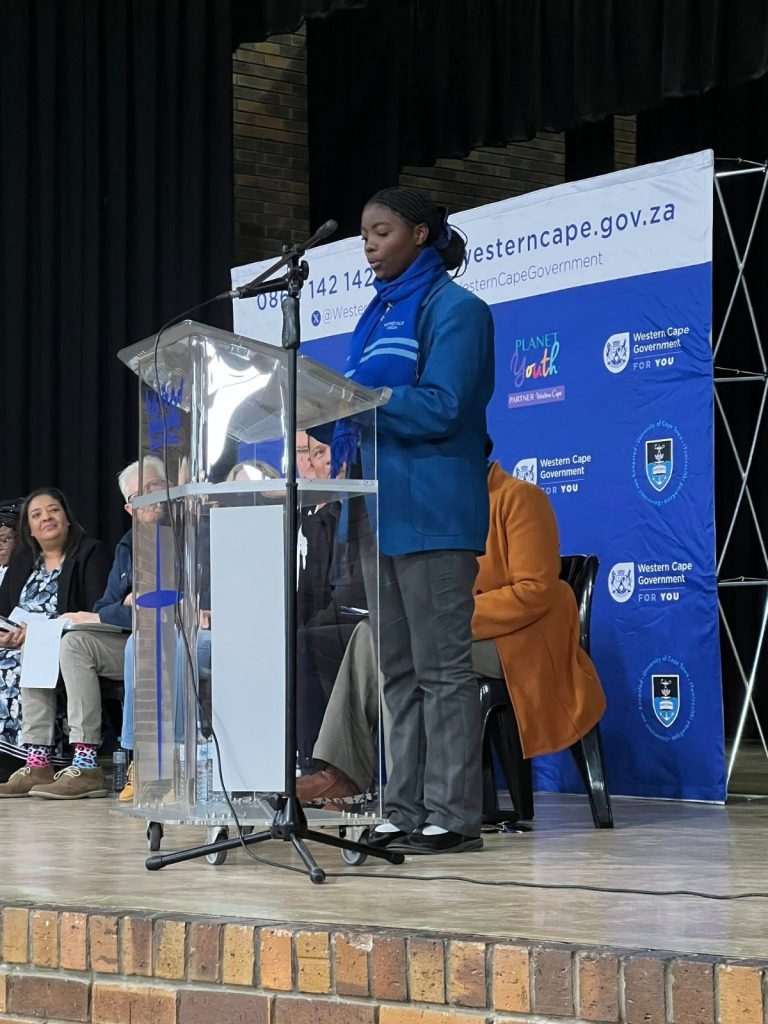
Meanwhile, Winde was at Mondale High School in Portland the following day, on Thursday 24 July, to launch a similar initiative: the province’s Planet Youth programme.
‘You can’t only police your way out of a problem’
“This is one of our violence prevention programmes because you can’t only police your way out of a problem, you’ve got to go to the root causes. You’ve got to say ‘why?’ and ‘what is happening?’ and ‘what can you do differently?’ and that is why we are here today?” Winde said.
The “data-driven initiative” is based on an Icelandic model.
“They started this because they had alcohol and drug abuse among young people,” he said. “But we have other layers that they don’t have.”
The initiative aims to build “healthier, safer, and more supportive environments for our young people”.
While Planet Youth is driven by broader projects, the draft safety strategy hopes to work at micro level.
“It has to be targeted. We have to be able to identify Ben at number 10 Iris Avenue that is vulnerable to becoming a gangster,” Arendse said, adding that the strategy was a collaborative answer to Marais’ challenge to “get out of the office and into the streets”.
“Is it ambitious? Yes. Possible? Yes. Difficult? Definitely. Necessary? Absolutely,” Arendse said.


You must be logged in to post a comment.