

Stellenbosch – If Artificial Intelligence (AI) is here to stay, there needs to be guardrails and guidelines. In an effort to create a framework for itself and others, Standard Bank partnered with the School for Data Science and Computational Thinking at Stellenbosch University to develop a framework for responsible AI use in business.
“While AI presents significant opportunities to enhance efficiency, innovation, and client experiences, it also introduces a degree of uncertainty due to its complexity,” explained John Mukomberanwa, Head of Digital Insights at Standard Bank Corporate and Investment Banking.
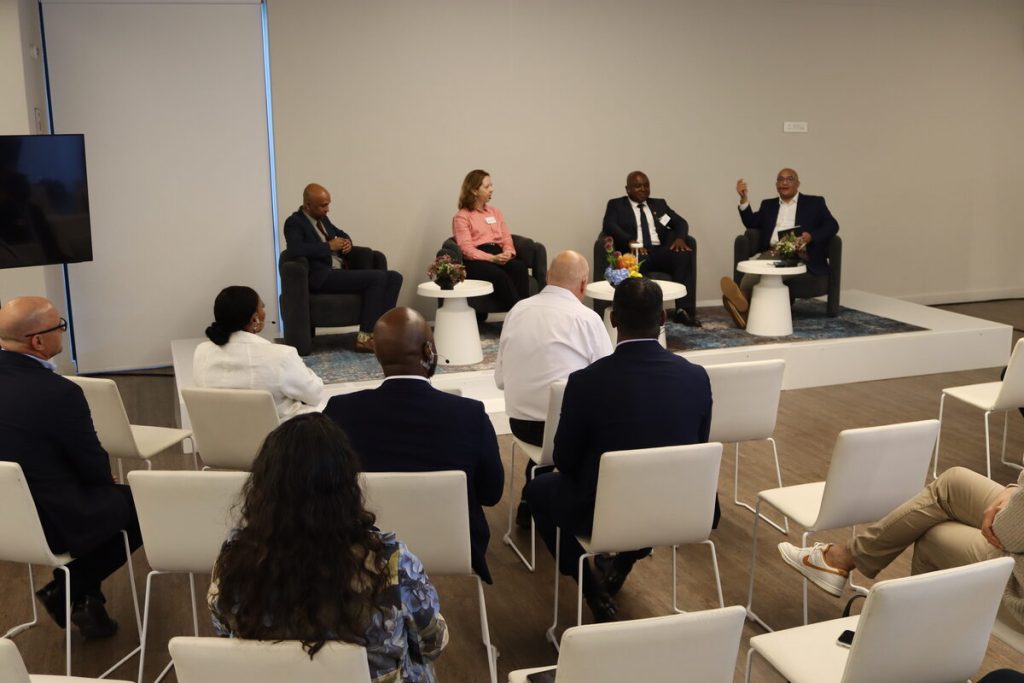
Mukomberanwa was among the panellists at a recent AI-centred discussion hosted at the Hazendal Hotel & Spa.
Banking’s Digital Shift
According to Mukomberanwa, major changes in the banking sector in 2018-’19 led to a shift in thinking that put digital solutions at the forefront of the business. These digital solutions now include using AI as a data-driven tool to help solve banking clients’ challenges and create products. However, the bank saw the potential for problems that might arise from relying on AI and recognised the need to create guidelines for its use.
“We saw it fitting to partner with a reputable academic institution, combining our financial and industry expertise with the university’s strength in data science, computational thinking, and ethics to find a solution that shapes practical approaches to responsible AI adoption in the business landscape,” said Mukomberanwa.
What the two institutions produced was the “SBSA Responsible AI Approach”, a framework that established the parameters within which AI would be developed, deployed, and used.
Ethical Concerns Around AI Adoption
The adoption of AI in business has drawn criticism from an ethical and human rights perspective. Critics have raised concerns about transparency, accountability, and privacy in business when AI is used. According to Statista, 30% of B2B companies actively implemented AI across their organisations in 2025.
ALSO READ: Study develops AI to detect misinformation in local languages
Dr Tanya de Villiers-Botha, senior lecturer and chair in the Department of Philosophy at SU, explained that the framework ultimately means being able to apply high-level ethical principles to real-life, actionable guidelines.
“That is why the ethical process is never really complete. You can’t really say, well, now we have rolled out this framework, here are your principles, go ahead and be ethical,” she said.
A Living Document
In practice, the framework means Standard Bank applies around 120 questions throughout its innovation cycle. The principles of the framework are applied across selected high-impact use cases of AI that support clients, operations, and risk management activities.
“The questions are intended to prompt thoughtful deliberation, encourage documentation of reasoning, and provide a record of the ethical considerations that informed decisions across the product lifecycle,” the Standard Bank Responsible AI Approach reads.
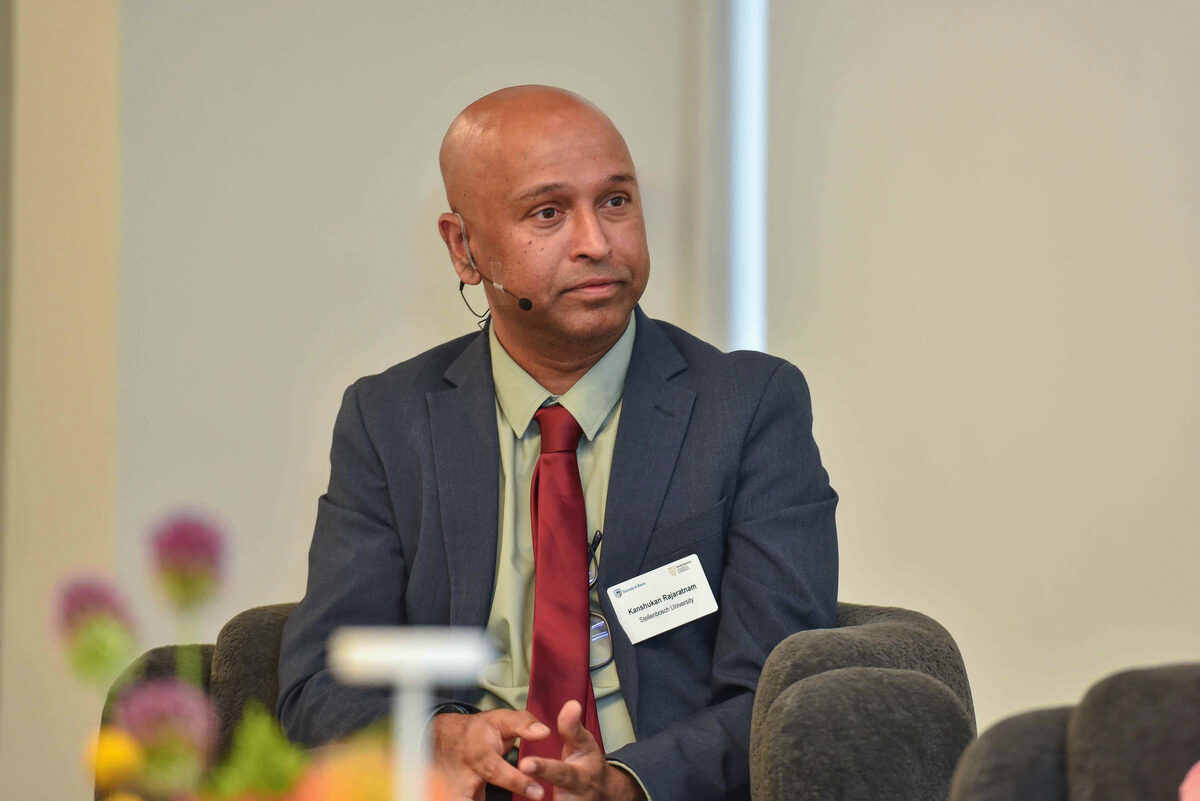
Prof. Kanshukan Rajaratnam, Director of the School for Data Science and Computational Thinking at SU, adds that the framework is not a final solution: “And so it has to live. Technology changes all the time, data changes all the time, and the way we use technology and data changes all the time. So the framework needs to be taken by users and be updated to their context to be able to use it.
“The framework is still new, but if you use it in a different context, you have to use the framework to update it for your context to be able to use it. It is not a static document; rather, it is a dynamic document which everyone has to consider within their own context,” Rajaratnam said.
“We saw it fitting to partner with a reputable academic institution, combining our financial and industry expertise with the university’s strength in data science, computational thinking, and ethics to find a solution that shapes practical approaches to responsible AI adoption in the business landscape,” said Mukomberanwa.
What the two institutions produced was the “SBSA Responsible AI Approach”, a framework that established the parameters within which AI would be developed, deployed, and used.
Ethical Concerns Around AI Adoption
The adoption of AI in business has drawn criticism from an ethical and human rights perspective. Critics have raised concerns about transparency, accountability, and privacy in business when AI is used. According to Statista, 30% of B2B companies actively implemented AI across their organisations in 2025. Dr Tanya de Villiers-Botha, senior lecturer and chair in the Department of Philosophy at SU, explained that the framework ultimately means being able to apply high-level ethical principles to real-life, actionable guidelines.
“That is why the ethical process is never really complete. You can’t really say, well, now we have rolled out this framework, here are your principles, go ahead and be ethical,” she said.
A Living Document
In practice, the framework means Standard Bank applies around 120 questions throughout its innovation cycle. The principles of the framework are applied across selected high-impact use cases of AI that support clients, operations, and risk management activities.
“The questions are intended to prompt thoughtful deliberation, encourage documentation of reasoning, and provide a record of the ethical considerations that informed decisions across the product lifecycle,” the Standard Bank Responsible AI Approach reads.
ALSO READ: South Africa’s AI policy cited fake research, created by AI: What lessons need to be learned
Prof. Kanshukan Rajaratnam, Director of the School for Data Science and Computational Thinking at SU, adds that the framework is not a final solution: “And so it has to live. Technology changes all the time, data changes all the time, and the way we use technology and data changes all the time. So the framework needs to be taken by users and be updated to their context to be able to use it.
“The framework is still new, but if you use it in a different context, you have to use the framework to update it for your context to be able to use it. It is not a static document; rather, it is a dynamic document which everyone has to consider within their own context,” Rajaratnam said.


You must be logged in to post a comment.