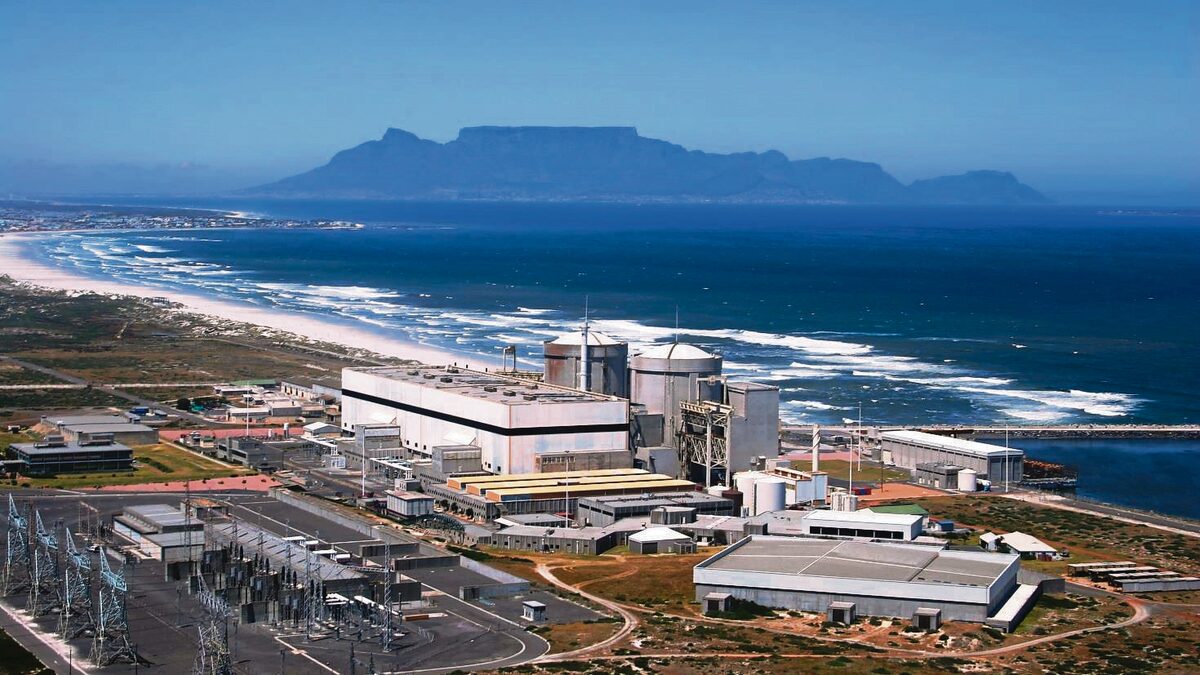

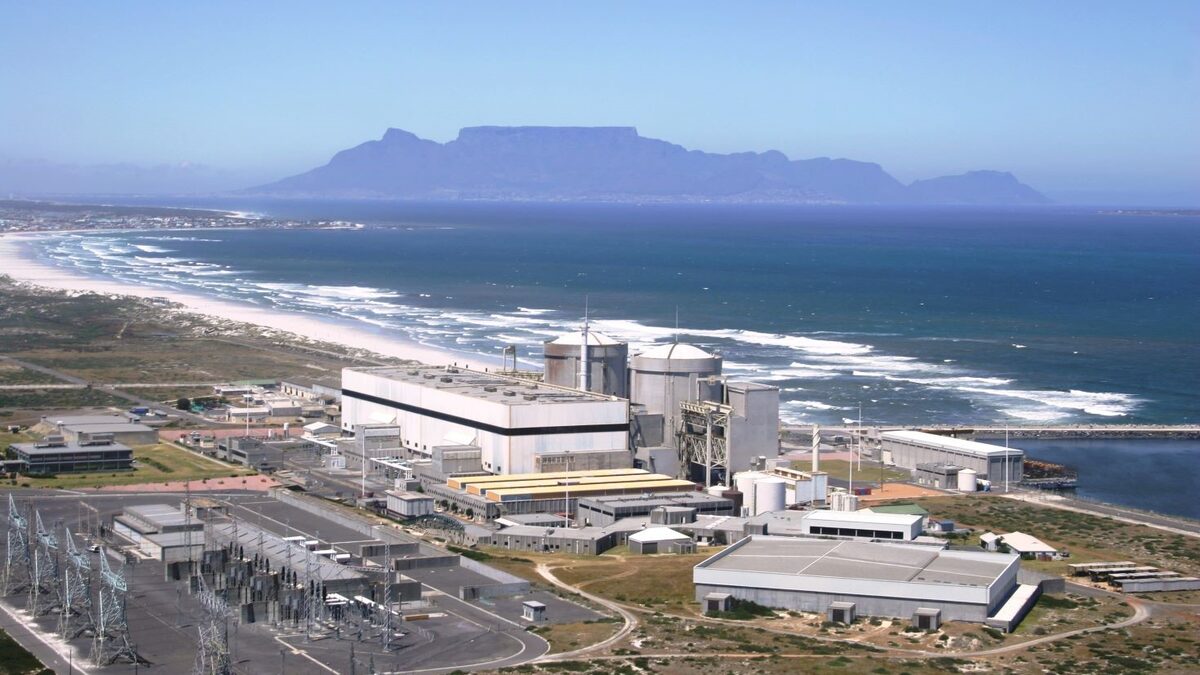
Eskom has moved to reassure residents living around the Koeberg Nuclear Power Station that no radiation leak occurred during recent maintenance work at Unit 2, following the detection of two brief airborne radioactivity events inside a controlled work area earlier this month.
Despite Eskom’s assurances, concerns over nuclear safety remain deeply rooted among many residents living in Duynefontein, Melkbosstrand and surrounding communities. For decades, residents have questioned the risks associated with living close to Africa’s only nuclear power station, particularly following reports of outages or technical incidents.
The utility stressed there was no danger to employees, nearby communities or the environment, and the incident was classified as Level 0 – No Safety Significance on the International Nuclear and Radiological Event Scale (INES), the lowest possible rating.
The events occurred on 2 and 7 July while technicians were conducting routine steam generator inspections during Unit 2’s scheduled outage, which began in April and remains on track for completion in November.
Routine inspection triggers radiation alarm
According to Eskom, the events happened during Eddy Current Testing (ECT), a routine inspection process used worldwide to examine the integrity of steam generator tubes inside nuclear power stations.
During the inspection, tiny microscopic oxide particles, commonly known in the nuclear industry as “crud”, became airborne inside a sealed work area within the containment building.
Highly sensitive Constant Air Monitors immediately detected the airborne particles and automatically triggered an alarm.
Eskom said established safety procedures were immediately implemented, including halting the inspection, securing the work area, allowing the ventilation system to filter the air and carrying out radiological assessments before work resumed.
The utility emphasised that at no stage was radioactive material released outside the containment building.
No leak beyond containment, says Eskom
Speaking during a media briefing, Eskom Chief Nuclear Officer Velaphi Ntuli said the event posed no threat to workers or the public and demonstrated that Koeberg’s safety systems functioned exactly as intended.
“We are all exposed to radiation, whether you work at Koeberg or in your normal course of life.”.
He explained that a standard chest X-ray exposes a person to about 100 microsieverts of radiation, while a mammogram delivers around 400 microsieverts.
“The average person receives about 2 400 microsieverts of radiation every year simply from daily life. You can contrast that with the 20 microsieverts received by four of our workers.”
Ntuli said the exposure was well below regulatory limits and was not considered a reportable nuclear safety incident.
“Our radiation protection team acted swiftly and within procedure. Our systems and safeguards worked exactly as they were designed to.”
He added that continuous monitoring, HEPA-filtered ventilation systems, containment barriers and radiation protection measures prevented any environmental release.
Eskom confirmed that iodine tablets were not required because there had been no radiation leak.
Minister seeks to calm public fears
Electricity and Energy Minister Kgosientsho Ramokgopa said government had called the media briefing because public concern surrounding anything related to nuclear energy is understandable.
“When matters of this nature come to the fore that attempt to introduce uncertainty about nuclear safety, we felt it was important to stand before the country and share the true facts.”
Ramokgopa said the incident fell within normal operational parameters for nuclear facilities and should not undermine confidence in Koeberg or South Africa’s future nuclear programme.
“I really want to say to the country that we are safe. There is no reason to be suspicious.”
He added that government wanted to ensure there was no lingering uncertainty around Koeberg as South Africa prepares for future nuclear procurement under its Integrated Resource Plan (IRP).
Residents’ fears resurface
One Duynefontein resident, Susan Jacobs, said while Eskom’s explanation was reassuring, incidents involving radiation inevitably create anxiety.
“Whenever we hear words like ‘radioactivity’ or ‘radiation’, it naturally worries people because we live so close to the plant. We appreciate the explanations, but residents will always want complete transparency.”
TygerBurger has previously reported on ongoing concerns raised by residents over the long-term safety of Koeberg.
Those concerns resurfaced when the National Nuclear Regulator approved Eskom’s application to extend the operating life of Koeberg Unit 1 by 20 years, allowing it to continue operating until July 2044.
Originally commissioned in 1984 with a planned 40-year lifespan ending in 2024, Unit 1 received the extension following extensive safety upgrades and regulatory assessments.
Meanwhile, Unit 2 remains offline for scheduled maintenance and long-term operation upgrades, while Unit 1 continues supplying electricity to the national grid.
Eskom said the recent airborne radioactivity detections had no impact on the outage schedule, plant operations or nuclear safety, adding that the incident demonstrated the effectiveness of its multiple layers of safety systems designed to detect and contain even the smallest changes in radiation levels.
ALSO READ: Protest highlights safety concerns