Mowbray has become a lifeline for small-scale farmers. They come from rural Western Cape towns. Now the market’s future hangs in the balance.
The City of Cape Town plans to release the Hill Park Lane property through a public auction process. The site is home to the market and Gordon’s Gym. The move would end nearly three decades of continuous leasing to the gym.
The City’s Economic Growth Directorate said: “The property is currently under investigation for the proposed lease. Subject to the outcome of the investigation and receipt of all necessary approvals, the City intends to make the property available to the market through a public auction process.”
The statement confirms what market organisers, the gym and nearby residents have feared since lease negotiations collapsed last year.
A market built from nothing
The Mowbray Market runs on the first Saturday of every month outside Gordon’s Gym in Hill Park Lane. Vendors pay no fees. For some it is their only source of income.
The market launched in December 2022 and has grown steadily since. TCOE hosts the market alongside three partners. They are the Rural Women’s Assembly, the Inyanda National Land Rights Movement and the Mawubuye Land Rights Forum. TCOE is a national organisation. It operates from 36 Durban Road, Mowbray.
TCOE started in 1983. It supports smallholder farmers, farmworkers, fishers and rural communities through agroecology, food sovereignty and land reform. Director Mercia Andrews leads the organisation. Her son, Robbie Andrews, helps coordinate the market and the organisation’s agroecology work.
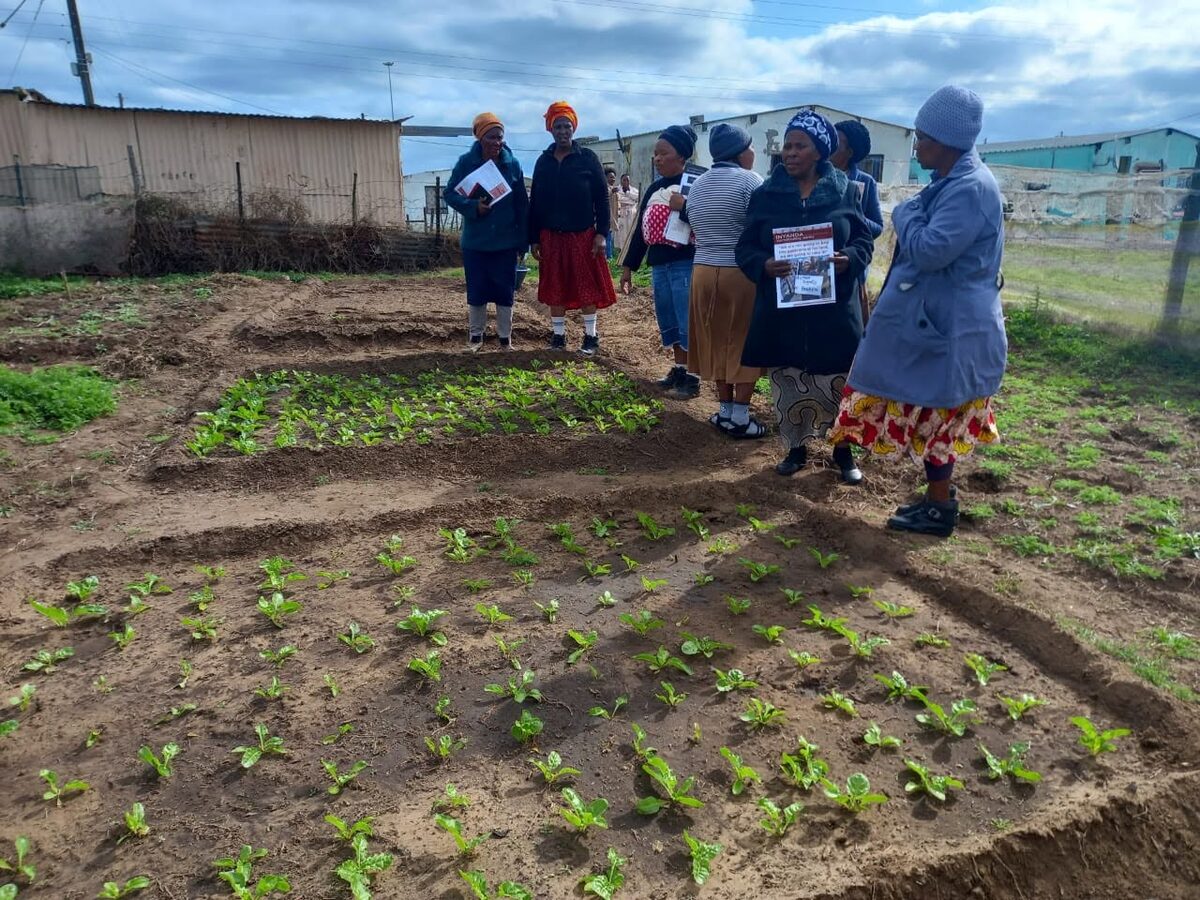
TCOE runs agroecology hubs across the Western Cape, Eastern Cape, Limpopo and Free State. The market began as a platform for the Western Cape hubs. It lets them sell surplus seedlings and produce directly to the public.
A space for marginalised farmers
Robbie Andrews has explained the market’s purpose plainly.
“Industrial farming and the market domination of a handful of retailers leaves little room for small-scale farmers and producers, particularly black and women farmers, who are often not resourced,” he said. “The Mowbray Market is an opportunity for marginalised farmers to directly engage with customers and to try to create new local supply chains with independent producers.”
Farmers travel from Genadendal, Suurbraak, Calitzdorp, Buffeljagsbaai and Ashton to sell at the market. Some vendors come from as far as L’Agulhas. TCOE provides transport.
Shoppers find organic vegetables, seedlings, fresh fish, honey, fynbos, handmade soaps and homemade food. Vendors offer Cape Malay treats, samoosas and rotis. They grow and make everything without synthetic chemicals.
For the farmers, the market is more than a sales platform. It gives them a direct link to urban customers. This bypasses supermarket supply chains that typically squeeze out small producers.
The auction threat
The City of Cape Town owns the market site. Gordon’s Gym has leased the property for 26 years. The lease has expired and the City is now moving to auction the property through a competitive process.
TCOE, the gym and a nearby bicycle shop each submitted proposals for the site. The City rejected all three.
A City spokesperson said the City “could not fairly justify prioritising or combining proposals without compromising transparency and governance principles.” The official said the City “was unable to reasonably and fairly motivate for the preference of any single proposal.”
The site has split zoning, which requires formal land-use approvals for any development. It sits on a 100-year floodplain, which limits construction. The City has zoned portions of the land for transport. No permanent structures can go there.
The City’s property disposal guidelines set out a clear process. The investigation phase checks ownership, zoning, viability and development conditions. Officials also confirm whether the City still needs the property. This determines whether they can sell or lease it. Officials then prepare a valuation report and a disposal or lease plan. After that, the City releases the property through a public auction or tender process.
“Legal limbo”
Gordon’s Gym owner Gabor Kovacs said the City recommended a 10-year lease in 2024, which the gym accepted. But the City never finalised the agreement.
“Our immediate priority is demanding procedural fairness and requesting an urgent meeting with the City to pause the upcoming auction,” Kovacs said. “An open public auction is an incredibly blunt tool that completely ignores our rights as historical tenants and discounts the value of the existing infrastructure on the land.”
The City has confirmed that Gordon’s Gym continues to operate under a tacit lease arrangement while the investigation proceeds. The City has also noted a gap. The gym did not obtain written consent for the market to operate on the site. The lease agreement requires this consent.
“For the market to operate legally during the interim period, the current lessee is required to formally request and obtain the City’s written consent to sub-lease the premises to the market operator,” a City official said.
A community fights back
A Change.org petition from June has drawn support from residents and market-goers. The petition calls on the City to halt the auction. It also demands a long-term community lease for TCOE. Organisers want real public participation before the City finalises any decision.
“Public land is a public good,” the petition reads. “We will not allow it to be sold off to the highest bidder.”
Gordon’s Gym has said publicly that it sees value in sharing the site with the market. This is a rare alignment between a commercial tenant and a community organisation. It shows how broadly the community values the market.
Residents on the eastern side, between the Liesbeek River and Rondebosch Common, have adopted the market as a gathering point. For four years it has drawn shoppers from across Cape Town’s southern suburbs. It creates a rare bridge between urban consumers and rural producers.
What happens next
The City’s statement leaves little room for ambiguity. The investigation is under way. If the investigation supports the auction, the City will seek all necessary approvals. The property will then go to the highest bidder.
Farmers travel hours to reach Mowbray. Customers have made the market part of their monthly routine. The question now is whether public land should serve a community that has already invested in it. Or should the City sell it to whoever can pay the most?
The next Mowbray Market takes place on Saturday 7 November. Hours are 10:00 to 14:00, outside Gordon’s Gym in Hill Park Lane.
ALSO READ: Community garden success: Veggie stall thrives at Constantia Market Day