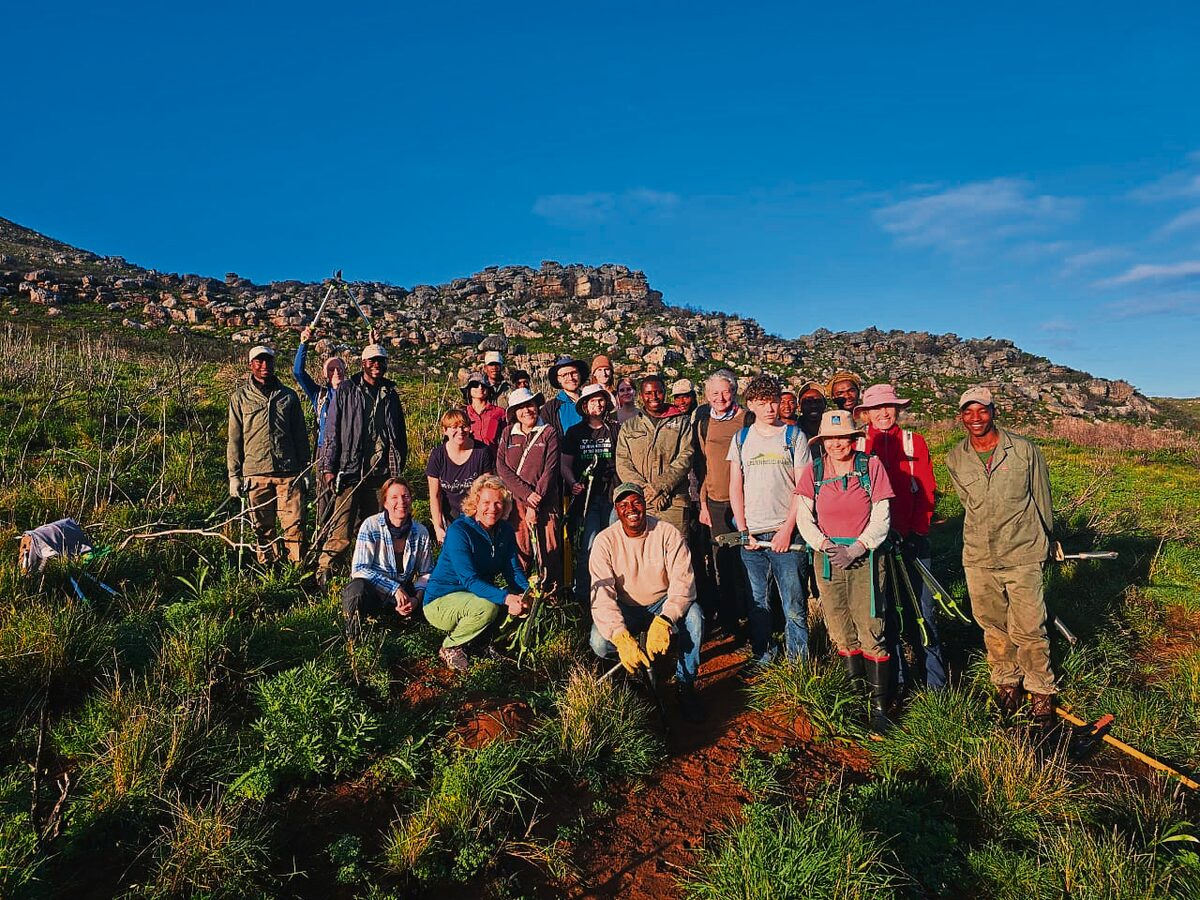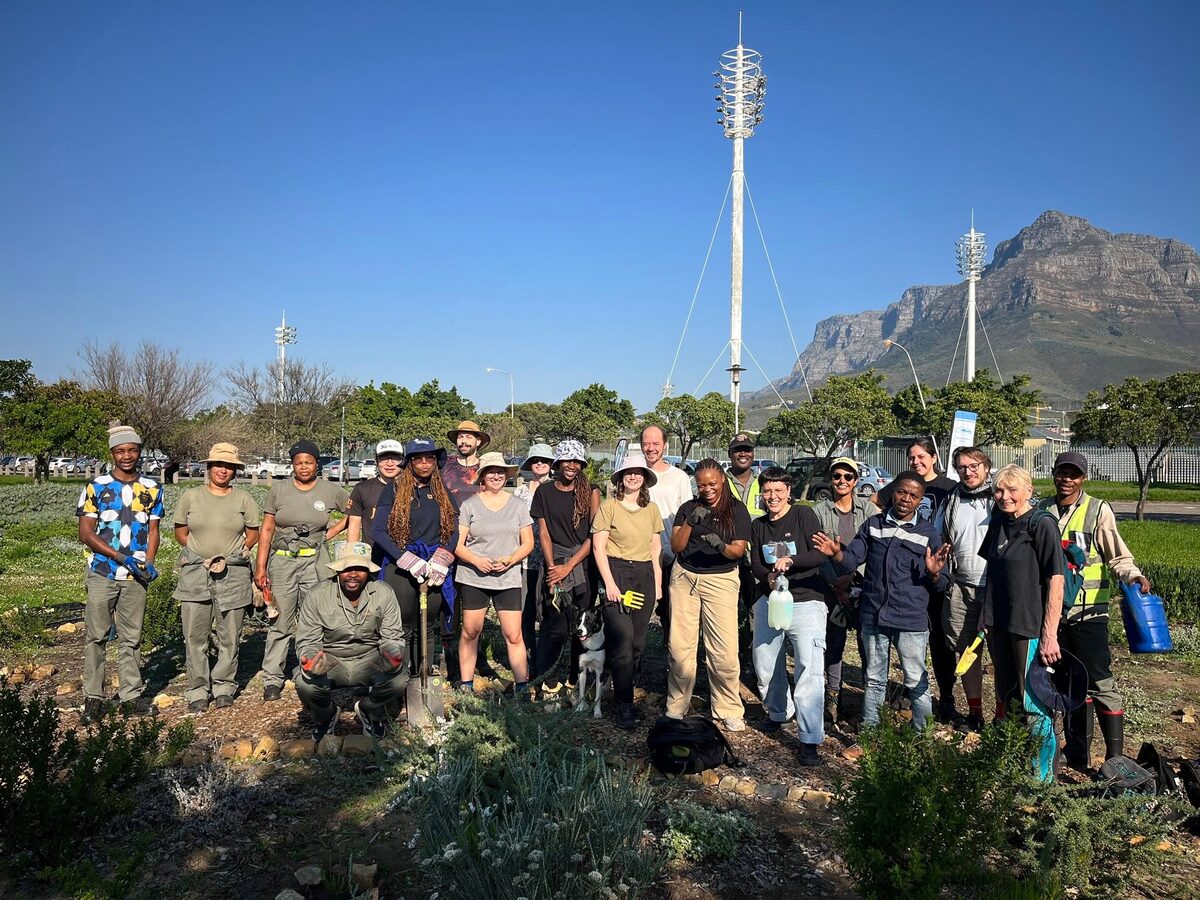
Seventeen volunteers gathered along the lower Liesbeek River in Observatory. They added another chapter to the quietly remarkable story of the Fynbos Snake.
Armed with trowels and a shared sense of purpose, they planted 80 plants from 10 indigenous fynbos species. The site sits opposite Hartleyvale sports grounds. Not long ago, kikuyu grass and invasive weeds smothered it completely.
The volunteers came from the surrounding community. Friends of the Liesbeek drew them in through social media posts and a mailing list. For some, it was a return visit. For others, it was their first time. They dug into Cape Town’s sandy soil on behalf of the river.
The right plant in the right place
Saturday’s species were far from random. Among those going into the ground were Lobelia pinifolia, Hermannia pinnata, Otholobium decumbens, Struthiola dodecandra, and Phylica ericoides. Most were new additions to the garden. The team selected them to build on last year’s planting. Some of those earlier plants have now established beautifully and even begun to multiply.
Nick Fordyce, Chair of Friends of the Liesbeek, explains that multiple considerations drove the selection. “Some are practical choices. We need hardy groundcover to outcompete grass and weeds, or we need to stabilise banks. Some are aesthetic, to add an interesting mix of colour and texture. We also chose plants with medicinal value and fragrant plants.
“But above all,” he says, “the goal is indigenous diversity.”
That diversity is already paying dividends. The team chose plants that flower at different times of year. This gives the garden year-round habitat for pollinators and birds. “As soon as native plant diversity returns, pollinating insects and birds can use this new resource,” Fordyce notes. The Fynbos Snake, he explains, can show what an urban landscape gains when people give nature a chance.
More than a garden
Friends of the Liesbeek developed the Fynbos Snake in partnership with the City of Cape Town. Ward 57 supports it through a ward allocation. Its ambitions stretch well beyond horticulture.
The garden sits near a defunct stormwater drain and a natural depression in the landscape. That is no accident. The next phase is a pilot sustainable drainage system. It will incorporate bioswales and work with the natural lie of the land to improve stormwater retention.
“By adding native riparian plants and making minor adjustments to the landscape, we can show something important,” Fordyce says. “Nature-based solutions outperform hard infrastructure on problems like ageing stormwater drainage and catchment-wide flooding.”
This positions the garden not just as a green amenity but as working urban infrastructure. It invites residents to see the surrounding landscape as an extension of the river and part of its catchment.
A space the community is making its own
Recent additions of benches and bins have made the Fynbos Snake more than a place to plant. It is becoming a place to pause. Walkers, runners and cyclists now use the space regularly. The hope is that something deeper takes root alongside the fynbos: a sense of community stewardship.
“It’s hard to say what the garden means to the community,” Fordyce reflects. “But we have certainly seen people using the space and appreciating it. Our hope is that it becomes a site of community stewardship for the garden and its biodiversity. Having volunteers join for planting days is an important part of that process.”
Friends of the Liesbeek has planned more planting days. If you’d like to get involved.
ALSO READ: Liesbeek river flooding raises concerns about urban river resilience